wellnessfitpro
Reporting Highlights
- Crushing Debt: Chicago’s mismanagement of pensions and heavy reliance on borrowing over decades have created an unrelenting financial burden.
- Vicious Cycle: To solve its annual budget crunch, more borrowing is used to fill in holes, including back pay for firefighters and payouts for police misconduct.
- Strained Services: Solutions to crises involving public health lack the funding that can improve the lives of Chicagoans, and basic inspections for sidewalks and restaurants fall short.
These highlights were written by the reporters and editors who worked on this story.
When the city of Chicago eventually finishes its spending plan for 2027, $3.9 billion will come right off the top.
Taxpayers will have nothing to show for it. Not a single cent of that money will be used to fill a pothole, pick up a can of garbage, pay a firefighter to respond to an emergency or address lead poisoning in children.
Strapped into a straitjacket made up of the city’s debt, there is nothing Chicago’s mayor or City Council can do about it, forced to spend billions every year simply to stay current on the $55 billion it owes to banks and its pension funds.
No other big city will pay more toward its debt this year or next, according to an analysis by WTTW News and ProPublica. This year, $3.6 billion out of a $16.6 billion budget was consumed by debt.
New York City, with a population three times the size of Chicago’s and a budget more than seven times as big, has $47 billion in debt backed by tax revenues. Los Angeles, which has approximately 1 million more residents than Chicago but a smaller budget, has $1 billion in debt set to be paid back with taxes, records show.
According to all four of the major Wall Street credit-rating agencies, New York’s and Los Angeles’ fiscal health make them much better choices for investors. Chicago’s history of questionable borrowing and budgeting — it chose to either ignore or short its pension payments for years — has undermined its credibility.
Its credit rating now sits just two or three levels above junk status, making the cost of borrowing even more onerous. And the city’s chief financial officer, tasked with managing city debt and relationships with credit agencies, resigned last week in stunning fashion, saying she no longer could continue in the role because it would compromise her “integrity and professional obligations.” She had come from Fitch Ratings, a credit agency, and had been on the job for only three months.
Chicago’s Pension Systems Are Less than 50% Funded
The city is an outlier among other large cities, where most pensions are at least 75% funded.
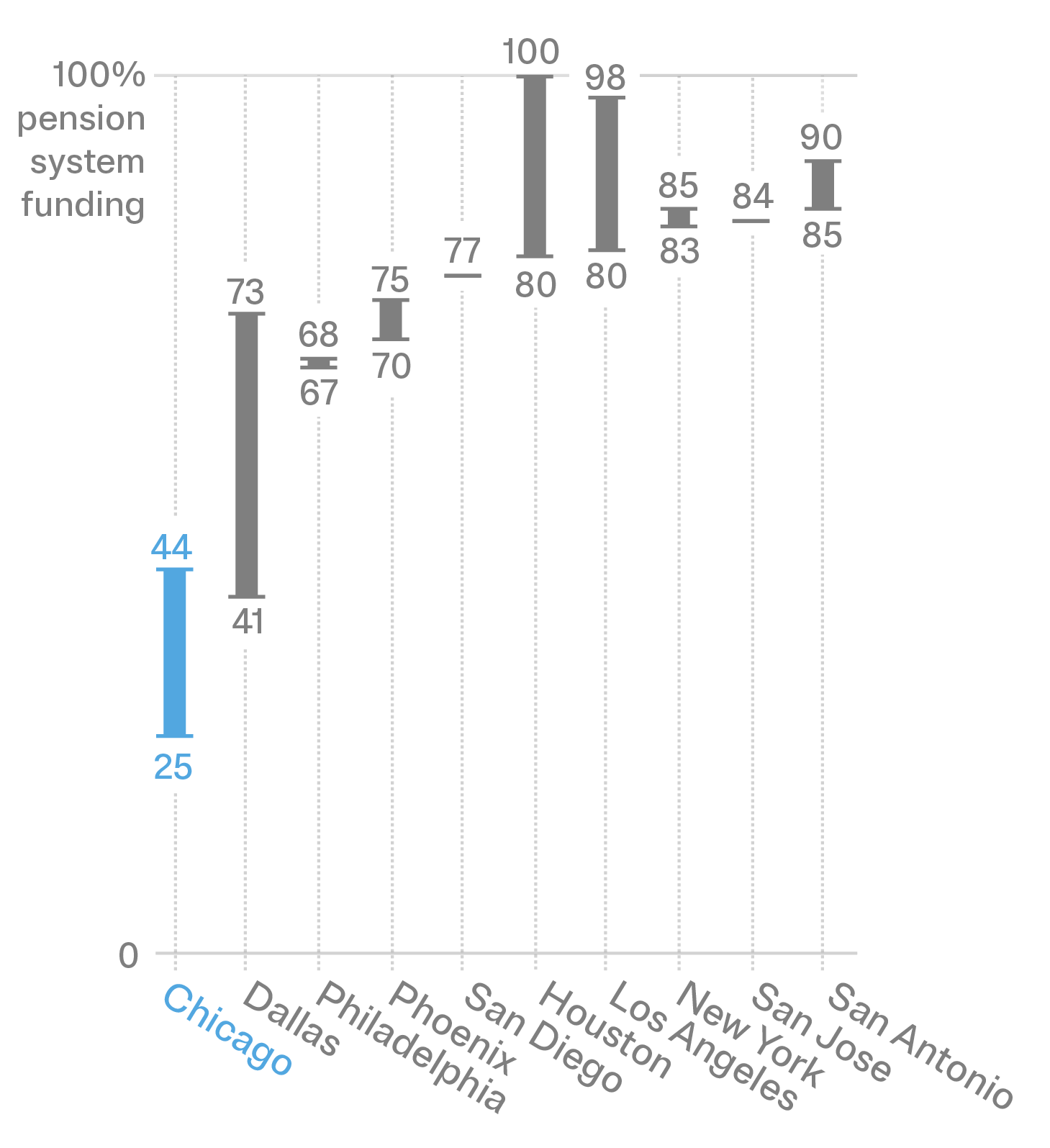
Source: 2025 city budgets and pension reports (data as of September 2026)
Lucas Waldron/ProPublica
Options for a financial rescue are limited or unpalatable. Pension obligations, locked in by law and political realities, remain untouchable. There is little public or political appetite to raise property taxes or cut city jobs, particularly among the ranks of police, the city’s largest workforce. A windfall from the city’s still-under-construction casino grows more unlikely than ever.
The office of Mayor Brandon Johnson, who is finishing up his first term in office, blames “reckless financing methods” from past administrations for the city’s financial bind.
“Savings and efficiencies alone cannot solve the city’s persistent structural gap,” the city’s Office of Budget and Management wrote to WTTW and ProPublica in response to questions for this story. In searching for revenue streams, Johnson has sought to impose new taxes on the city’s biggest corporations — an effort that has met stiff resistance.
Tackling the pension crisis, the city since 2023 has paid an additional $1 billion into its four pension funds above what is required by state law, records show, an infusion that the city touts as a stabilizing force.
But, like his predecessors, Johnson continues to rely on borrowing. Since taking office in 2023, Johnson has added $1.9 billion to the city’s debt obligations, according to city data.
That borrowing has “advanced desperately needed investment in economic development and affordable housing in historically underserved communities on the South and West sides,” according to Johnson’s spokesperson.
It also has been used to keep the city functioning. In 2026, for example, Chicago borrowed $166 million to pay firefighters what they were owed for working without a contract — and annual raises — for four years. Officials acknowledged they failed to set enough cash aside annually to cover those widely anticipated costs. The city borrowed an additional $267 million to cover the soaring cost of lawsuits alleging Chicago police officers committed a wide range of misconduct.
In some cases, the Johnson administration has negotiated agreements with its lenders that allow the city to pay only interest for several years, backloading its debt burden.
Chicago’s Debt Payments Were the Largest Category of the City’s Budget in 2026
Source: 2026 Chicago city budget
Lucas Waldron/ProPublica
With so much of the city budget dedicated to debt and pensions — and more cordoned off by federal and state laws that mandate spending for specific purposes, such as transportation — Chicago officials get to decide how to spend just one-third of its annual budget, records show.
The result for residents: Restaurant inspections are lagging. Complaints about crumbling sidewalks and injuries from those hazards pile up, without timely repairs. The city’s Public Health Department doesn’t have enough caseworkers to handle the intensive intervention needed for children suffering from lead poisoning.
The budget pressures are unrelenting. In August, Johnson announced another borrowing plan to fix a budget shortfall that emerged midyear. He blamed the City Council for overestimating the impact of new revenue streams while his council foes accused him of continuing a pattern of questionable borrowing habits.
Amid the finger-pointing, Johnson acknowledged the bind facing his administration and the city as a whole. “We cannot continue to budget by searching for loose change in the couch,” he said.
“We cannot continue to budget by searching for loose change in the couch.”
Chicago Mayor Brandon Johnson
Watching the annual struggles of city officials to climb out of its money pit leaves many residents feeling more than a little uneasy about what comes next.
“It is the feeling that people get when they max out their credit card and they’re barely paying the minimum,” said Alderperson Andre Vasquez, who represents the 40th Ward and speaks often of growing up in a family that struggled to pay the rent every month. “You’re behind on your utilities. So you get mail every month, letting you know you’re behind.
“And at some point, you’re not even gonna open the envelope anymore, because the feeling of dread, even trying to see it, is a challenging one. That’s how people in Chicago feel.”
Unhealthy Fallout
When Johnson ran for mayor in 2023, he repeatedly emphasized his commitment to invest in the city’s neighborhoods in order to build a healthier city. Central to his message was a pledge to reopen six mental health clinics closed by former Mayor Rahm Emanuel when he faced his own budget pressures in 2011.
Those closures fueled a terrible cycle, Johnson has said. Chicagoans in desperate need of counseling and medication instead found themselves in crisis, forced to call 911 for help or struggle alone.
But during Johnson’s time in office, the city has reopened just two clinics. The city’s lack of capacity has forced nonprofit organizations to pick up the slack, despite their own funding woes and staffing challenges.
Johnson, who has touted his record of investing in “historically underserved communities,” is promising to open another clinic in 2027. But fulfilling that promise hinges on the outcome of a court fight over whether Chicago can levy taxes on social media companies like Facebook and YouTube.
“The need is big and growing,” said Mark Ishaug, CEO of Thresholds, a nonprofit group that specializes in community care. “We don’t have enough money, and what we do have is being threatened.”
Hemmed in by the city’s budget, Johnson has worked to expand mental health services outside the traditional clinic setting by offering counseling at libraries across the city several times a week and launching a “street psychiatry” program focused on unhoused Chicagoans.
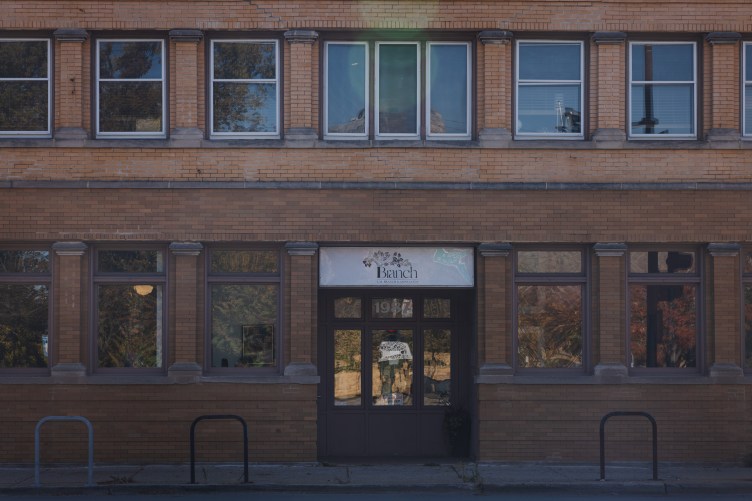
Chicago’s wide range of public health needs often have solutions that require money the city lacks.
In recent years, for example, the Public Health Department’s food safety programs have been “not in substantial compliance,” according to a 2025 state audit. The department has had to prioritize restaurants and other eateries that are considered high risk while lower-risk establishments are inspected less frequently. But even that effort falls short. State law requires three inspections a year for high-priority eateries, yet that happens at only 15% of those, records show.
Inspections also were at the center of a 2023 City Council proposal to prevent lead poisoning, especially among the city’s vulnerable children living in aging or neglected housing. More than 600,000 houses and apartments, the majority of the city’s homes, were built before 1978, when lead paint was banned by the federal government. Lead paint poses a hazard in 99% of homes built before 1978, officials have said.
One solution suggested by an alderperson would’ve mandated that the city inspect every Chicago home or apartment every five years for lead paint and other health hazards. But the proposal would have required the Public Health Department to hire 600 new inspectors, more than doubling its total workforce — and its budget. Ultimately, not a single hearing was held on the idea.
This March, the issue came up again, when the City Council created a working group to develop a plan to proactively inspect all Chicago homes offered for rent. The first step would be a study and recommendations within six months. But that deadline passed without any public progress, despite several community meetings.
The department’s current efforts to address child lead poisoning underscore the impact of budget pressures.
The department receives more than 1,000 notifications each year about children with lead poisoning. Each report kicks off a complicated remediation process, involving multiple city departments, designed to identify and remove the lead source from the child’s home. Health department nurses work with the families to monitor their children’s health and assess whether the city’s abatement efforts are working.
Public health records provide a snapshot of workloads for caseworkers during the first quarter of the year, with several handling more than 200 cases at a time. “Concerns remain for case managers with persistently high caseloads,” wrote a supervising nurse in an April email to department leaders.
A department spokesperson said it reaches out to all families in these situations, “providing at minimum direct outreach and educational materials.” More than 96% of families that are contacted get a home visit from department staff. The spokesperson did not say what percentage of families the city is able to reach.
In the coming months, Public Health will have to do even more with its limited budget. The state of Illinois has lowered the threshold for elevated levels of lead in the blood, which will lead to increases in positive tests.
Coupled with the city’s efforts to expand blood tests for children in areas on the South and West sides, even more families are expected to enter the queue for case management.
Patchwork Solutions
Felicia Nalls-Bradley just wanted to get to work. It was her first week on the job.
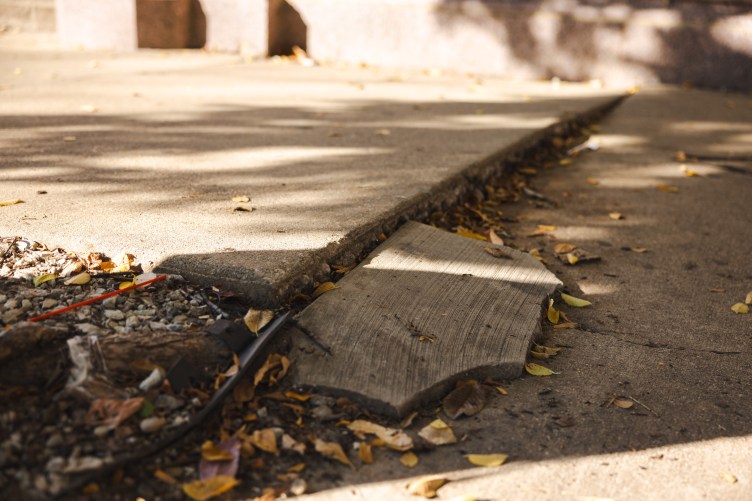
But she tripped over an uneven sidewalk on the South Side in 2022. As she fell, she struck a fence and suffered injuries to her head, neck, shoulders, hands and back that required surgery and almost a week in the hospital. Records describe the path as “unreasonably hazardous,” with a 2-inch difference in elevation between two portions of the walkway.
She sued the city for negligence and settled for $400,000 last year. It was one of more than 350 sidewalk-related cases the city has settled since 2010, records show. The city has paid at least $16.1 million to resolve such claims during that period.
Records and deposition testimony from those cases describe a largely reactive maintenance system that relies heavily on residents to report problems.
A city engineer testified in a sidewalk-injury deposition in 2024 that Chicago does not routinely inspect its sidewalks. He also said that employees investigating a complaint are not expected to identify other hazards nearby.
In separate testimony in 2017, another engineer said the city responded to about 13,000 sidewalk maintenance requests annually but had only a handful of crews rotating across Chicago to make repairs.
The engineer’s testimony in another case contrasted his professional desires with the limitations of his resources. “In a perfect world I would like to do that, yes,” he said about inspecting every sidewalk complaint.
He then added a caveat: “This is the real world.”
Injuries — and lawsuits — are not the only consequence of poor sidewalk maintenance. Iliana Haven, who uses a power wheelchair and scooter because of a neuromuscular condition, said they regularly encounter obstacles as they struggle to get around.
A thwarted trip to the Puerto Rican People’s Day Parade exemplified their problems as they encountered broken and uneven sidewalks on their scooter. After being unable to find a passable route, Haven called family for help.
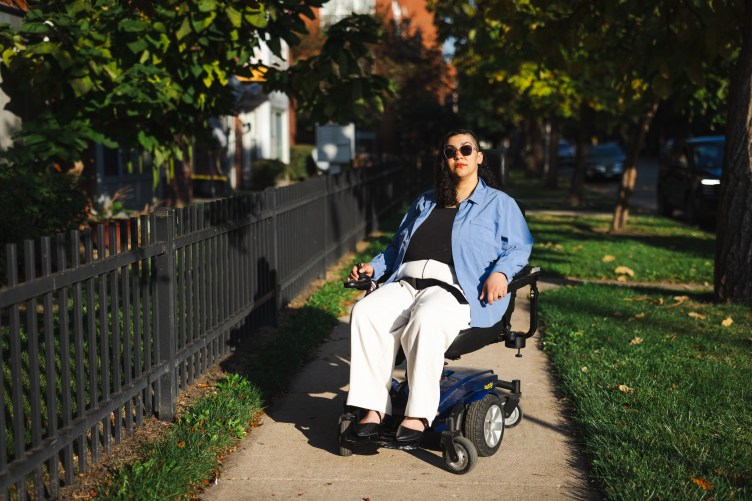
It took about 30 minutes for relatives to find Haven. Family members returned home to get a motorized wheelchair, which could more easily carry Haven to the event. But it had nearly concluded by the time everybody got through the entrance gate. Haven appreciated the help and took it with good humor, but the ordeal highlighted a lesson.
“It is a rule of mine to never leave anywhere by myself if I can help it,” Haven said.
They also understand the frustration of others challenged by sidewalks. The lack of access impacts businesses in the end, they said.
“There’s a huge number of disabled people in the city of Chicago. We would love to go and spend our money,” Haven said. “We can only do that if we can leave our house.”
The Debt Burden
After declaring that he would run again for mayor in next year’s election, Johnson gathered the media in early October to tout what his administration called a success story, a concrete example of his commitment to building up neglected areas of the city.
Under bright skies, he cut the ribbon on seven new two-flats in North Lawndale, a West Side neighborhood that has seen its population dwindle and its crime rate remain stubbornly high. The only way to reverse those entrenched trends, he said, is to create safe, affordable new homes that will allow Chicagoans to “put down roots and build wealth.”

The homes were built on city-owned vacant land; they also were built on more city debt. The Johnson administration used $5.4 million from the $1.25 billion Johnson borrowed in 2025 to fund housing and economic development projects across the city.
The debate over that borrowing crystalized Chicago’s current governing dilemma: Should it reduce its dependence on debt or address crucial needs for Chicagoans? And is it possible to do both?
Some alderpersons warned the city could not afford to borrow another $1.25 billion and questioned the wisdom of a payment schedule that avoids paying any principal until 2028. If that debt is not retired until 2055, as scheduled, taxpayers will have paid more than $98.9 million in interest costs alone, records show.
That borrowing is at the heart of Johnson’s attempt to expand the city’s economic capacity and invest in neighborhoods that have long been ignored by City Hall. His administration defends the borrowing by saying there is a plan to pay it back with a new approach that doesn’t affect taxpayers. Nearly four dozen tax-increment financing districts are set to expire by 2039, allowing more than $2 billion to flow back to the city, Chicago Public Schools and other taxing districts in coming years, records show.
Some alderpersons remain skeptical of Johnson’s budget strategy, and his overall financial stewardship was dealt a significant setback when Chief Financial Officer Ashlee Gabrysch resigned Friday. She described a deep rift with the administration over how to portray the city’s finances.
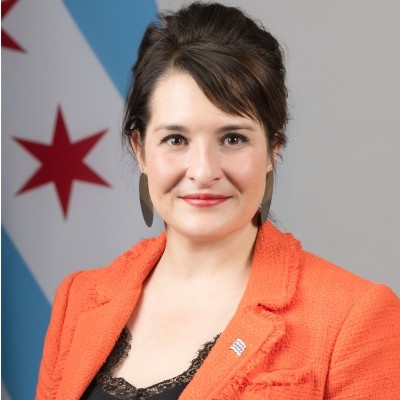
“The Chief Financial Officer’s statements about the City’s finances are relied upon by investors, rating agencies, City Council, and taxpayers, and they must be complete and accurate,” she wrote to Johnson. “I am not able to fulfill those obligations under the conditions in which I have been asked to serve.”
The city responded by criticizing her job performance, saying she had been “largely absent” as Johnson’s team worked on its 2027 budget.
In the aftermath, alderpersons are seeking an audit of city finances. A majority already have been sparring with Johnson over borrowing.
They moved in September to make it harder to take on new debt by requiring the votes of at least 30 alderpersons, not just a simple majority from the panel of 50. Johnson blasted that change, saying it would stop investment flowing to neighborhoods like North Lawndale, and vetoed it.
Justin Marlowe, a professor at the University of Chicago Harris School of Public Policy and the director of the Center for Municipal Finance, said Johnson faces hard choices as he tries to implement his agenda.
“I give the mayor credit for having aspirations to make housing more affordable and to expand behavioral and mental health care,” Marlowe said. “These are all noble goals. But the city can’t afford it.”
Less than two weeks later, Johnson was back at City Hall, giving his 2027 budget address and outlining his plans to fill yet another large gap. Among his solutions again was a corporate tax, which once again was deemed dead-on-arrival by key alderpersons. But the City Council may have no choice but to go along with Johnson’s plan for more borrowing.
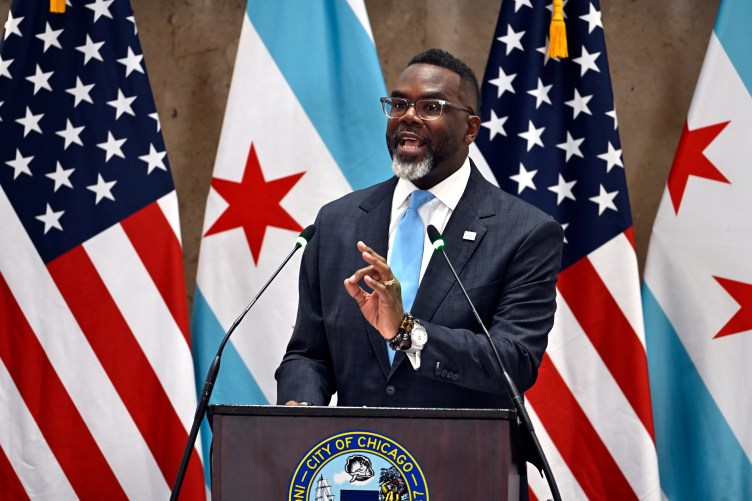
He proposed borrowing $481 million in 2027 to cover the cost of resolving lawsuits alleging that police misconduct led to wrongful convictions and deadly pursuits. If approved by the council, it would mark the second straight year that the city has borrowed to cover its bills, a move that financial experts consider a sign of worsening financial distress.
Marlowe said the city has no choice but to borrow to cover those costs, calling it the “least bad option” available to the city.
But Joseph Ferguson, who heads the Civic Federation, a nonpartisan budget watchdog group, was unimpressed by Johnson’s presentation. He’s seen a pattern over decades in which city officials plan to make it through the next election cycle or the next budget fight without looking toward lasting solutions.
Johnson’s plan, Ferguson said, shifts costs onto future taxpayers and only manages to “dig the city deeper into a financial hole.”
#Chicagos #Billion #Debt #Threat #City #Services #ProPublica