wellnessfitpro
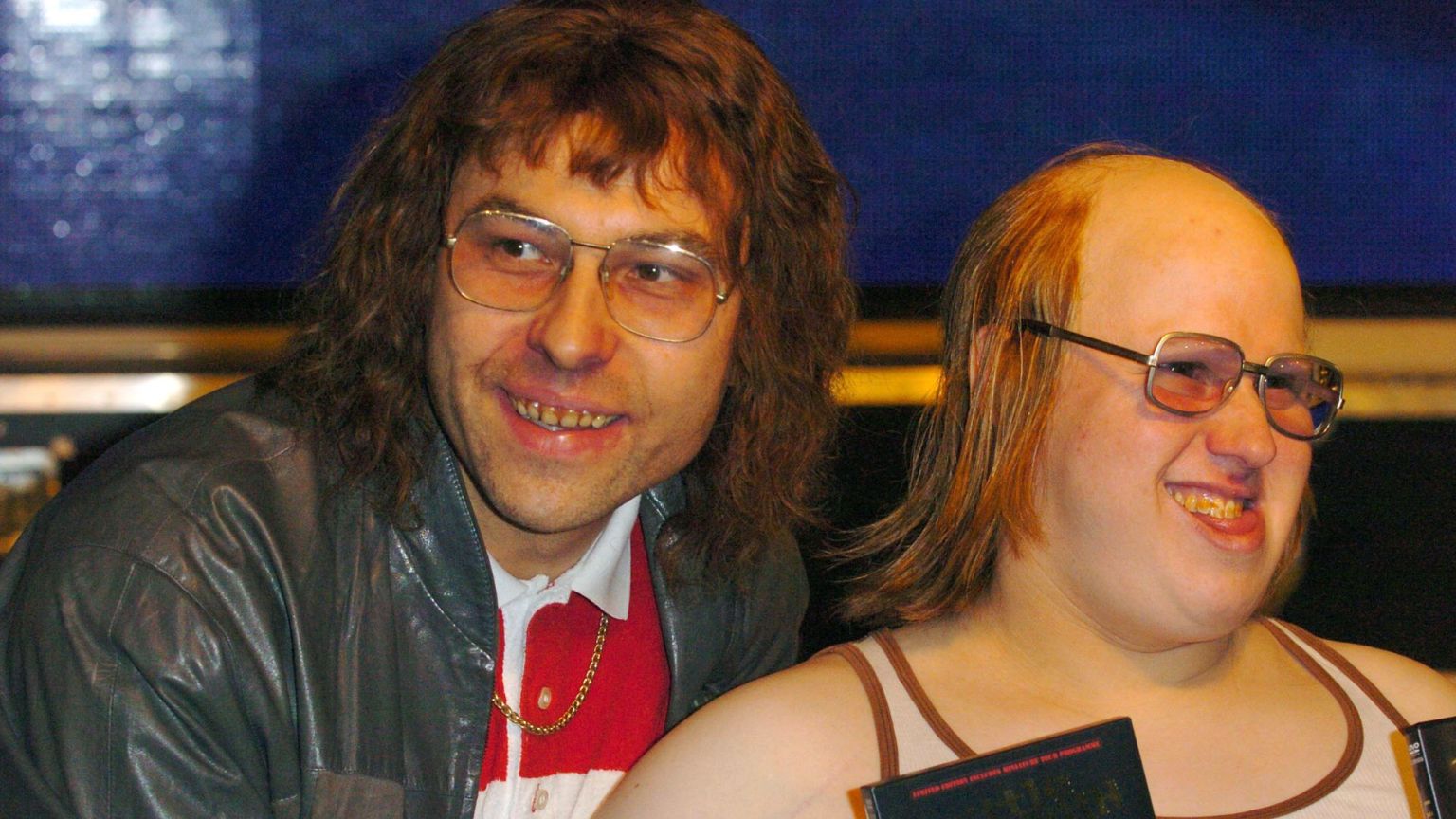
The recent press pile-on against Little Britain demonstrates just how quickly television history can be rewritten – in a manner that would make even the Politburo blush.
In the Independent, Charlie Brinkhurst-Cuff writes that she has ‘always hated Little Britain’ and that ‘rot was at the heart of everything David Walliams did’. In the Spectator, Alexander Larman describes the programme as ‘firmly of [its] regrettable time’. Nick Hilton, again in the Independent, regards the BBC sketch show as ‘symbolic of the bitter televisual landscape of the 1990s’.
Let me be clear: I am not here to defend David Walliams’s alleged personal conduct. I am here to resist the crude revisionism that now treats one of the funniest television programmes of the early 2000s as though it is and always was beyond the pale, even in its own time.
It is worth remembering just how popular Little Britain was. It won the BAFTA for best comedy in 2005, the National Television Award for most popular comedy in 2004, 2005 and 2006, and a Golden Rose in 2005. In all, it collected 29 awards between 2003 and 2007.
One of the few advantages of being an old git with a long memory for television comedy is that I was there on the front line of 1970s entertainment. The Benny Hill Show, Love Thy Neighbour and Mind Your Language spring immediately to mind. These programmes traded in broad racial and sexual stereotypes with an almost blithe indifference. Then came the explosion of alternative comedy, which set out to demolish the conventions, complacencies and assumptions of mainstream entertainment.
Little Britain, arriving in the wake of that revolution, was essentially post-alternative. It returned to grotesque character comedy, catchphrases and regional stereotypes, but did so in a television culture already transformed by the alternative movement. Its comedy was, in that sense, knowing: it played with the very conventions that an earlier generation of comedians had set out to dismantle. And audiences loved it.
A recent rewatch of the series served as a reminder of precisely why it had appealed to critics and hoi polloi alike. Unflinching in its creation of Rabelaisian grotesques, Little Britain spared no corner of the Great British public. High or low status, nobody was safe from its relentless excavation of human absurdity.
Much of the recent criticism, however, has focused on its supposedly unrelenting tendency to punch down. Certainly, many of its most memorable characters – the ‘chav’ Vicky Pollard, or the supposedly disabled Lou and his long-suffering carer, Andy – inhabit the lower reaches of the socio-economic spectrum. But I wonder whether some of the offence lies less with the people being caricatured than with the sensibilities of the liberal middle classes, who prefer their proletariat to remain reassuringly ‘salt of the earth’. The great unwashed, meanwhile, may be rather more capable of recognising the occasional grain of truth in an outrageous caricature.
And it is hardly as though the upper orders escaped unscathed. The hideous, grotesquely entitled Bubbles DeVere, and the hapless transvestites Emily and Florence, are lampooned just as mercilessly as the show’s working-class characters. The joke, ultimately, is that we are all ridiculous, provided someone is prepared to look closely enough.
Criticising Little Britain in light of the allegations against Walliams is an attempt to impose the moral assumptions of the puritan present on the cultural landscape of the past. Of course comedy should be open to retrospective criticism; it would be absurd to suggest otherwise. But there is a world of difference between acknowledging that certain jokes have dated badly and pretending that an entire programme was an aberration – an inexplicable lapse in the nation’s cultural judgement.
Little Britain was no accidental throwback to the bad old days of British television. It was a product of a comedy culture that had experienced the alternative comedy revolution, and was confident enough to revisit, subvert and play with the conventions that very revolution had challenged. Its humour was frequently grotesque, sometimes uncomfortable and, on occasion, indefensible. But it was also inventive, exuberant and very, very funny.
We should be perfectly capable of acknowledging all these things simultaneously. Otherwise, we risk reducing television history to a succession of moral verdicts, in which the only permissible response to yesterday’s entertainment is to explain why we ought to be embarrassed by it today.
And that, frankly, would be a rather miserable way to remember British comedy.
Andy Simpson is a writer.
#defence #Britain