wellnessfitpro
In 1963, the photographer Dmitri Kasterine heard that Stanley Kubrick was in London filming Dr Strangelove. Kasterine was a fan, so he approached the editor of Queen magazine and successfully pitched a feature on the director at work. Kubrick noticed him on set and said: “Would you like to come and work for me? You stand in the right place.”
Kasterine worked for Kubrick from 1963 to 1971, taking the stills on Dr Strangelove, 2001: A Space Odyssey and A Clockwork Orange. Kubrick taught the photographer the importance of courage, patience and perseverance.
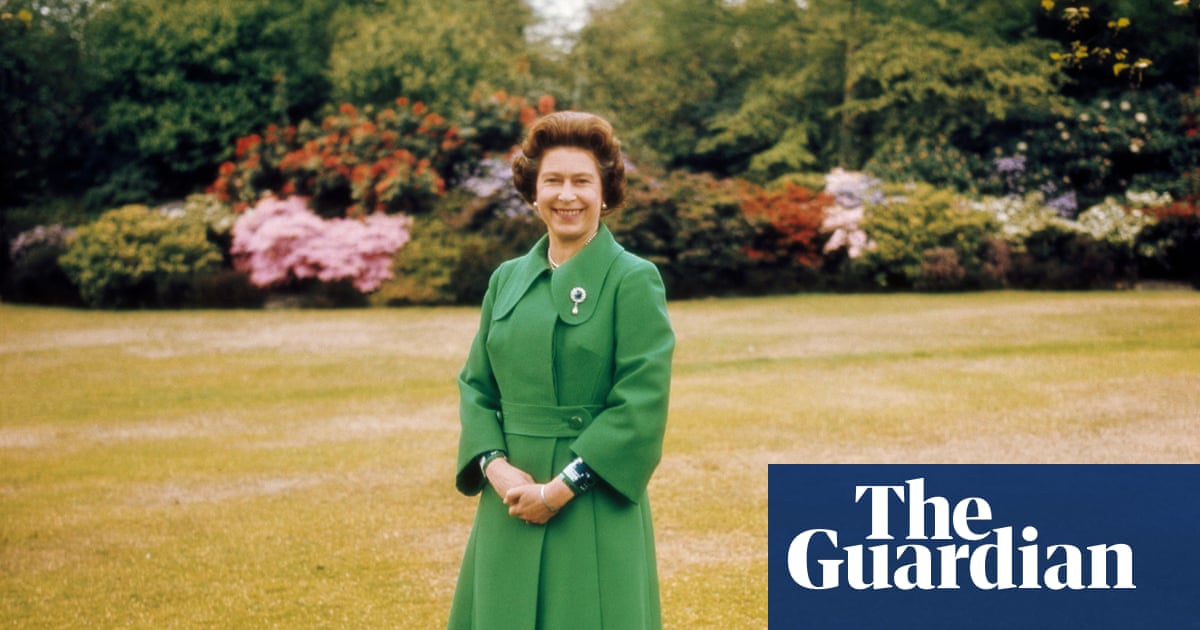
These lessons supplemented his photographic craft, honed since the beginning of the 1960s, creating a style that led to Kasterine, who has died aged 94, becoming one of the most significant portrait photographers of the 70s and 80s. He photographed James Baldwin, Michael Caine, Patricia Highsmith, Martin and Kingsley Amis, Tom Stoppard and Queen Elizabeth II for Harpers & Queen, Vogue, the BBC’s Radio Times and the Daily Telegraph magazine.
In his work, Kasterine wanted to “avoid the conventional” and prevent the sitter from “putting on a polite face”. He utilised his gentlemanly charm and elegance, putting the subject at ease before turning away, pretending to adjust his equipment, ignoring the sitter – attempting to catch them off guard, thus revealing something of themselves. This approach unveiled vulnerability in Dirk Bogarde, discomfort in Samuel Beckett and boredom in Muriel Spark.
In an interview with the reporter Bradley Towle, Kasterine said: “I look for something that gives me a shock. I look for something that has unusual elements. It could be what they’re wearing; it could be the background. It could be just an expression. I don’t really look for it, it comes to me.”
As well as his acclaimed portraits of the literati, he took great pride in a personal project undertaken between 1996 and 2018 in his adopted home of New York state. He had become fascinated with the city of Newburgh on the Hudson River, which, from being awarded the title of All American City by Look magazine in 1952, had become, by the 1990s, blighted by recession, corruption and racism. He set about to capture the decaying splendour of the city and, more importantly, the dignity of the overlooked, predominantly Black community that called it home.
In the introduction to his 2012 book, Newburgh: Portrait of a City, Kasterine wrote: “This is a record of uncelebrated and ignored people … But in the ruins of the buildings and in the faces of the people I see warmth and beauty, and in some of the faces a determination to change things.” Three years later, Kasterine filmed a documentary, Newburgh: Beauty and Tragedy. The city embraced his work, and 44 of his Newburgh portraits were mounted on the exterior of its Ritz theatre, from 2012 to 2026.
His photographs are held by the Royal Collection Trust and the National Portrait Gallery in London, and the Smithsonian Institution’s National Portrait Gallery in Washington DC.
Dmitri’s father, Nicolas Kasterine, had served in the Russian Imperial Guard and was the aide-de-camp to the Grand Duke Dmitri Pavlovich, who was involved in the assassination of Grigori Rasputin. Having fought the Bolsheviks in the 1917 revolution, Nicolas escaped Russia via Finland, bringing with him a large, uncut diamond, which, when in London, he sold to buy a suit and a sports car. There, Nicolas married Katherine White, the daughter of an insurance broker, and the young couple socialised with other Russian émigrés in Paris, Monte Carlo (where Dmitri’s elder sister, Irina, was born), and London.
The young family then settled in the village of Kemsing, near Sevenoaks, Kent, where Dmitri was born, named after his godfather, the grand duke. Kasterine’s parents divorced in 1935, and Katherine took her two children to live outside the village of Westerham, also in Kent. Nicolas died in a car crash the following year.
The second world war was a frightening experience for the sensitive Dmitri. Being close to Biggin Hill aerodrome, Westerham was frequently bombed by the Luftwaffe, and on his eighth birthday, bombs fell so close that the house was badly damaged.
When the air raids stopped, Katherine put up a bird table outside the kitchen window. Dmitri wanted to photograph the birds, so his mother bought him a camera. He built a dark room and excitedly developed the film. When he saw that the birds were pinpricks in the frame, he burst into tears. Undeterred, he moved on to cows in the fields, with excellent results.
After the war, Dmitri was sent to board at Radley college in Oxfordshire, where he remained until 1950. It was while at school that he learned of his mother’s death in a riding accident in 1948. He was just 15.
After leaving Radley and working briefly as a wine merchant and then for Lloyd’s of London, Kasterine, who had inherited a love of fast cars from his father, took up motor racing. In 1956, he suffered a life-threatening injury when the Lotus-Bristol racing car he was driving at the Aintree International meeting overturned and crashed through the safety barrier. A friend visited while he was recovering in hospital and suggested he take up flying. He did, and for a while he worked as a commercial pilot flying to Australia.
On a stopover in Karachi, Kasterine photographed the breaking-in of a young thoroughbred. Pleased with the result, and frightened of flying, Kasterine decided to take up photography professionally.
In London from 1961, Kasterine shared a studio with the photographer Michael Wallis, who mentored both Kasterine and their dark-room assistant, Patrick Lichfield. Dmitri hustled for work from magazines and sought out public figures to request a sitting, and his career took off.
In 1981 his first book, England and the English, was published. This gentle collection of portraits, daily life and landscapes was a swansong to the bucolic ideal of his native land. He needed a new challenge.
He had been to the US once, to photograph Mick Jagger in Los Angeles in 1975, and had visited New York City on the way home. He liked it, and moved there in 1984. There, he shot celebrated portraits of art-world luminaries such as Jean-Michel Basquiat, Roy Lichtenstein and Cindy Sherman, and commissions for the Sunday New York Times.
In his later years Kasterine moved to Garrison, in the wilds of New York state, with his second wife, Caroline (nee Cristofalo), whom he had married in 1988. There he took pictures of farmers and people who loved horses, and in 2021 he published a collection of his work, Who How When Where. After seven decades taking photographs, he was, he told Towle, still “… always on the lookout … It’s very difficult to explain exactly why and wherefore I take a picture, but it’s a silence; it’s a tap on the shoulder.”
He is survived by Caroline and their son, Nicholas; his children, Alexander and Cathy, from his 1963 marriage to Elizabeth Dickson, which ended in divorce, a daughter, Lucie, from a relationship with Frances Pemberton, and six grandchildren.
#Dmitri #Kasterine #obituary #Photography