wellnessfitpro
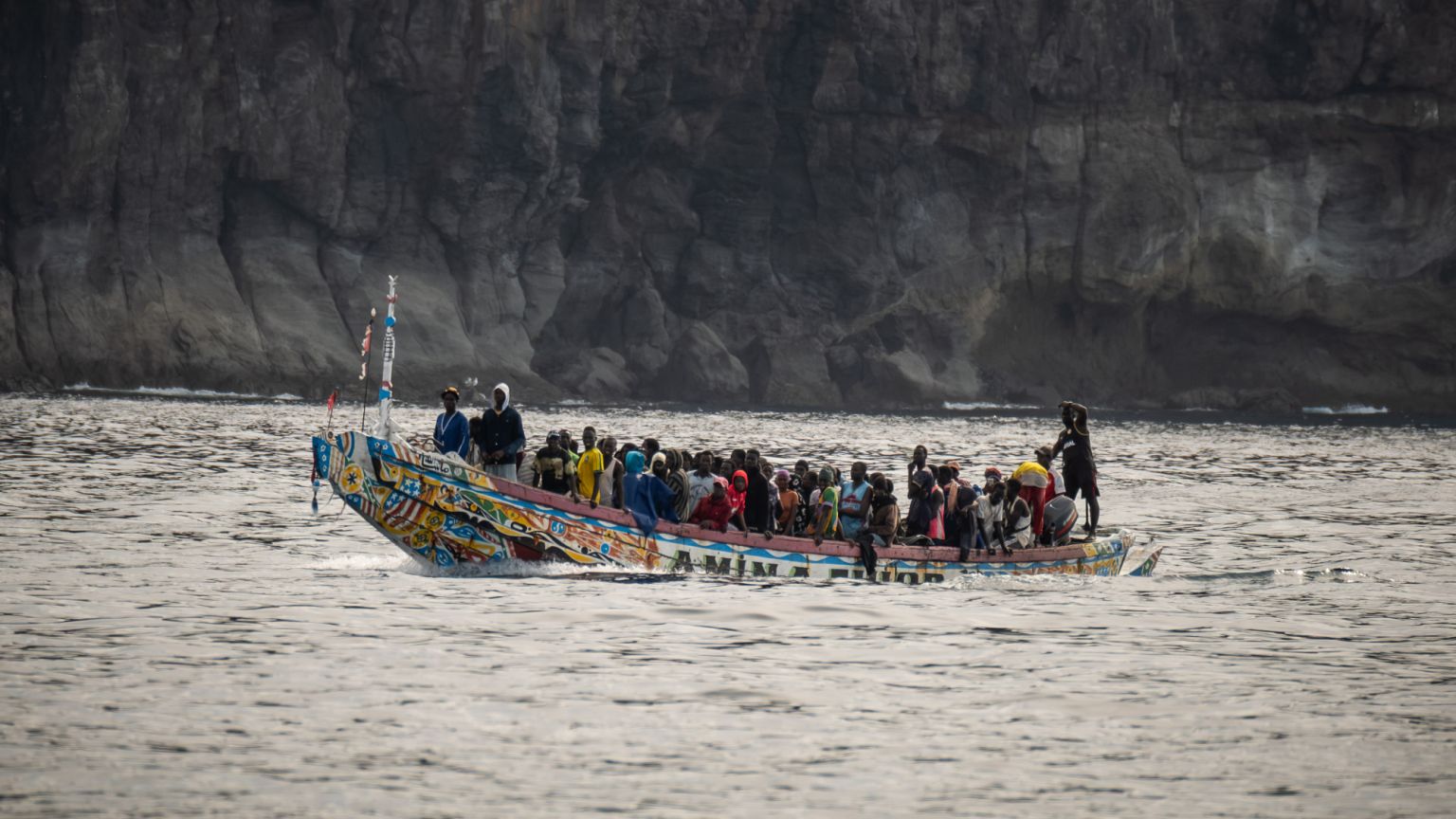
The migrant crisis on the Spanish island of El Hierro, in the Canary Islands, continues to grow. It provides yet another example of prime minister Pedro Sánchez’s reckless approach to immigration and border control.
The westernmost of the Canary Islands, El Hierro is home to roughly 12,000 people. Situated 65 miles off the northwest coast of Africa, it has long been a major entry point into Spain (and Europe) for migrants, but rarely in the numbers recorded over the past few weeks. Since the beginning of November, more than 11,000 migrants have arrived in El Hierro, often in small, weather-beaten fishing boats known as ‘cayucos’. So far this year, the volume of arrivals is up by 84 per cent compared with figures from 2025. The massive influx of people mainly from Senegal, the Gambia and Mauritania has overwhelmed healthcare services, and the government has now declared it an emergency.
There’s little doubt that many people flee West Africa for understandable reasons, from severe economic hardship to instability in the Sahel. But the policies of Sánchez’s coalition government have made the situation a thousand times worse. They have effectively encouraged thousands upon thousands of migrants to make the perilous journey in the hope of securing the right to live in Spain and, ultimately, the European Union.
The main source of encouragement arrived in January this year. That was when Sánchez bypassed parliament and issued a royal decree to regularise almost all ‘undocumented migrants’ on Spanish territory. It meant that anyone who could prove they had lived in Spain for at least five months gained the right to reside and work. They also acquired unfettered access to healthcare and education. Almost 1.2million illegal arrivals applied.
By creating such a huge pull factor for illegal immigrants, Sánchez’s approach has effectively created the migrant crisis in the Canaries. After all, we’ve seen this movie before. In late July, around 70,000 mostly Moroccan migrants broke into Ceuta, the Spanish enclave on the North African coast. Though many soon returned to Morocco, consequences of that border collapse have been far-reaching. Tourism in Ceuta has collapsed, schools were shut for weeks and reports of sexual assault rose dramatically.
Sánchez’s border-destroying policies, inviting tens of thousands into Spain pose a problem for other European nations. This is why even EU leaders, such as Danish prime minister Mette Frederiksen, a centre-left politician, have attacked the Spanish PM. Speaking at a summit in Brussels in October, she said that ‘one country is doing almost everything in the opposite direction of what the others are doing – in other words, you come to a country illegally, and suddenly you’re allowed to be there legally’.
Sánchez and his progressive coalition partners have responded to critics of their immigration policies with predictable accusations of ‘racism’ and ‘fascism’. But many ordinary Spaniards are tiring of politicians virtue-signalling over illegal migration. Former equality minister and Podemos member Irene Montero is a good example of the pro-migration ‘progressive’. She has condemned anyone describing the Ceuta crisis as an ‘invasion’, claiming they’re racist. Such accusations usually come from those, like Montero, who live at a comfortable distance from the deleterious consequences of Spain’s broken borders.
But after Ceuta and now El Hierro, change may finally be afoot. This weekend’s General Election could, if polling is to be believed, result in Sánchez’s departure from office. Whoever succeeds him must develop a better migration policy – a policy that balances humanitarian concerns with the needs of host communities, and, above all, protects the sovereignty of Spain.
Maria Reglero is a consultant on women’s rights based in Barcelona.
#Spanish #government #lost #control #borders