wellnessfitpro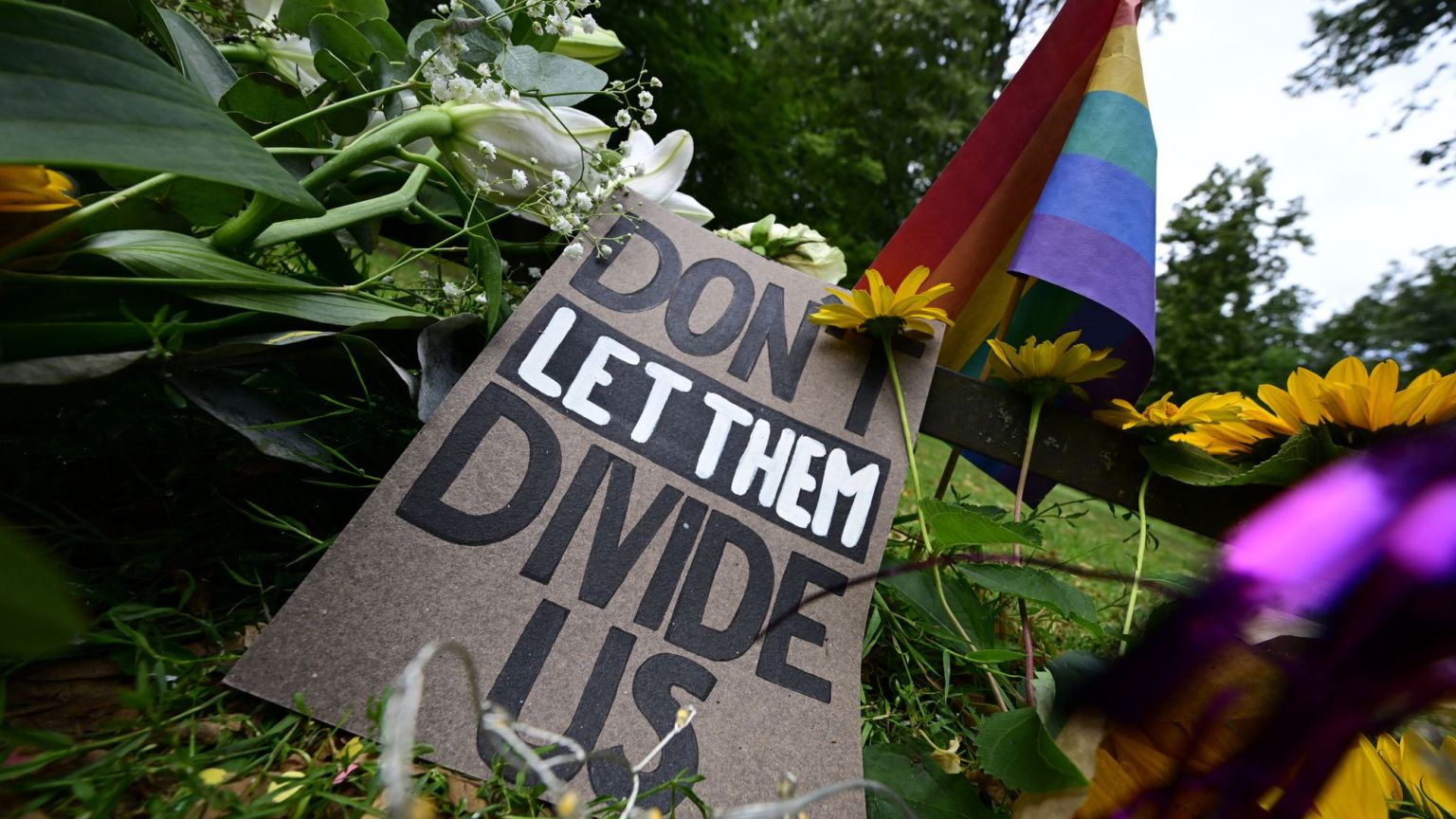
A week on from the murderous attack on Berlin’s Pride festival, new details continue to emerge. Investigators have found a video on the phone of the perpetrator, Abdul Ballout, in which he claims responsibility on behalf of Islamic State (ISIS). It has also emerged that two of his cousins were ISIS fighters, while his uncle – Omar Bakri Muhammad – is an influential Islamist preacher in London.
We didn’t need these latest revelations to know this was an Islamist attack. This was already clear from Ballout’s profile – he was previously convicted on terrorism-related charges and had travelled to the Middle East in an attempt to join ISIS. But for the government and security experts, the latest news only deepens the embarrassment.
German chancellor Friedrich Merz, in particular, will surely regret the dishonest comments he made in the immediate aftermath of the attack. Speaking at a memorial service, he mumbled something about ‘stupid platitudes and bad jokes’ being the cause of the tragedy – leaving out the word Islamism entirely.
For Merz, whose approval ratings are now so low that many consider his fall to be imminent, the situation is serious. To the majority of the German public, his speech only highlighted the government’s utter helplessness in the face of the Islamist threat.
Making things worse is the sense that Germans, in electing Merz, have been deceived. Before his election, he talked a big game, particularly on immigration and integration, and cast himself as a break with years of weak leadership. The public has hardly forgotten that this is the same man who, little more than a year ago, was voted into office on the promise of improving Germany’s security situation. There were the bold statements following the deadly attacks in Munich and Aschaffenburg in the spring of 2025, both committed by young men from Afghanistan. The limits of tolerance had finally been reached, the then-candidate for the chancellorship declared.
What a different figure Merz cuts now. The desire to deflect from the government’s obvious failure to prevent the attack, and speak plainly about the ideology that motivated it, appeared straight out of the establishment playbook. He left us with the gnawing suspicion that he was most worried about how the atrocity might boost the insurgent AfD. ‘Will the attack benefit the AfD?’ has become a nervous refrain in anti-populist circles, especially with the country heading towards important local elections in September – elections in which the AfD is expected to achieve its best-ever results.
To be fair, the Islamist threat itself is not of Merz’s making. He took office to find more than 9,000 Islamists already classified as an immediate security risk living in Germany. But he is responsible for the dishonest handling of the very serious problem in our midst.
This has been a trend across the German political class. It is perhaps best encapsulated by the constant, hollow appeals not to let these perpetrators ‘destroy our open society’. Critics have rightly pointed out that the permanent threat of terror has already destroyed much of what we once cherished as an open society: German Christmas markets and public events are increasingly cancelled, and, when they do go ahead, it is with significant security. Concrete barriers to prevent car-rammings are increasingly prevalent in city centres, as are passport checks just to enter a public swimming pool. The days when people attended public events without a second thought are long gone.
Occasionally, however, the truth slips through. In 2024, Berlin’s police chief, Barbara Slowik Meisel, warned about threats facing Jews and homosexuals in certain Berlin neighbourhoods with large Muslim populations. Visibly wary not to be accused of ‘Islamophobia’, she added that she did not want to ‘stigmatise’ any group.
A similarly revealing statement was leaked to the German public just a few weeks ago. A hitherto confidential report by Germany’s domestic intelligence agency, the Verfassungsschutz, warned that political Islam and Islamists are becoming – or have already become – deeply embedded in German society. Yet, clearly out of fear of German citizens’ reaction to such news, the report was confined to politicians’ eyes only, until journalists got hold of it.
Some figures in the German state appear to be aware that this obfuscation can only go on for so long. The public was right to ‘ask many questions’, said interior minister Alexander Dobrindt after last Saturday’s attack. New rules, he said, were needed to ensure ‘that individuals classified as security threats are not treated under juvenile criminal law and certainly not released on probation’, as had happened with Ballout. He also called for ‘restrictions on freedom of movement’, citing electronic-monitoring tags as one option, and even vaguely gesturing towards some form of ‘preventive detention for individuals classified as security threats’.
But in the eyes of far too many, the government, and today’s elites more broadly, have already lost this debate. They have simply done too little for too long. Trust in the administration’s ability to solve these problems and keep people safe has plummeted. This week, an opinion poll found that only 17 per cent of the public still have confidence in the state’s ability to fulfil its duties – of which guaranteeing citizens’ safety is surely among the most important.
Two opposing sides – the establishment and the public – now view each other with deep distrust. The establishment regards a growing share of its own electorate with fear and disdain. It seems to see people’s supposedly anti-Islamic prejudices as more of a danger than the threat of Islamism itself. On the other side stands an ever-growing segment of the public that views its own leadership as hopelessly incompetent – a view the establishment’s dishonesty has only confirmed.
Torn and conflicted, Germany right now is in real danger of coming apart at the seams.
Sabine Beppler-Spahl is spiked’s Germany correspondent.
#Berlin #Pride #attack #shames #German #establishment