wellnessfitpro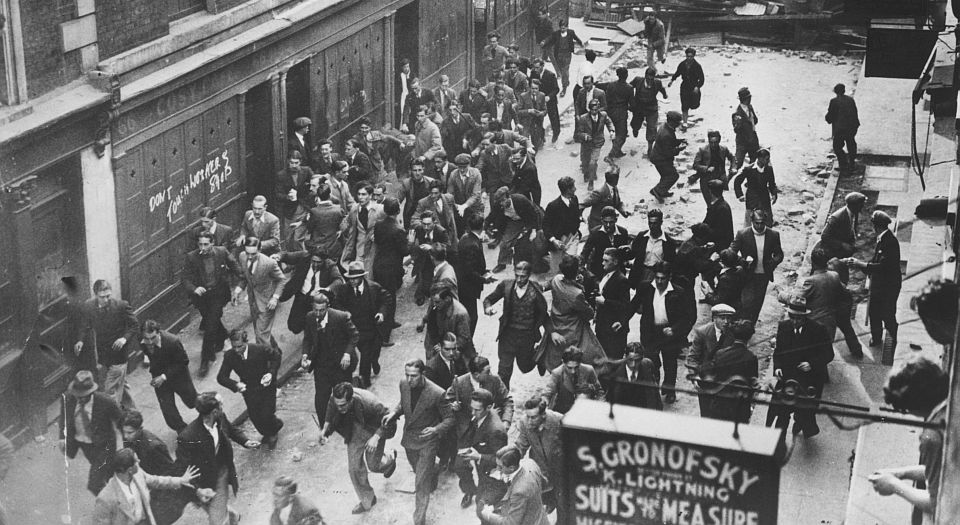
The Battle of Cable Street took place on Sunday 4 October 1936. Oswald Mosley and his British Union of Fascists (BUF) announced their intention to march, in military formation, through the working-class districts of East London. That part of London was home then to vast numbers of Jews. Around a third of Britain’s Jews lived there. They included historic communities who had come back to England in the 1650s following Cromwell’s reversal of the 1290 Expulsion of the Jews, and also more recent arrivals from the Russian Empire, which in the late 1800s and early 1900s had been gripped by the fever of anti-Jewish pogroms. And as early as 1936 there were Jews in the East End who had freshly fled the creeping menace of Nazism in Europe.
Given both their historical and living memory of anti-Jewish animus, it wasn’t surprising the East End Jews did not take kindly to Mosley’s planned march. They considered it an intolerable intrusion into Jewish life, a spectacle of hate designed to let London’s Jews know that they would fare no better than Europe’s Jews. That they, too, would be subjected to the supremacist provocations of fascism. So the Jews had a choice: Let it happen, and accept they would suffer the slings and violence of anti-Semitic dehumanisation as they had done in Russia, Poland and Germany. Or stop it, and in doing so lay a moral flag in the dirt, one that would make it clear that here, in Britain, fascism would not enjoy free rein. Here, Jews would fight back against the fate authored for them by the racist machinery of Nazism.
They chose the latter. They chose freedom.
They rose up, assisted by others in the working class: Irish dock workers, anarchists, trade unionists. On 4 October, on Cable Street and beyond, this ragtag army of resistance faced down Mosley’s 5,000 Blackshirts. They borrowed the cry of Spanish republicans who were then embroiled in a bitter civil war with Francoist nationalists: ‘They shall not pass.’ They availed themselves of whatever makeshift weaponry they could find and hit the streets to say No. They let the world know that fascism would gain no foothold in East London, and by extension in England, and that in fact England might prove to be fascism’s gravedigger.
It was on 26 September 1936 that Mosley first announced his intention to march through East London. He chose the date of 4 October as a celebration of the fourth anniversary of the BUF’s founding. The official organisations of British leftism agitated for a ban on the march. The Labour Party and various mayors from East London delivered a petition to the Home Office pleading for it to block Mosley’s men. The Home Office refused. The Jews of East London became restless. They started to plan a counter-rally. That panicked the media classes and progressive organisations almost as much as the Blackshirt rally did. From the left-wing Daily Herald to the Jewish Chronicle, from the Labour Party to the Communist Party, the cry went out: Don’t counter-march. Don’t risk violent clashes. Don’t be hooligans.
#left #betrayed #spirit #Cable #Street