wellnessfitpro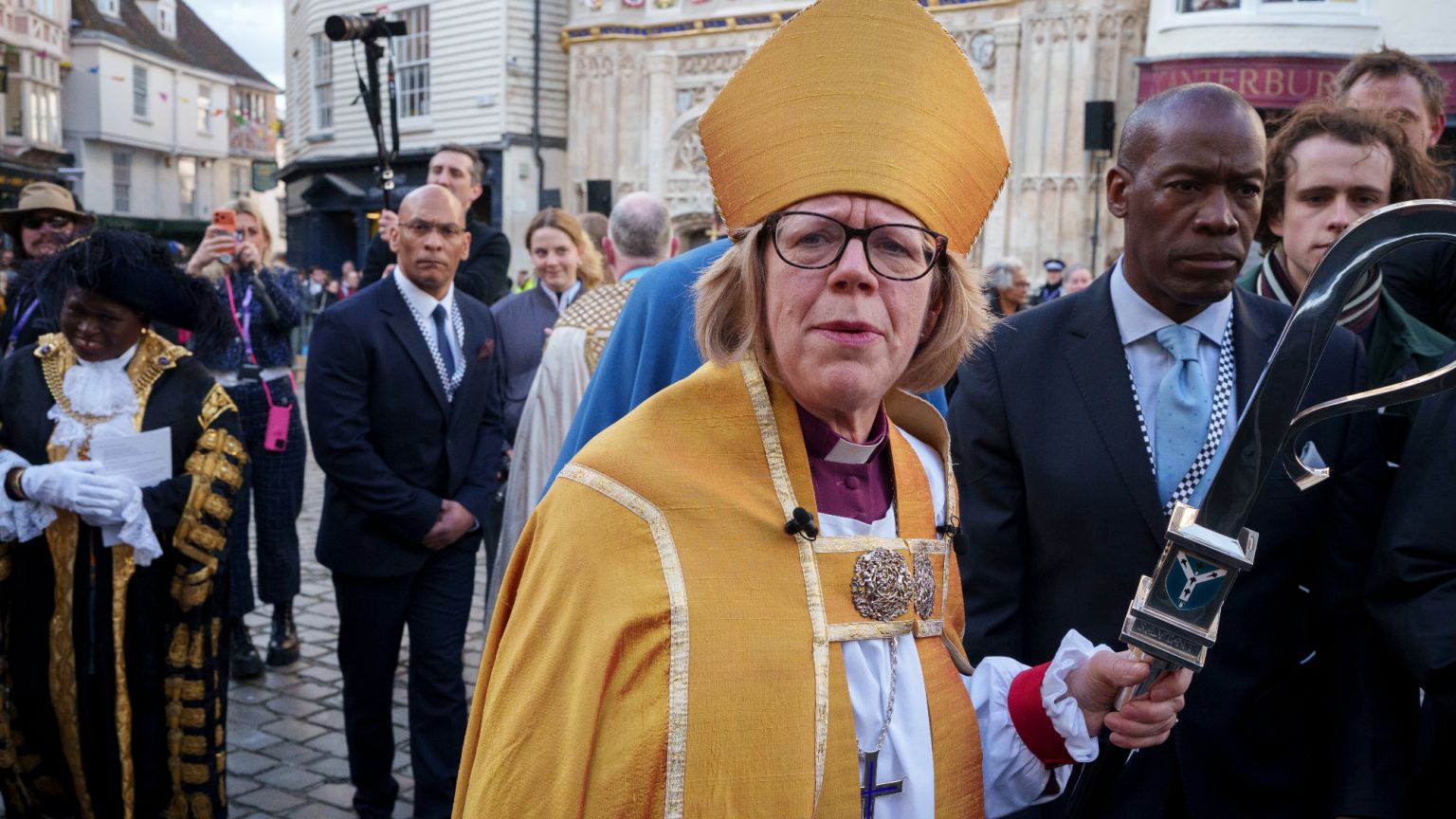
You can see why the Church of England thought ‘Project Spire’ would be a good name for its multi-million-pound ‘reparations’ scheme. Yet if Archbishop of Canterbury Sarah Mullally or her predecessor Justin Welby had read William Golding’s The Spire, this might have given them reason to reconsider.
Golding’s story of Dean Jocelin, a man consumed with an obsessive determination to build an enormous cathedral spire despite the building lacking adequate foundations, makes for an unfortunate analogy. Ignoring all warnings, Jocelin’s mad vanity project consumes vast resources and ultimately brings ruin and suffering to himself and others.
Had the current or past Archbishop of Canterbury paused to reflect on this precautionary tale of grand moral vision detached from reality, they might not have embarked on their foolhardy ‘Project Spire’, which will result in the Church of England giving up £100million for its role in the transatlantic slave trade.
I am not a member of the Church of England, and yet as someone who spends ever more time in church and is probably on a slow and steady path to Christian worship, I have an interest in this scheme.
Nothing in Project Spire appeals to me or what I want from church. It is not only intellectually lazy and ethically dubious, it is also – on a practical level – ruinous. Quite literally. We have parish churches, in desperate need of roof and other repairs, that will lose out on funding support because random Ghanaians or Cameroonians who never experienced the harms of slavery are somehow judged to be deserving of a windfall. And while the church insists Project Spire will not reduce parish funding because it comes from a separate endowment, the reality is that the £100million used for reparations cannot be used to support ministry or preserve church buildings.
Indeed, there is a cruel irony in the name given to this project when it will have the effect of reducing central church support for the repair of spires. Like that of St Mary the Virgin in Bottesford in Leicestershire – its celebrated 212-foot medieval spire is one of the finest in England and is suffering from structural issues and deteriorating stonework.
What I find interesting is what motivates all this. Who is Project Spire for? Are there millions of Nigerian Christians putting pressure on the church over this stuff, or is it driven by Mullally herself? What good does it do? We all know the slave trade was wrong – we also know Christians like William Wilberforce and the Clapham Sect were at the forefront of ending it, often at great expense to themselves. It was the Royal Navy’s West Africa Squadron that patrolled the seas to supress the slave trade after Britain had led the way in abolishing it in 1807. Indeed, parish churches up and down the country sent petitions to parliament calling for abolition long before the legislation was passed.
Who does it benefit to go on about the historic slave trade? If it is being done with an eye to the congregations of the future, it is a remarkably short-sighted ploy. Having spent considerable time in West Africa, where Mullally made a trip this week, I am convinced that obsessions over the distant past preoccupy the minds of ordinary people in Africa far less than they do self-flagellating white liberals in the developed world.
I suspect the motivations are not even as pragmatic as filling the pews. Instead, as so often with the woke shibboleths of our age, I suspect the call for reparations comes from a mix of guilt, partial historical knowledge and weakness in the face of shouty activist groups.
This despite the powerful moral case made by Nigel Biggar, regius professor emeritus of moral theology at Oxford University, who has pointed out that we can accept the grave evil that slavery represented, without concluding that this imposes on us a duty to pay reparations. After all, so much time has now passed and Britain has already expended significant resources abolishing slavery. It would also be extraordinarily difficult to identify the victims or beneficiaries today, and, most important of all, Brits today should not bear moral guilt simply because of the possible actions of some of their ancestors.
Or what of the arguments of distinguished historians like Robert Tombs? He has persuasively shown that the reparations argument is flawed on historical grounds, pointing that Queen Anne’s Bounty investments in the South Sea Company are not obviously linked to the slave trade.
Speaking of keeping true to history, in meeting the King of the Ashanti in Ghana last Wednesday, one would have hoped Mullally would have been reminded of the role the Ashanti Kingdom played in the transatlantic slave trade during the 18th and early 19th centuries, and which became an important source of the Kingdom’s wealth and military power. Most historians reject the idea that the trade was simply imposed by Europeans, instead recognising that it was a commercial system in which African states and merchants exercised agency as did European slave buyers.
But the argument against reparations need not rely only on the fact that the historical case is disputed, or on Christian morality’s position against assigning inherited guilt. Nor even on the question of what the law allows, when the Church Commissioners’ endowment is held for statutory purposes, such as supporting the ministry of the church and parish life, rather than for international money transfers. There is also the simple fact that this crusade risks politicising and disunifying the church. Instead of uniting worshippers around the Christian faith, a church that allows itself to become a vehicle for contemporary political causes undermines its moral authority and alienates ordinary churchgoers.
Mullally may be more interested in reparations than repairs. But she should ditch the progressive crusades, and focus on fixing some church roofs.
Ameer Kotecha is CEO of the Centre for Government Reform. He was formerly a senior diplomat, serving as the head of the British consulate in Russia from 2023 to 2025.
#Church #Englands #ruinous #reparations #racket