wellnessfitpro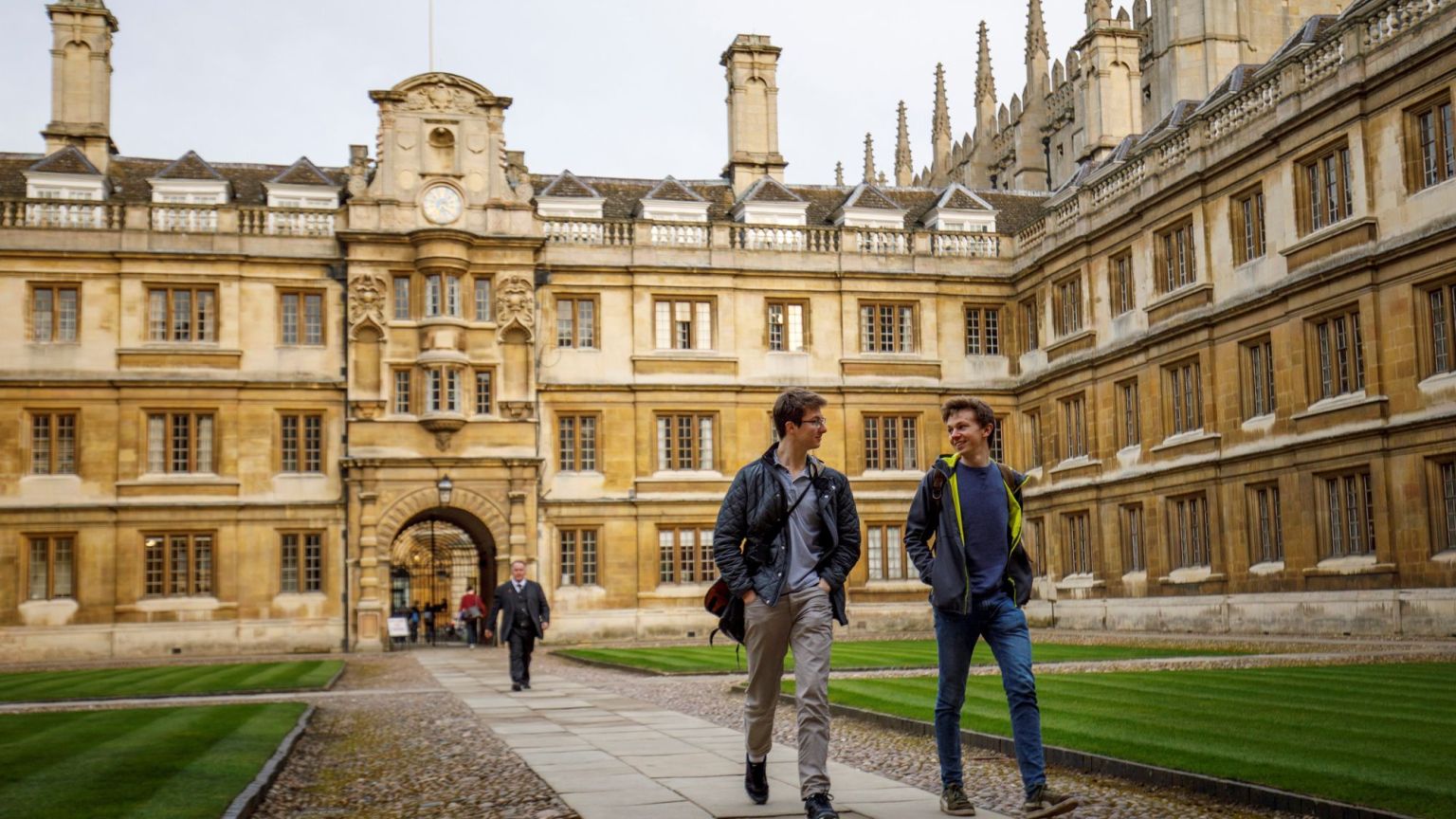
To understand the making of the emperor’s new clothes, count the tailors.
The University of Cambridge maintains an Office of External Affairs and Communications with nearly 40 named staff. Six of them are press officers in the narrow sense, and there’s a head of media and five communications managers. Another seven sit in research communications. Around them cluster a five-strong directorate, four public-affairs operatives, seven people doing social media and video, four on web and email, three on internal communications, three designers and a three-person brand and trademark team, which exists, presumably, to protect the brand.
Then count the moral tailors. The central equality, diversity and inclusion section, nested within human resources at the Old Schools (the university’s central office), has a section head, three EDI consultants, a co-ordinator and an administrator. That is before the separate race-equality team, before the disability service, before the EDI officers salted through every faculty, before the college-level apparatus.
None of this comes cheap. These posts sit on the university’s single-salary spine. A communications manager or an EDI consultant occupies roughly the £43,000 to £56,500 band, heads of section run towards £67,000, the deputy directors to £76,000 and the executive director of communications sits somewhere north of £83,000 on a spine that climbs, for the most exalted, past £213,000. Cambridge employs more people and on better salaries to manage its reputation than most national newspapers employ to report the news.
And what has all this machinery delivered? In March 2023, it delivered Jason Arday, appointed professor of sociology of education at 37, celebrated everywhere as the youngest black professor in Cambridge’s history, a man whose account of himself – nonverbal until 11, barely literate until 18, doctorate by 2015 – was promoted by the press office and the newspapers with the credulity of a parish magazine reviewing the vicar’s marrows. He was made a fellow of Jesus College. He was garlanded with honorary degrees. He was, in the ugly phrase of the trade, a comms asset.
Then a researcher named Nathan Cofnas started reading. He alleged that substantial passages of the 2015 thesis were lifted from an earlier dissertation, copy-editing errors and all, and raised questions about the biography, the honorary posts, the whole glittering edifice. Liverpool John Moores University, which awarded the doctorate, investigated and found no misconduct, attributing the problems to ‘honest and reasonable error’.
Arday has denied all wrongdoing throughout, and the Good Law Project (of course) published an open letter / fund-raising campaign / petition on his behalf. He is entitled to a defence, and the courts of academic inquiry have not yet concluded.
But what did all those tailors do? In June, Cambridge’s official response to the questions was to denounce a ‘vile campaign’ to undermine his credibility. Not to examine the claims. Not to say nothing, which is what a competent press office says while it checks the facts. It decided instead to smear the questioner.
Eight weeks later, Cambridge announced a fresh investigation into Arday’s qualifications and honorary appointments, and within days, on 5 August, he resigned with immediate effect from his chair and from his Jesus College fellowship, citing the toll of relentless accusation. Whatever the investigation eventually finds, the institution managed, in a single summer, to be both attack dog and prosecutor, to vouch and to recant, and to do it in front of every newspaper in the English-speaking world.
Fox News covered it. Al Jazeera covered it. The Free Press covered it. The damage at home is serious. The damage abroad, where Cambridge’s name is the product, is very serious indeed.
The Good Law Project’s open letter pronounced the allegations entirely false, the work of a right-wing smear campaign, and gathered some 14,000 signatures. Archived versions show the text was then quietly rewritten under the signatories’ feet. The claim that two universities had conducted thorough investigations disappeared. Cambridge names were trimmed or shorn of their affiliations. No note disclosed the changes. And now, after Arday’s resignation, the Good Law Project’s founder, Jolyon Maugham, explains that it merely chose ‘to carry’ the letter, ‘a deliberately neutral verb’. Fourteen thousand people signed that letter after the Good Law Project urged them to. They are now left holding a courier’s receipt.
And what of the master of Jesus College? Sonita Alleyne made her career running a media-production company before she came to preside over Arday’s college, so she of all people knew what an open letter is for and what a signature on one does. She signed anyway, and she signed as master, lending not merely her name but her office to a text declaring the allegations entirely false. The master of a college is not a fan with a lanyard. She holds a position of trust over her college’s fellowship. Had any question of a fellow’s integrity come before the college, its master had already published her verdict. Then the letter started to slough its Cambridge names, affiliations melting from the page. Within the week, Arday had resigned and the Good Law Project’s founder was recasting the whole exercise as neutral carriage.
Thirteen press officers, six diversity professionals and not one of them, apparently, empowered to ask the only question that mattered: Is the story true?
Pity the fundraisers. Cambridge’s Development and Alumni Relations Office employs more than 140 people, bleeding 310,000 alumni, fresh from a campaign that raised over £2.2 billion for the university and its colleges. Jesus College runs its own small Development and Alumni Relations Office and was lately recruiting a major-gifts officer to persuade donors that Jesus College is, in the words of the advertisement, a place where ‘academic values’ are a ‘core concern’ and ‘freedom of thought and expression is paramount’. Somewhere this week, a development officer is preparing for a call with a hard-headed benefactor in Houston or Hong Kong who has read the coverage and wants to know why his money endowed a pedestal rather than a scholarship. That officer did nothing wrong. The comms directorate and the EDI section built the pedestal, wrote the press releases, commissioned the photography, and the fundraisers will spend the next decade dealing with the aftermath. My sympathy stops only at the door of anyone who knew the clothes were imaginary and kept stitching.
Because that is the real scandal, and it survives whatever verdict the investigation returns on the man himself. Hans Christian Andersen’s tailors did not merely sell the emperor an invisible suit. They created a court in which no one dared say so, because to see nothing was to confess oneself unfit for office.
Cambridge (among countless others) has built exactly that court, staffed it generously at £43,000 to £83,000 a head, and when Cofnas finally shouted from the crowd, the university’s first instinct was to accuse him of lèse majesté. The tailors are still on the payroll. The emperor has resigned. The procession, one gathers, will continue.
So the question asks itself, and the donors, the alumni and the taxpayers who underwrite this establishment are entitled to an answer. All those salaries, all that machinery, all that curated virtue. What are they for?
Gawain Towler is a commentator and an elected board member of Reform UK.
#Emperor #Ardays #clothes #spiked