wellnessfitpro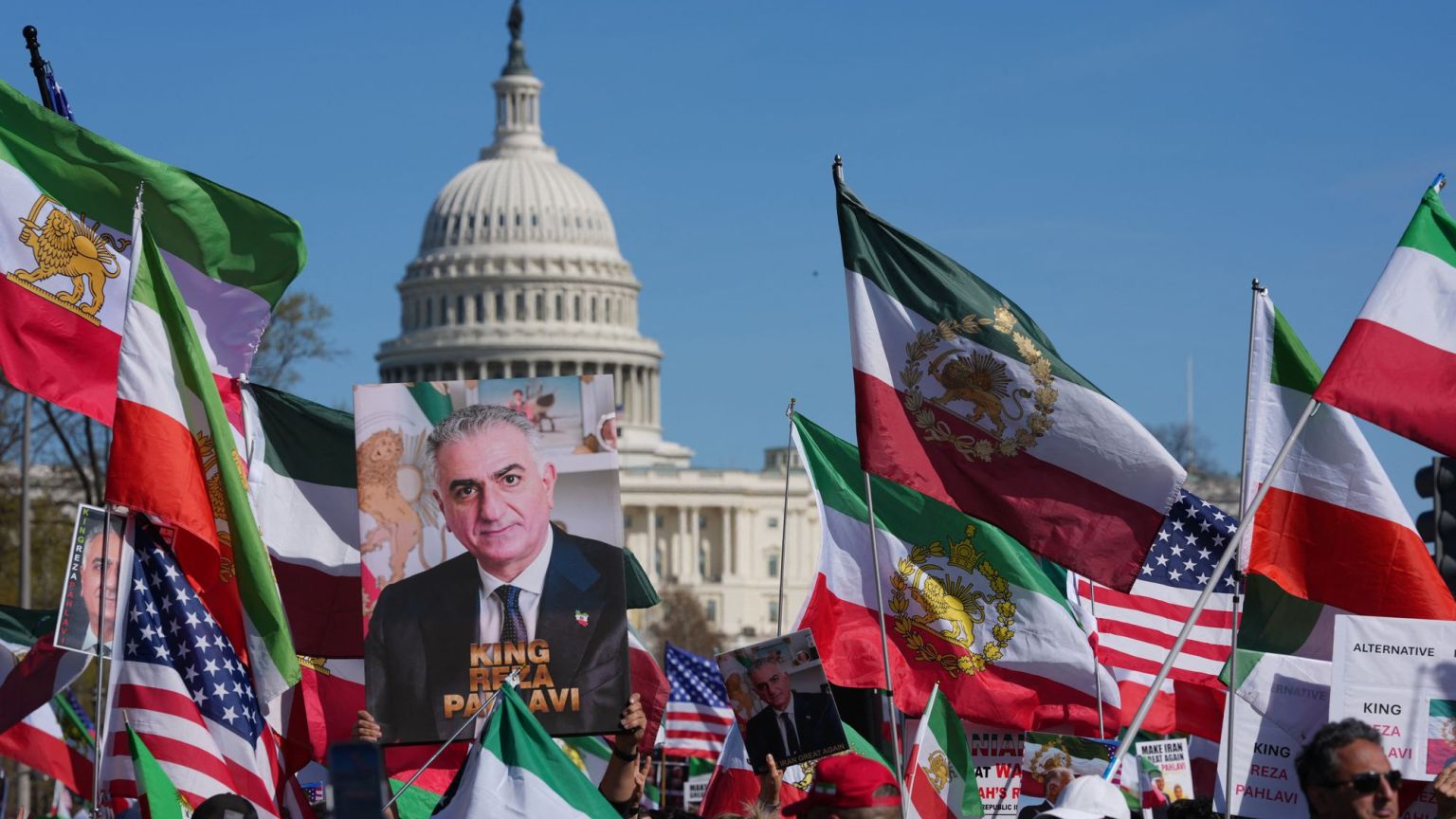
Psychologist Dr Nezhat Farnoody sits in her well-appointed office in Irvine, an upscale, modern city about an hour and a half south of Los Angeles. She and her daughter, Nelly (who is also a psychologist), spend much of their time listening to Southern California’s Persian elite, a community caught between a country that welcomed and nurtured them and their mother country, Iran, with which the US is waging an on-again, off-again war.
‘I think this is the first time my doctor told me to take sleeping pills’, she admits. ‘People are trying to close their eyes to the suffering, but they can’t.’
Farnoody left Iran in the 1980s. She was unhappy with being forced to go through ‘ideological school’ at Tehran University, part of an intimidation campaign by local Islamic enforcers. The elegantly dressed 79-year-old says her clients are torn between love of their native country and hatred for the current Islamic regime.
Nowhere is this dissonance more widely felt than in California, which is home to over 45 per cent of the estimated 500,000 Iranians in the US, notes a new Chapman report from geographer Ali Modarres. This population is concentrated in southern California, with the best-known Iranian enclave in west Los Angeles, which is sometimes referred to as ‘Tehrangeles’.
California’s Persian population is doing well socio-economically, with its incomes well above the national average. Much of the money initially came from real estate but now comes from everything from medicine to the technology sector. In LA, ultra-decked-out homes, often decorated with pillars, are sometimes referred to as ‘Persian palaces’. Iranians account for an estimated quarter of the population of Beverly Hills, whose mayor, Sharona Nazarian, came from Iran to California as a child.
‘Our success is that of immigrants’, suggests Sid Mahasseb, a serial LA entrepreneur with several start-ups under his belt. ‘You come here to exchange a bad situation for a better one. We are more American than the Americans.’
Rather than detest America, they have thrived here. Professor Modarres explains that this reflects in part the fact that most came as students or as skilled immigrants. Overall, more than 50 per cent of those over 25 hold a bachelor’s or master’s degree; another 20 per cent have a doctorate or professional degree, figures well above the national average.
In fact, they may be among the most degree-fixated populations in the country. Many came here for education. Persians talk about getting degrees more than getting rich, although ideally, they can do both – and have. Even many of the Islamic Republic’s regime’s small cadre of backers are teaching at universities in both the US and the UK. It could serve as a good Plan B, a sinecure in an atmosphere often as hostile to the West as Tehran.
To be sure, there are some exceptions. Some US-based Iranian ‘nepo babies’ have been accused of both sending money to the regime as well as gun-running. There are also reports of Iranian agents planning assassinations of American-based dissidents, as well as attacks on synagogues and other soft ‘Zionist’ targets. Similar threats have been reported in the United Kingdom.
More subtle efforts, led by Trita Parsi, co-founder of the Quincy Institute for Responsible Statecraft, which has criticised the US’s war with Iran, have raised the hackles of US officials. They see Parsi as a propagandist for the regime and have considered deporting him. Another prominent Iranian, Jamshid Ghomi, living in a Newport Beach manse, has been arrested for allegedly shipping over 250 metric tonnes worth of computer networking equipment to Tehran. He has been linked to the Iranian nuclear program as well as giving aid to the IRGC.
Then there are the activities of Hamideh Soleimani Afshar, the niece of the late General Qassem Soleimani, the commander of the Quds Force, an Iranian Revolutionary Guards Corp (IRCG) division primarily responsible for military operations abroad. He was someone with American blood on his hands. Working with Soleimani’s grandniece, she promoted the puritanical regime even as they lived the high life – the grandniece even showed herself off in risqué outfits that could prompt a whipping or worse back in the home country.
But most Iranian Americans tend to be opposed to the Islamic Republic. A survey conducted last year by the Public Affairs Alliance of Iranian Americans found that barely three per cent of Iranian Americans favour the current regime, with an additional eight per cent welcoming a reformed Islamic Republic. Among regime opponents, 11 per cent would like to see a constitutional monarchy, while 55 per cent would like a parliamentary democracy.
Any attempt from the outside to put Reza Pahlavi – the exiled son of the old shah of Iran – back on the throne would likely be opposed by many Iranian Americans. ‘A lot of people who support the shah have never lived under him’, suggests 81-year-old Kamron Jabbari, who runs Mazda Publishers, a prolific producer of books about Iranian culture. Jabbari, who came to the US at age 19, is part of a strong contingent, in southern California and elsewhere, which feels that Iran has had enough autocrats, whether they wear a crown or a turban.
Jabbari has published a remarkable book, A Modern Theocracy, co-authored by Monsour Farhang, who served briefly as Iran’s ambassador to the United Nations, and John Limbert, a diplomat and former hostage. It reveals the deviousness of the Islamic Republic. Ayatollah Khomeini, the founding father of the Islamic Republic, used maslehat – or expediency – to fool his allies on the left and liberal centre until he was ready to silence, imprison or execute them.
‘He was a perfect Machiavellian leader’, explains Farhang. ‘He said he was not interested in power, but he had a coherent idea of what he wanted to do.’ Like many more moderate figures, Farhang was quickly purged as Khomeini consolidated power. But at least he escaped with his head. Iran leads the world in per-capita executions and appears to be accelerating the pace, having executed close to a thousand new victims since January.
John Limbert, the former hostage and Farsi-speaking ex-diplomat, tells me that America gravely missed the Islamist threat developing during the 1970s and 1980s, in large part because it remained primarily concerned with anti-Communism. He describes US policy towards Iran, now and then, as ‘confusion compounded with ignorance, compounded by hubris’.
Both Limbert and Farhang scoff at the notion that there are moderate figures with whom to make peace. They document how the supposedly important political figures have had decreasingly little power over the past four decades. This reality seems not to have dawned on vice-president JD Vance, who fell for the fantasy of Iranian moderates that has seduced every administration since the Jimmy Carter presidency.
The Islamic Republic, Limbert and Farhang insist, is vulnerable. It has lost the ‘trust’ of its people, with most estimates putting interior support at below 20 per cent. That will not change until the regime’s core – the mullahs and the IRGC – are out of power.
They warn that the zealots are not susceptible to threats to infrastructure or even starvation. The bombing may have decapitated the most powerful figures, but their murderous policies and acolytes remain in power. ‘You are not going to change this with bombing’, Limbert suggests. ‘The people on the top don’t care if the country is turned into a pile of rubble as long as they rule the pile of rubble.’
The reality remains that the current regime is unlikely ever to embrace conditions that would be acceptable to the US. Given Iran’s history of foreign domination, both from Britain and the US, supporting a local insurgency could prove the best approach. ‘I think the changes should come from inside Iran, not outside’, notes publisher Jabbari.
Of course, not all anti-regime activists are opposed to current US policy. Nick Arazatash, who runs a construction firm in Orange County, remembers the country as being much like California, with mild weather and spectacular topography. Like others, he recalls a more tolerant place where Muslims co-existed with minorities like Baha’is, Christians, Zoroastrians and Jews. ‘We need to get rid of the fanatics ruining Iran’, the 61-year-old told me. ‘If I were young enough, I would join the US Navy if I could.’
Most Persians I interviewed were more ambivalent. Many may despise the current regime but are concerned about the impact of US airstrikes on their friends and family back home. The Public Affairs Alliance says the findings ‘illustrate a community torn between supporting action against Iran’s nuclear ambitions and opposing military confrontation’.
Many like Farnoody were shocked by President Trump’s intemperate threat to destroy Persian civilisation, something that well predates Islam (not to mention MAGA) and flourished as among the most powerful empires of the ancient world. If he did so, he would be completing the work of the mullahs, whose goal is to supplant a magnificent national heritage with post-national Islamism.
Many American Iranians’ biggest concern lies with the innocent people caught up in the military exchanges. Ordinary Iranians now suffer horrendous economic conditions, with 70 per cent of the population at or teetering towards poverty. The Wall Street Journal suggested the country’s economy is heading into a ‘death spiral’.
Despite their concerns about the military campaign, many American Iranians fear ‘a deal’ that leaves the current government chastened, but still in power. There’s great support for finding ways to undermine the regime from within, aided by the diaspora. ‘I wonder if Trump can bring regime change’, suggests Narges Rakin, a dean of Humanities at Cerritos College in south Los Angeles County. ‘It can be done. If they all had Starlink, it would kill them.’
Like Cubans in Florida, Persians in California are eager to re-engage with their homeland – not by moving back, but by providing technical assistance, relief and investment capital. More than that, they are proof positive that the ‘Great Satan’ is not quite as Satanic as the mullahs insist. It’s clear that many Persians flourish in the American ‘Hell’.
These immigrants could prove critical to rebuilding the shattered country, much as exiled Cubans look towards the reconstruction of their motherland. ‘I would love to rebuild Iran’, says construction executive Arazatash. ‘All of us want to help, not to make money, but to restore a great country.’
‘Our hearts are in Iran’, notes Farnoody. ‘You don’t have to lose your culture when you leave the country.’ Her cautious hope is that a combination of pressure and internal dissent can transform Iran once again into ‘a civilised country’, one befitting its storied past, as opposed to its very ugly present.
Joel Kotkin is a spiked columnist, a presidential fellow in Urban Studies at Chapman University in Orange, California, and a senior research fellow at the University of Texas’ Civitas Institute. Find him on Substack here.
#Meet #American #Iranians #caught #crossfire