wellnessfitpro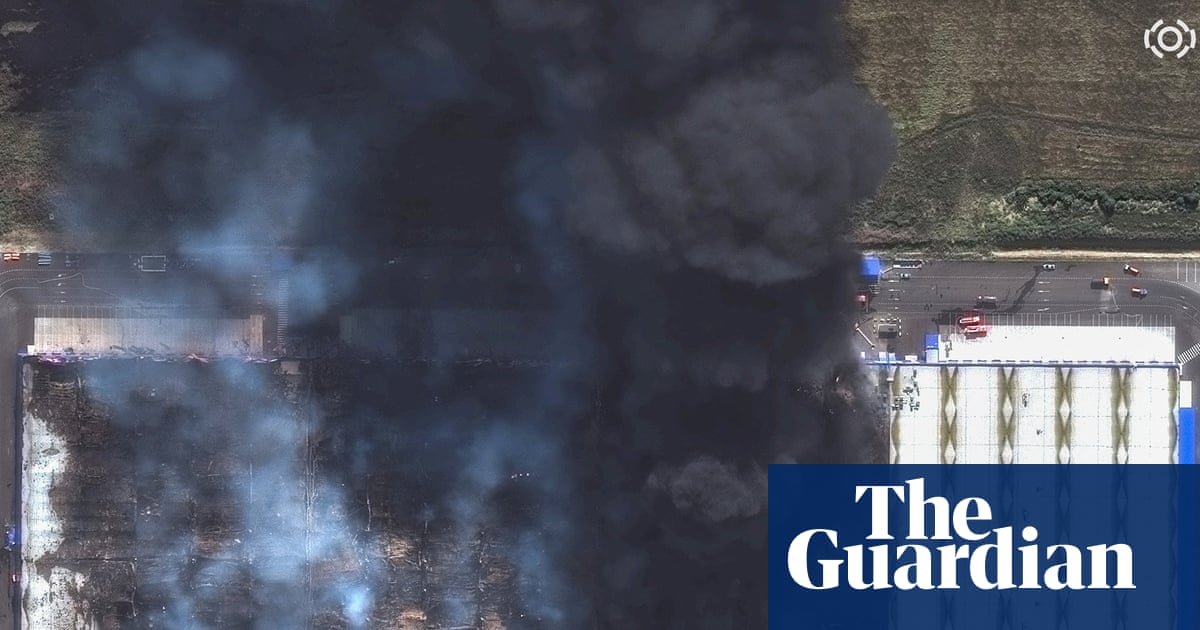
Ukraine has targeted four more warehouses of Ozon – Russia’s second-largest online retailer after Wildberries, which has itself been crippled by Ukrainian attacks. Ozon’s shares fell by almost 30% on Monday after it reported strikes in southern Russia that brought to six the number of its facilities targeted within three days. Ozon said a logistics hub in Makhachkala in Dagestan was on fire and had halted operations after a drone attack in which “several people” were injured. Another was on fire in Enem on the outskirts of the city of Krasnodar, while workers were evacuated from warehouses that came under attack in Adygeysk, in the Adygeya region, and in Nevinnomyssk in the Stavropol region.
In earlier events, drone strikes halted work at an Ozon logistics centre in the Samara region and another in the Orenburg region. Financial analysts said that unlike privately owned Wildberries, which has the backing of state-owned bank VTB, Ozon’s main shareholder AFK Sistema has a large debt and is unlikely to provide substantial support. Before the latest Ozon attacks, Vladimir Putin promised state help in the restoration of warehouses “at a new technological level” and asked the government to design a programme to help the sector. The EU imposed sanctions on Ozon’s and Wildberries’ financial units on 24 July.
Putin has geared up the Russian state to seize control of companies like Wildberries and Ozon, as well as fuel companies and transport operators, by deeming them too poorly protected from Ukrainian attacks. Special powers set out in a presidential decree will allow the state to take charge of them at a time when Ukraine has stepped up drone attacks on oil refineries and e-commerce warehouses. The state will be able to seize physical and financial assets, and assume formal ownership rights, if entities responsible for such facilities are judged to have failed to protect them and are too slow to repair them after any attack. It applies to fuel, energy, industrial, communications, transport and logistics facilities and other objects regarded as critically important for security and economic stability.
The Ukrainian military struck a Russian Mig-29 fighter plane and two Russian vessels in the Black Sea, Ukraine’s drone forces commander Robert Brovdi said on Monday. It is the third Russian warplane hit in two days. Brovdi said on the Telegram app that one of the vessels attacked was a tanker and the other was a bulk carrier. Ukraine’s military struck a Russian military plant at Kamensky in the Rostov region, causing a fire, the Ukrainian general staff said. The plant produces solid rocket fuel for Russian weapons.
The Perm oil refinery, Russia’s seventh-largest by volume, has shut down after a Ukrainian drone attack on 21 August, two industry sources told Reuters. The primary CDU-4 unit, which accounts for almost 40% of the plant’s capacity, stopped working on that day. Repair works could take between one and two weeks. Another primary refining unit, CDU-5, which accounts for 34% of the plant’s capacity, has been idle since a 29 July drone attack. Lukoil, which controls the refinery, did not reply to a request for comment. The plant usually makes millions of tonnes of petrol and diesel.
#Ukraine #war #briefing #Ozon #Kyivs #sights #sheds #Wildberries #rival #burn #Ukraine