wellnessfitpro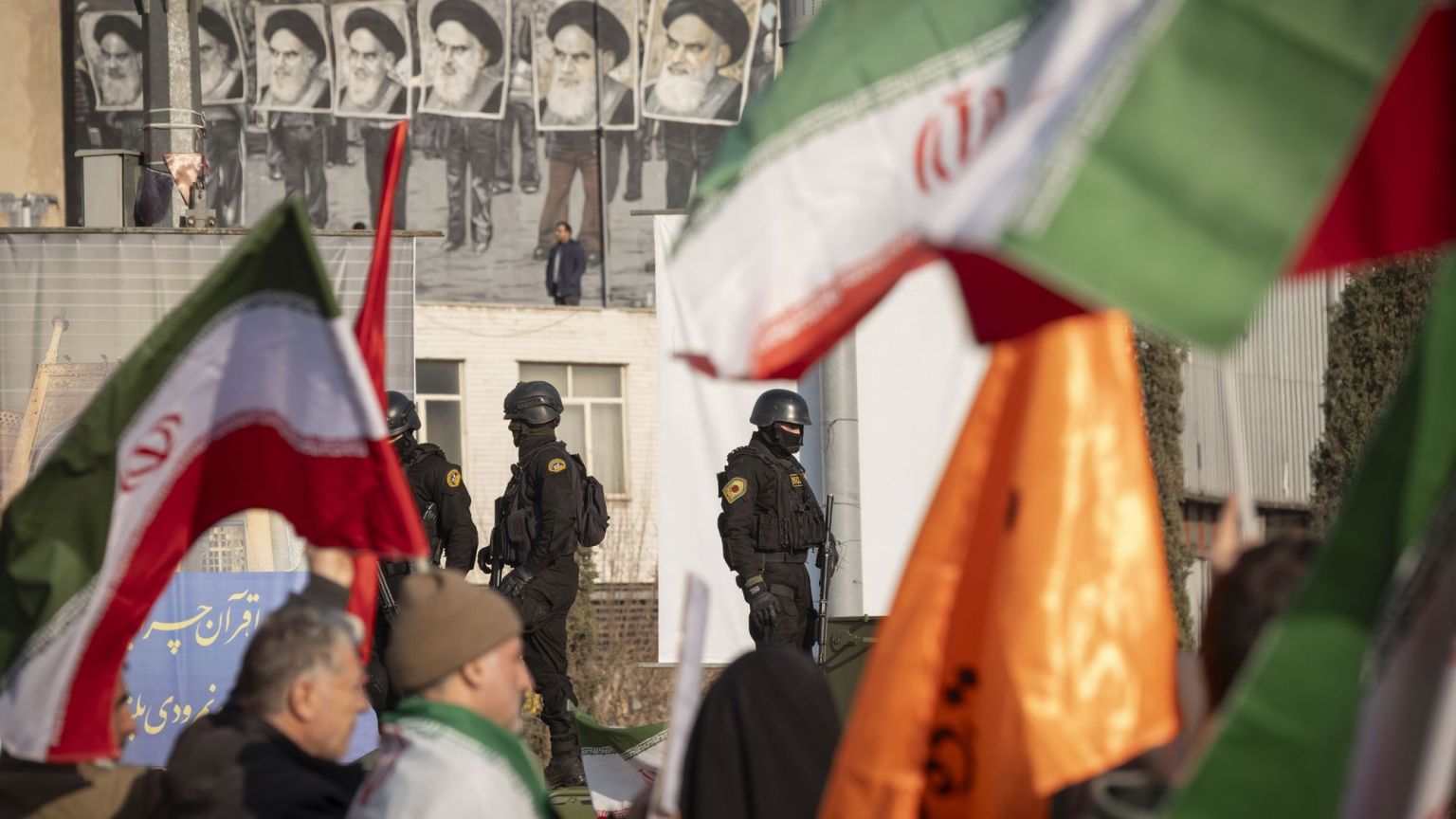
Since the news broke that the Iranian parliament is planning to criminalise talking to foreign media outlets, my father has been telling me to stop. Stop writing, stop getting involved, stop speaking to people abroad, stop doing anything that might make me visible. My friends have been calling too, usually with the same question: ‘Aren’t you going to leave? Isn’t it time?’
I am a 24-year-old philosophy researcher living in Iran. I run the Persian-language philosophy magazine, Praxis Publication. Yet somehow the ordinary question of what I should do with my life has been reduced to whether I should leave my country in order to keep doing the things I came here to do.
I understand my father’s view, which makes the whole thing harder. He just wants his son to be safe. When parliament starts discussing laws that could turn contact with foreign institutions into a security matter, a father does not sit down with the legal text and analyse every clause. He looks at his son and thinks about an email, a conference, an article, a conversation with someone abroad, and whether any of these ordinary things could later be given a very different meaning. My friends understand this, too. They are not telling me to leave because they have stopped caring about Iran. They are telling me to leave because they can see what happens when people begin calculating the risks of ordinary human contact.
On 16 August, Iran’s parliament approved the general framework of a bill presented as a measure against foreign influence. Its individual provisions are still being debated and it still has to pass further stages before becoming law, but the direction is already clear enough. The proposal would restrict contact with certain foreign media and institutions and put new controls on academic and scientific cooperation with overseas organisations. The published draft also envisages prison sentences for some unauthorised academic cooperation.
Yet when I think about this bill, I do not first think about parliament. I think about a camera on my desk. Not long ago, I was sitting in my room, recording myself speaking to a camera so that I could send a presentation to the Discourse in Public Spaces (DIPS) conference at the University of Hamburg. I was supposed to present there in person, but the war had closed embassies and made travel impossible, so I recorded myself instead. I stopped and started again, tried to make an argument clearer, looked at the screen, started another take and eventually sent the file to people in Germany who wanted to hear what an Iranian researcher had to say. There was nothing mysterious about it. There was no secret meeting, no intermediary, no intelligence operation. There was a young man at a desk trying to communicate an idea to others at a university in another country.
That is what makes the whole discussion so strange. Academic life is made out of precisely these small, almost boring acts. You send an email to a professor whose work you have read. You ask a question. Someone sends you a paper. You disagree. You translate a passage because you want to know exactly what the other person means. You discover that a word does not quite exist in your own language, so you have to find another way of saying it. You go to a conference and find that somebody has been thinking about your problem from an angle you had never considered. None of this is an optional extra attached to the pursuit of knowledge. This is what academic research and scholarship are. The danger of turning these connections into security problems is therefore not simply that some researchers might lose access to some universities, conferences or journals. The more serious danger comes before the punishment. A student thinks twice before writing to a professor abroad. A researcher decides that a particular conference is not worth the risk. Someone avoids a journal because its location looks inconvenient. Another person quietly chooses a safer subject. Nobody has arrested them. Nobody has even called them. They have simply learned to anticipate trouble, and that anticipation begins doing the work of censorship all by itself.
This is how intellectual culture becomes sterile without anyone ever having to announce that knowledge is forbidden. You do not need to tell a young person, ‘Do not become a researcher’. You only need to make him wonder whether becoming one is worth the trouble. I keep thinking about my younger brother. What am I supposed to tell him? Study hard. Learn languages. Read widely. Go to university. Become a researcher. Speak to people who know things you do not know. And then, somewhere at the end, add the warning: just be careful who you speak to, where you send your work and which university invites you. At some point, that advice becomes absurd. Education is supposed to teach a young person that the world is larger than the room he is sitting in. It should make him curious about what he has not seen, not train him to recognise the boundaries beyond which he is not allowed to see. If my brother grows up thinking that knowledge becomes dangerous when it travels too far, then the damage has already been done, even if he never receives a prison sentence.
This is why I keep coming back to language. I work in the humanities, where words have a habit of crossing borders even when governments do not like them to. A concept arrives in English and I try to bring it into Persian. Sometimes there is already a Persian word waiting for it. Sometimes there is not. Sometimes the translation sounds awkward, and that awkwardness is useful because it forces me to stop and ask what the original idea actually means. Sometimes the Persian language changes the foreign concept. Sometimes the foreign concept changes the way I understand something I thought I already knew.
That is not cultural surrender. It is how languages live. Persian has never been a sealed container, and neither has English. Languages borrow, argue, imitate, resist, misunderstand and change one another. They take words from elsewhere and make them their own. They encounter something they cannot quite express and stretch until they can. A language that never meets another language does not become pure. It becomes smaller. The same thing happens to a person. This is why I find the usual definition of freedom of speech too narrow. We often talk about freedom as though it means being allowed to say something. But freedom also means being allowed to let what you say go somewhere. I want to send an email to a professor abroad and receive an answer. I want someone in Hamburg to read an argument written by someone in Iran and tell me what I have missed. I want to read something in another language and become annoyed by it, persuaded by it or forced to rethink my own position. I want my words to encounter another mind. And I want that mind to be able to answer.
That does not mean I think a foreign professor is automatically wiser than an Iranian one. He might be wrong. His theory might be useless. His assumptions might be completely foreign to the life I know. Good. Let us argue about them. If his argument is bad, let me show why. If mine is bad, let him show me. If an idea is useful, let me take it. If it is foolish, let me reject it. I do not need the world outside Iran to agree with me. I need to be able to disagree with it. That is what intellectual freedom looks like when you strip away the grand language. It is also why the language of ‘foreign influence’ becomes dangerous when it begins swallowing ordinary forms of contact. There is a difference between espionage and scholarship, between an intelligence operation and an email, between recruiting an agent and inviting a researcher to speak at a conference. A conference in Hamburg does not become a conspiracy because it happens in Hamburg. A professor does not become a spy because he teaches outside Iran. An article does not become an act of infiltration because somebody abroad reads it. If the state cannot tell the difference, it teaches people to see ordinary human contact as suspicious. Once that happens, the damage does not stay inside universities.
A country that prevents its citizens from speaking freely with the outside world eventually loses something itself. People inside become less able to explain what their lives actually look like, and people outside become less able to understand them. Everyone has fewer chances to discover that the picture they carry in their head is incomplete. People stop comparing experiences. They stop testing assumptions. They become more certain inside smaller worlds. You can still see the sea through a window, of course. You can watch it, read about it, know that it stretches far beyond the walls around you. But seeing the sea through glass is not the same as being able to reach it. That is what worries me about isolation. It does not merely make us know less. It makes it harder to discover what we do not know.
My father tells me to be careful because he loves me. My friends tell me to leave because they want me to have a future. I cannot dismiss either reaction as cowardice. They are responding rationally to a choice that should never have been placed before us in the first place. But I still have one question that I cannot get rid of. Why should I have to leave? Why should a 24-year-old Iranian have to choose between belonging to his country and being intellectually free? Why should my younger brother have to wonder whether becoming a scholar is worth the risk? Why should I have to think twice before sending an email, recording a conference presentation or speaking to someone whose language and experience are different from mine?
I do not want special permission to think. I want the ordinary freedom to let a thought travel. Everyone keeps telling me to leave. I understand the fear behind it. But I cannot accept the idea that the only way to remain intellectually free is to abandon the people whose lives I am here to understand. I want to speak to the world without having to leave home first. That should not be a radical demand.
#Iranian #clampdown #spiked