wellnessfitpro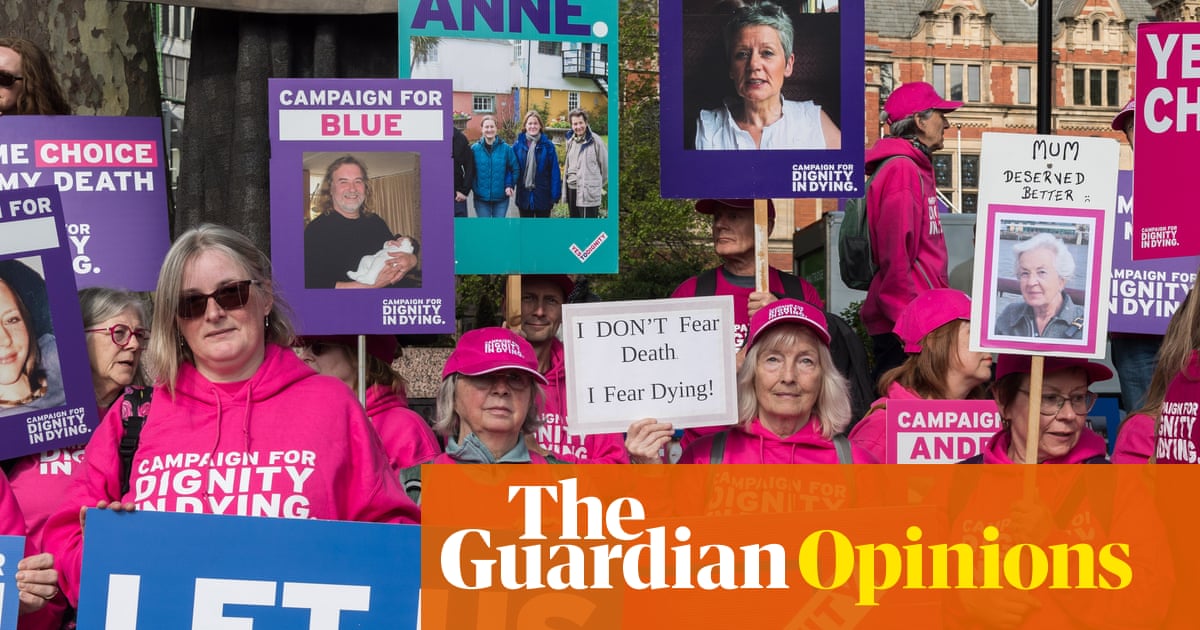
Once in a while, footsoldiers of the House of Commons, you are able to make history by leaving your own indelible footprints on the social fabric. Eras with a Labour majority always leave a legacy of progressive freedoms – whether on abortion, capital punishment, divorce, gay rights, racial discrimination, gender equality or, last time, civil partnerships. But tomorrow is your final chance to bequeath one of the last freedoms over our bodies: the freedom of the dying to choose when to depart them.
The terminally ill adults (end of life) bill, which goes for a second reading vote in the Commons tomorrow, gives anyone who is dying the right to request and be provided assistance with ending their lives. If it fails to pass, that’s the end of it for the rest of this parliament: future parliaments may be less progressive. So please, MPs: turn up and vote on Lauren Edwards’s bill, to ensure this Labour era leaves its own great social-reforming milestone.
Understand the horror: on the day you read this, as on every other, an average of 17 people will die in unspeakable pain, disgust and terror that nothing can relieve. “Some will retch at the stench of their own body rotting. Some will vomit their own faeces. Some will suffocate, slowly, inexorably, over several days.” This is recorded in The Inescapable Truth, a report by Dignity in Dying, in which palliative care staff reveal what is usually kept hidden from us: the shocking last months for the unluckiest, which any of us might be forced to endure, or watch a loved one suffer through.
That amounts to thousands of us a year, as reported by the Office of Health Economics, which counted the cases of unrelieved pain even among dying people who had the best palliative care. Opponents of assisted dying say that we should focus on improving access to and provision of palliative care, but even then many will die in agony. Even the best care will not always prevent suffering. And why condemn those who are suffering today to wait for palliative care improvements that they may not see in their lifetimes, when we could help end their pain now?
Any MP not voting for the bill tomorrow must be honest: their personal decision will force thousands of people a year to exit life through a torture chamber. None of us can know if we will be among them when our turn comes, but all of us will live with the fear of it.
Over the decades that I have been writing about the right to die, I have encountered all kinds of tragic cases. I think of the man in severe pain who drove his electric wheelchair through fields towards a river to throw himself in: his battery ran out and he was found weeping in despair. Or the suffering, bedridden grandmother I interviewed who was carefully planning her own rational death. “An end, no more muddles and puddles,” she said, pluckily, wanting to relieve not just her misery but her family’s from the distress of watching her die. Her plan to take her life didn’t pan out as she imagined – her chosen method was barbaric and took a long time to work, leaving her family miserable, furious and divided between themselves about blame.
Dignity in Dying’s new report, Out of the Shadows, records the hidden harm of people trying to kill themselves for lack of a medically assisted death. The dread journey to Dignitas in Switzerland, costing about £15,000, is a grim, friendless ending for hundreds that has to be undertaken too soon, before the dying person is too sick to travel.
Most of all, I think of my mother dying wretchedly of liver cancer, begging her GP to kill her. “Where’s Dr Shipman when you want him?” she asked him. Or of my friend Jill Tweedie, the much-missed Guardian writer, suffering from motor neurone disease, who died in 1993. After her diagnosis, she asked me to make sure that she could always die whenever she chose. The prospect of death was only bearable if she could at least control her ending: she was afraid of leaving it too late and being forced to endure the unendurable. When her breathing became wheezy, the sign of what she feared most – slow asphyxiation – and she was left briefly alone, she checked herself into a clinic without telling anyone and died that night. There was no doubt in our minds that she took her own life, not waiting for the final ravages. But fear of the law forced her to die all alone and secretly.
MPs: turn up tomorrow and use your vote. Refuse to allow a handful of unelected Lords to block a bill passed by the Commons and supported for years by 75% of the public. MPs note: there is majority support for assisted dying in every constituency in England and Wales. Kim Leadbeater’s bill won with a majority of Labour MPs, but Tory, Liberal Democrat, Reform and Green MPs voted for it, too.
The democratic outrage at the lords’ behaviour should be reason enough for all MPs in favour to turn up tomorrow to defy the peerage. Just nine lords filibustered by laying down more than 1,200 amendments, most pointlessly near-identical, to prevent a vote, knowing that a majority in the Lords would have backed it, too, given the chance. For 16 days, these mainly religious objectors were allowed to block the will of both houses, backed by conservative Christian pressure groups. That disgraceful filibuster alone should be the trigger for Lords reform.
after newsletter promotion
Meanwhile, as the debate goes on, Humanists UK records that since the bill first arrived in the Lords, during its long obstruction, 43 UK citizens have died at Dignitas. Let no one have to make that desperate journey ever again, nor suffer what we don’t inflict on our dying pets.
#plea #MPs #final #chance #save #assisted #dying #bill #mark #history #Polly #Toynbee