wellnessfitpro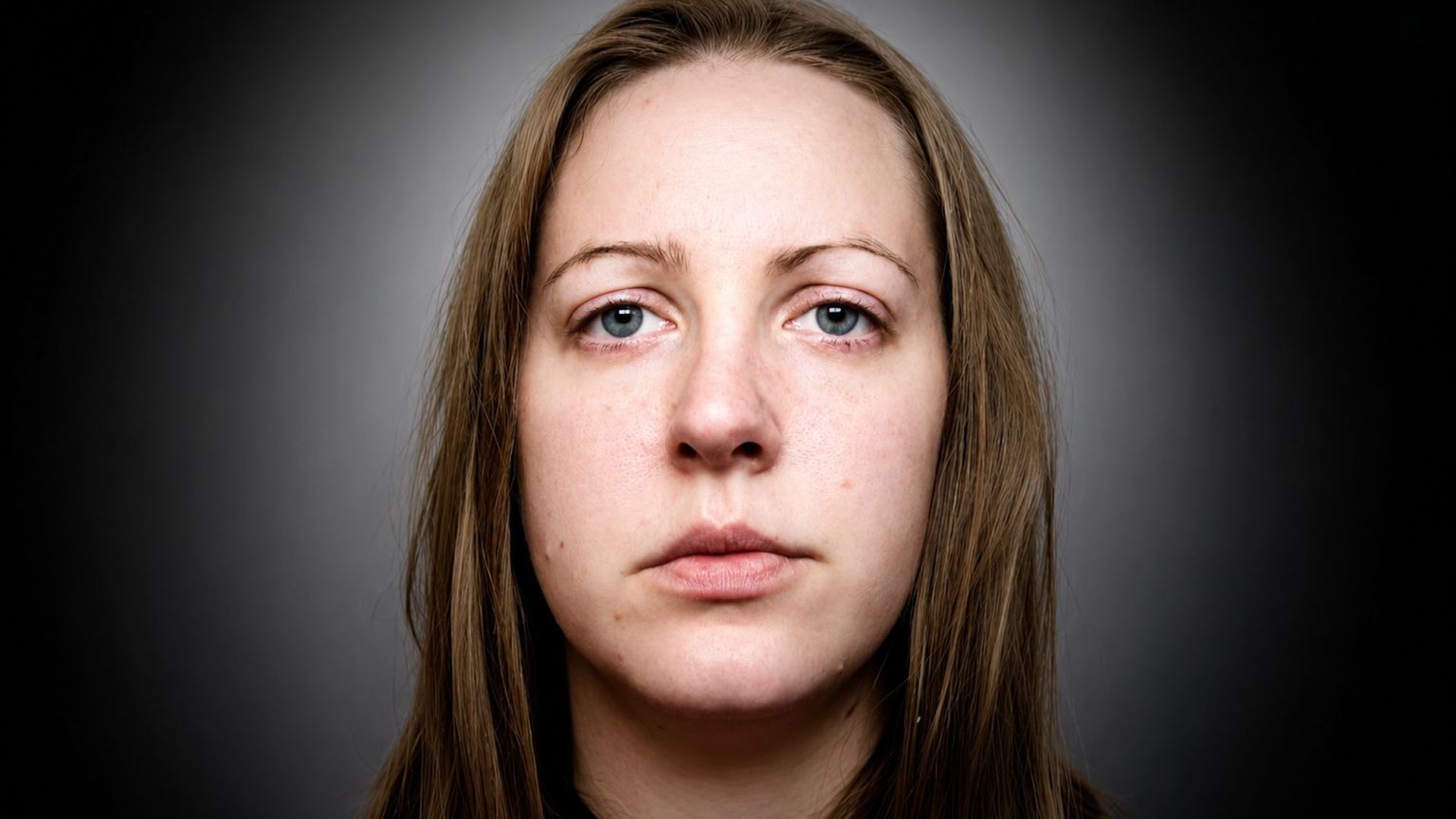
Ever get the feeling you’re in the middle of a PR war? Less than a week after Lady Justice Thirlwall published her report into the failings of the Countess of Chester hospital, Channel 5 broadcast its third documentary about Lucy Letby, the NHS neonatal nurse convicted of murdering seven babies in her care there, between June 2015 and June 2016.
The timing of the documentary was almost certainly not a coincidence. The 822-page Thirlwall Report demolished many of the claims of Letby’s defenders and reminded the public of her horrific crimes. It came a day after two of the supposedly world-leading experts, convened by retired neonatologist Shoo Lee, deserted Letby’s defence team and accused her lawyer of relying on arguments that are ‘inconsistent with the available evidence’ and ‘demonstrably inaccurate’. Team Letby needed to regain the initiative and Lucy Letby: Scapegoat?, a collaboration with the Sun newspaper, was ready to go.
The 70-minute documentary mostly reheats Letbyist slop, rattling through old copes and canards in scattergun fashion. The title alone is a red flag. Nobody at the hospital needed a scapegoat. The spike in deaths she caused alarmed some of the staff, but the outside world was oblivious. No doctors were being blamed for it and the hospital managers were desperate to move on. The documentary’s presenter, Sun journalist Rob Pattinson, argues that Letby was scapegoated because, after she was taken off the ward in July 2016 due to doctors’ concerns, the management rallied around her, threatened to report the consultants to the General Medical Council for bullying and considered managing them out. And so to cover their backs, the doctors then decided to call in the police.
This is such a peculiar theory that it requires a little unpacking. One problem is that it doesn’t explain why the consultants raised their concerns about Letby in the first place. But even if we put that down to a fit of pique, we are expected to believe that, having made false allegations against an innocent nurse, the doctors thought the best course of action was not to row back and apologise (as, in fact, they were forced to by the managers) but to call in the Old Bill. By a happy coincidence, the police found medical experts who concurred with the doctors that she had deliberately harmed several babies. The consultants had more good fortune when it turned out that the nurse whom they had victimised because she was always on duty when unexplained deaths occurred had taken home 241 handover sheets, obsessively searched for bereaved parents on Facebook and left notes in her bedroom saying, ‘I killed them on purpose’ and ‘I AM EVIL I DID THIS’. She also happened to be the nurse who was looking after two babies whom, it later transpired, had been poisoned by insulin. And in a final stroke of serendipity, they found a jury who, in August 2023, convicted her of multiple murders.
In other words, the consultants made Letby a scapegoat for some reason and then doubled down on the scapegoating when the management took her side. It was a massive gamble to avoid a trivial risk to their own reputations. While this is technically possible, a more realistic interpretation of events is that Letby was not the victim of a conspiracy, but was instead the beneficiary of a cover-up instigated by the hospital management, which would have succeeded if the doctors had not put the interests of patients first and insisted on a proper investigation.
The realists’ reading of events is given extra weight by the fact that a great deal of evidence points towards Letby being guilty, most of which is ignored in this documentary. Noting that several reviews into the spike in deaths were carried out before the police were called in 2017, Pattinson claims that ‘none of these reviews found any evidence of crime’. But, as Thirlwall points out, the reviewers were not given sufficient information to find a crime and would not have been equipped to conduct a forensic criminal review even if they had.
Neonatologist Dr Jane Hawdon conducted a case-note review in the autumn of 2016, but was not told that there were any suspicions and was not given all the post-mortems. She nevertheless reported that five of the 13 deaths she reviewed were ‘unexplained’ and another was ‘of concern’. The documentary claims that Hawdon’s review not only found no evidence of crime, which is vaguely true, but that it also found that ‘most of the deaths could be put down to poor care’, which is not.
Hawdon identified eight deaths, mostly from natural causes, which she said were ‘explained but may have been prevented with different care’ (my emphasis). She told the hospital’s medical director, Ian Harvey, that a ‘completely unexplained [death] on a neonatal unit is rare. So by definition more than one unexplained death does arouse suspicion.’ This was her way of sounding the alarm. The Thirlwall Report concludes that ‘the failure to call the police at this stage is impossible to defend’.
What about the infamous ‘statistics’? Professor Jane Hutton, described in Lucy Letby: Scapegoat? as ‘the leading statistician involved in the case’, appears in the programme telling her well-worn story about being hired and fired by the police during the investigation. In her telling, the police dropped her because she had too much integrity to produce a dodgy statistic that might lead to a wrongful conviction. After she raised her objections, the police informed her by email that: ‘The prosecutor does not agree with our line of inquiry and has instructed us not to pursue this avenue, any further, at present.’ This episode has been portrayed, not least by Hutton herself, as the police getting rid of an awkward expert, but this misses the point. The documentary shows an email from the police in which they do indeed seem to be fishing for a statistic along the lines of ‘the odds of an innocent nurse being present at all events are one in 50million’. Hutton was right to challenge this and the Crown Prosecution Service was right to tell the police to drop it. But that was the end of the story. The prosecution never made any statistical claims and therefore had no need of a statistician. The police took her advice. She won.
The Channel 5 documentary is not all money for old rope. Dr Colin Ferguson, a retired vascular surgeon, is a relative newcomer to the Letby circus. He says that the autopsy of babies who die from air embolism should show air in their hearts, and yet Pattinson tells us that ‘in six out of seven of the babies on the murder indictment, no air was found in the hearts of any of them’. Ferguson says that air cannot leave the heart after death. Dr Dewi Evans, who gave evidence for the prosecution, says that air can move, especially during resuscitation, and that air was found in other parts of the babies’ bodies.
Ferguson and Evans came face-to-face to debate the issue for the documentary, but the 90-minute discussion was so heavily edited to make Evans look dumbstruck that it is impossible to draw any conclusions from it. It is, however, worth noting that the paediatric pathologist who gave evidence to the Thirlwall Inquiry, Dr Jo McPartland, says that ‘you could have a significant amount of air at postmortem and it could be completely undetectable at autopsy’. (To add further confusion, neonatologist Prof Neena Modi, who is on Shoo Lee’s expert panel, has said that post-mortem imaging proves that some of the babies did suffer from air embolism, although she believes it happened during resuscitation. Shoo Lee himself says there is no evidence of air embolism at all.)
Letby was convicted of seven murders, but there were six other deaths during the same period in 2015 and 2016. ‘If Lucy Letby didn’t cause those deaths’, Pattinson asks, ‘what or who did?’. The simple answer is that five of them died as a result of severe congenital abnormalities. The other did not have a post-mortem, but the death certificate records ‘prematurity with sepsis’. Pattinson never answers his own question, but the viewer is encouraged to assume that it must involve sewage since that is where the documentary goes next.
Dirty water has been much on the mind of Letby’s defenders ever since she called a plumber as her sole witness at her first trial. A new face in the Channel 5 documentary is Annalise McClements, whose son was transferred from the Countess of Chester hospital in late 2016 after developing enterovirus and sadly died. She was told by doctors that the baby had contracted the disease from her, but she believes that he got it from some kind of sewage leak. All of this happened six months after Letby was taken off the ward, but it is included in the documentary because it supposedly proves that there was a deadly bug in the unit. ‘How many deaths [in the Letby case] are because of that?’, asks McClements.
The categorical answer is ‘none’. We can say this with certainty because such a disease would have shown up in routine testing. Infectious diseases cannot explain the deaths of any of the babies on the indictment and – with the exception of Baby D, who was recovering from pneumonia – no infectious disease was mentioned in their post-mortems. Natural disease cannot explain either the sudden collapses or the sudden recoveries that were such a feature of the Letby case. The theory that bad plumbing was the root cause of the spate of deaths in 2015 and 2016 falls at the first hurdle since none of the babies had the kind of illness that would be transmitted by dirty water. As the Thirlwall Report says: ‘There was no infection on the unit at all, still less one that could explain the deaths. There had been two periods of concern about infections on the unit – in 2012 and 2015, pseudomonas was found on the taps, and was dealt with and had no consequences for babies.’
Time and again, the Channel 5 documentary presents theories that have been knocked down by Thirlwall. The hospital was desperately short-staffed? Thirlwall says that ‘no deaths could be attributed to staff shortages… The nursing staffing levels at the Countess were slightly better than in all other comparable hospital neonatal units in the region.’ The deaths were the inevitable result of nurses being overwhelmed and expected to care for patients with complex needs, and without adequate senior supervision? Thirlwall says that ‘there was no good evidence that this contributed to a single death, still less that they had caused some or all of them’.
Could the drop in deaths after Letby was taken off the ward be explained by the hospital being downgraded at the same time, and thus taking in fewer patients? No, Thirlwall says that very few mothers were turned away after the neonatal unit stopped taking very young neonates and that the downgrade ‘was not an explanation for the absence of deaths and unexpected collapses’ in the years that followed. Was Letby cot-side when so many babies died because she was one of the most experienced nurses on the unit? Thirlwall says ‘she was one of the more junior nurses on the neonatal unit’. And did Letby write the ‘confession’ notes because a counsellor told her to as part of her therapy? Letby herself has never made this claim and Thirlwall says that ‘there is no evidence that counselling or any form of therapy was provided to Letby’.
The brickbats to Letby simps in the Thirlwall Report cannot be dismissed with the usual Letbyist complaint that Lady Thirlwall started from the presumption of guilt, nor that she is part of the legal establishment. Thirlwall based her conclusions on a strong body of verifiable facts and expert opinion that is thoroughly referenced and easy to check. The inquiry was commissioned to see whether Letby could have been stopped sooner. She did not need to take on Letbyist talking points. Debunking the many myths that have sprouted up around this case was arguably beyond her remit but she did it anyway, presumably because she finds them so contemptible. Yes, she is a pillar of the legal establishment and yes, she applies the presumption of guilt to convicted criminals.
Unfortunately for Letby and her disciples, Thirlwall is exactly the kind of person they will have to convince if they ever get their case before the Court of Appeal. If that day ever comes, they will encounter a tougher audience than Channel 5 gets at 10pm on a Monday night.
Christopher Snowdon is director of lifestyle economics at the Institute of Economic Affairs and the co-host of Last Orders, spiked’s nanny-state podcast.
Watch the trailer for Lucy Letby: Scapegoat? below:
#Lucy #Letbys #defenders #desperate