wellnessfitpro
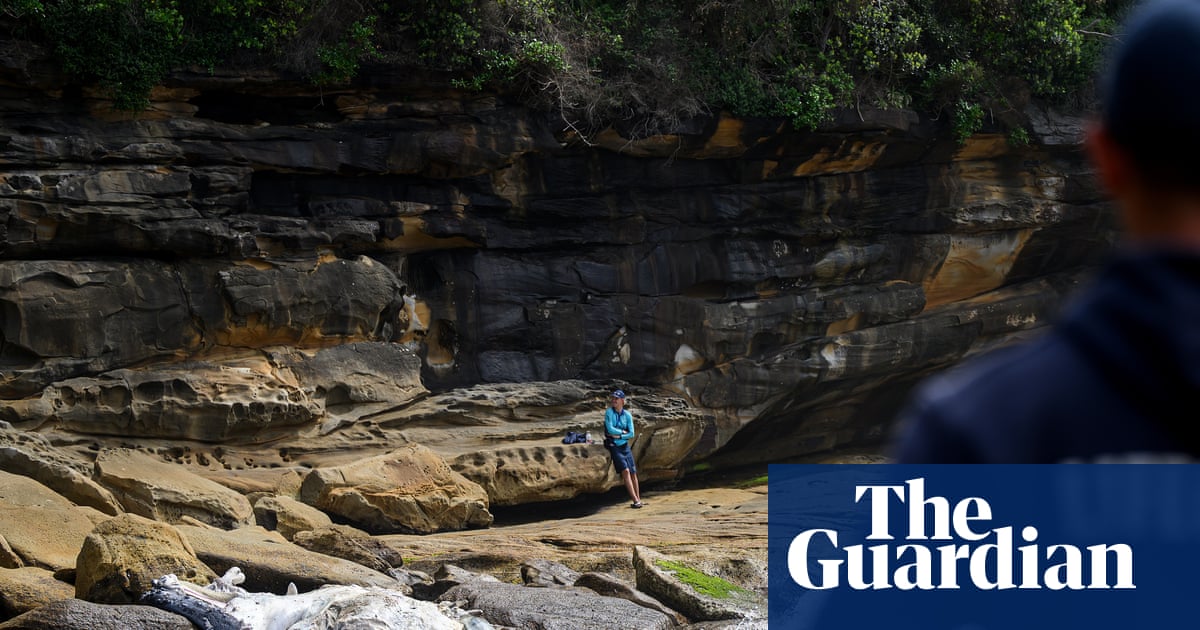
I am wandering down a steep and unfamiliar street in Saint Peter Port, Guernsey, a force seven gale blowing in my face, when I look up to cross the road and see a back garden running up the hillside opposite. It ends in a granite rock face about 30ft high, and in that moment, I have a vivid flashback to being sat on top of it, watching a group of people in the garden below. I can’t conjure their faces, but the memory is all too real: the sun on my face, a woman calling up: “Don’t break your neck!” I can tell she’s not worried and neither am I. Nobody is. It’s a party and we’re young and we’re drunk and we’re carefree, without a worry in the world. Or at least, that’s how I remember it.
I continue down the street, spooked by the power of the recollection, how it has ambushed me. I stand outside the house. I could swear I’ve never seen it before. Did I come to the party over the cliff? Should I knock on the door? Hi, this is going to sound weird but I was in your back garden about 42 years ago and I haven’t a clue why but I’ve just remembered it like it was yesterday …
There are no lights on, no car outside. I carry on down to the coast, where huge waves crash against the sea wall.
“A single person’s memory, uncorroborated and unsubstantiated by other evidence, is a feeble guide to the past,” the novelist, Julian Barnes, wrote in the Guardian last year. I am in Guernsey because it’s where I lived when I turned 18, even though I spent most of that year working and travelling abroad. I’m trying to recapture what my life was like then and it’s a good place to start. In Back to the Future, Michael J Fox’s Marty McFly gets in a DeLorean time machine. I have flown in an ATR 72-600 turboprop, and it is only my second time on the island in 35 years.
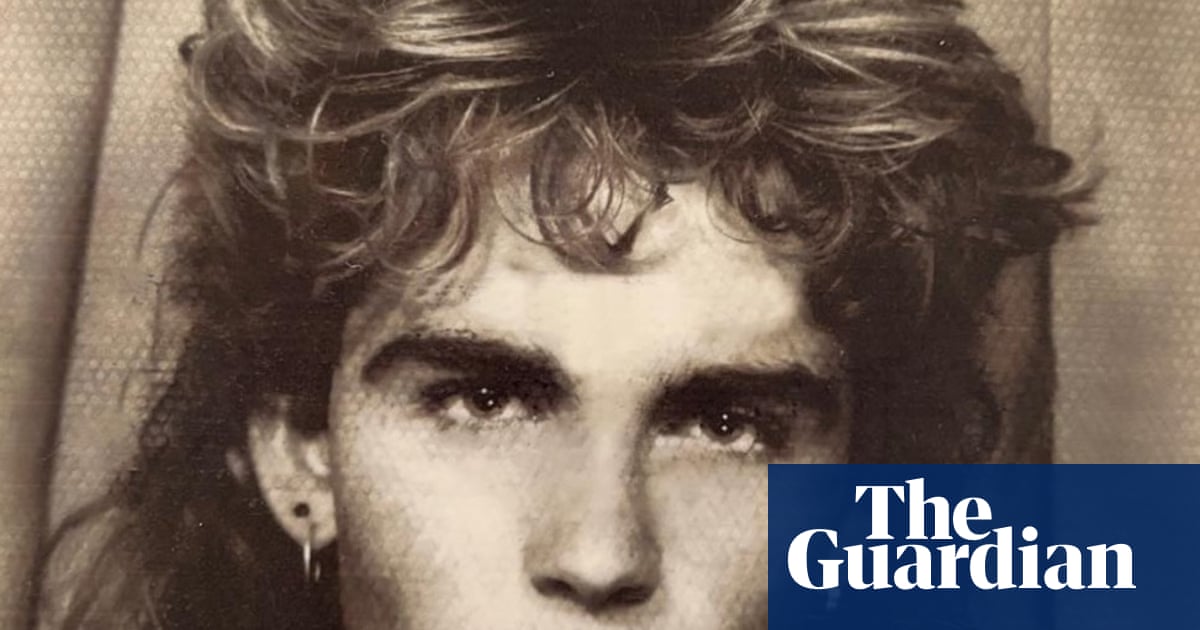
On 26 May 1983, a 7.8 magnitude earthquake in the Sea of Japan triggered a tsunami that devastated Honshu. Across the Pacific, the US conducted a nuclear test in Nevada, while Candy Girl by New Edition topped the UK charts. Manchester United beat Brighton & Hove Albion 4-0 in the replay of the FA Cup final (a painful fact to write as a Liverpool fan and now Brighton resident) and Star Wars: Episode VI – Return of the Jedi was bossing it at the box office. It was also my 18th birthday. Two weeks later, on 9 June, the Tories had a landslide general election victory that cemented Thatcherism for the next decade, a far more unpleasant detail to recall than the football result.
I don’t remember any of that – a quick internet search has filled me in. But it can’t tell me what I did that day. A Thursday in the middle of my A-levels, I would have probably been revising in my bedroom (although I remember spending more time doing keepy-uppies in the garden, struggling to focus), eager for the exams to be over, to leave school and home and go travelling. Top of the Pops was on that evening but it was no longer the weekly ritual of my earlier teens. Apparently the Police performed Every Breath You Take, today the most-streamed track of the 80s. I didn’t like it back then. The month before, Bowie’s Let’s Dance had been No 1 for three weeks. I loved Bowie and bought the album, but was disappointed: it was too polished, too commercial, a new direction for him I disapproved of, all tan and white teeth, a sign of much of the 80s to come.
When I was 11, my family moved from Wirral (or the metropolitan county of Merseyside, which it became part of in 1974) to Guernsey. My dad worked for the Midland Bank on Dale Street in Liverpool and was being transferred. Five days before I was due to start secondary school in Birkenhead, we drove south and caught a ferry. I’d never been on one before, never been abroad (neither had my parents). I told my mates I was going to live on the equivalent of a Caribbean island. It was the heatwave of 1976; the sun had clearly gone to my head. That first winter in Guernsey it seemed to rain incessantly and as a family we struggled to adapt to a very different way of life in a rented bungalow. My sister, Sue, who was two years older than me, never adjusted. When she was 16, three years after our move, she went back to Birkenhead to finish her education, living with the family of a friend of hers, only returning to the island for holidays. Which meant that from the age of 14, I was essentially an only child.
I had a troubled relationship with my parents, as did my sister; it was a big reason she left. The generation gap was huge. My parents had no experience of being a teenager. Born in the 1930s, they grew up in north Wales before youth culture. My father had a motorbike, but he wasn’t a biker. He couldn’t understand why I had to question and challenge everything. Because I did. I struggled with authority and I saw him as compliant. We were chalk and cheese. Even my being left-handed, which he jokingly called “cack-handed” when I laid the table with the fork on the right, was further evidence of our difference. A friend said once: “Everything we did was a way of saying to them: ‘I don’t want to be like you.’” Their politics, their clothes, their music, the TV they watched and the jobs they did (my mother was a housewife) were anathema. Such rejection must have been difficult, but perhaps not that unusual. Late 70s punk shocked not only my parents’ generation but its own. Rebellion was in the air. Another friend, who had a similarly difficult relationship with his conservative father around the same time, puts it: “He didn’t have the tools to deal with me.”
There was also the growing disparity in our educations. My parents left school at 16 but their ambition was for me to go to university (about 7% of 18-year-olds in the UK went to university in 1983, compared with 40.6% in 2025, despite there being grants and not crippling loans). English was my favourite subject (I was a big reader) and two books I studied for A-level helped broaden my horizons: As I Lay Dying by William Faulkner introduced me to stream of consciousness and more experimental writing, while Strait is the Gate by Andre Gide for my French A-level got me reading Sartre, Cocteau, Camus and Kafka – and opened the door to a morally ambiguous and transgressive world that I embraced for its essential absurdity. This was perhaps not the education my parents had in mind.
Before going to Guernsey, I arrange to meet my old friends Paul, Jay and Steve, who still live there. In the pub, as we chat about the past, I am initially struck – and a little alarmed – by how much more they remember than I do: people, pubs and clubs, parties and incidents. I tell myself it’s because they still live there, the constant reminders, but I also wonder if it is more about what we choose to remember.
Over dinner, we talk about how we understood the world in 1983 and what shaped us, with no internet and only four TV channels. Apart from our peers, we agree that NME and other magazines such as the Face were hugely influential, along with the John Peel show and Radio Caroline. I first started reading NME when I was 14 from cover to cover (the classified ads were as fascinating as the editorial). A review or interview might mention an older band or influence, and at the record shop (No.19 in Saint Peter Port, today a White Stuff), you’d search through the racks for them. Did the Teardrop Explodes and Echo and the Bunnymen trigger an interest in the Doors and 60s psychedelia, acid and Carlos Castaneda, the beats and counter culture?
You often had to take a punt on a record, parting with your hard-earned cash (I had a job as a milkman on a Sunday and in the holidays throughout my school years). Did I buy Thermonuclear Sweat by Defunkt in 1983, a band I’d never heard of, because I picked it up in No.19, drawn to the title, and saw a Joseph Bowie in the lineup and I was a Bowie fan? Its punk-jazz threw me, but I grew to love it, learned that Joseph was the brother of Lester Bowie, co-founder of The Art Ensemble of Chicago, my hardcore introduction to jazz. In that random way, one thing could lead to another, so slow compared with today, when we have a world of knowledge at our fingertips.
The early 80s were tribal: punk, mod, skin, rude boy, new romantic, indie: you dressed like the bands you listened to (on Saturday afternoons, we would go to jumble sales and find clothes to customise). The music you bought spoke volumes. Talking to my own three children, Connor, 27, Ella, 23 and Jake, 21, I get the impression that they didn’t listen to music with the same prejudices when they were 18. Fleetwood Mac, Genesis, Led Zeppelin and all those 70s “rock dinosaurs” would never have darkened my turntable (or increasingly, my cassette player; although I still have a lot of my records, not a single cassette has survived, all those cherished mixtapes, often painstakingly recorded off the radio, gone).
I remember being interested in the news, what was happening in the world (it was easy to feel cut off on an island). I read the Guernsey Evening Press (I liked the crime pages) and the Times, which my parents got, every day. They listened to BBC Radio 2 at breakfast, Terry Wogan to start the day, and watched The Nine O’Clock News in the evening. The news events that I remember were acid rain destroying the forests of northern Europe, high unemployment of 11.5% in the UK (though in Guernsey the rate was negligible), the Soviet Union invasion of Afghanistan and the tensions of the cold war growing with Reagan in the White House. There had been the Falklands war in 1982, a 74-day conflict that saved Thatcher’s premiership but seemed a world away. (The landlady of Taylor’s Long Bar in Saint Peter Port didn’t like serving groups of young men, but made an exception for servicemen. My friends and I happily told her we were back from the Falklands and she served us underage.)
The biggest threat was nuclear Armageddon. In September 1983, only the quick thinking of a Soviet officer averted catastrophe, when he interpreted a reported US nuclear strike as a false alarm and didn’t push the button – the closest the world has come to nuclear war since the Cuban missile crisis.
We all knew the name of Greenham Common, but I didn’t fully understand what was happening there. We would laugh about the advice of hiding under a table, in the case of a nuclear attack. Yeah, right.
Alcohol played a massive part in my life when I was 18, as it had done throughout my teens. It was easy to get served underage, so turning 18 wasn’t a landmark moment in terms of legally buying a drink (no one carried ID). Alcohol and tobacco were cheap on Guernsey: we all drank and smoked. You could go out with a fiver and have a night of it at about 50p a pint, the same for a packet of cigarettes. (It’s no longer cheap there, more or less the same as the UK.) During my visit, I pop into a pub at lunchtime that we used to frequent. It has seen better days. There is one customer, a woman at the bar having a large glass of wine. While I am chatting to the barperson about why I am on the island, the woman turns and says: “Love, all you’ve got to write about Guernsey is: 70,000 alcoholics clinging to a rock in the middle of the sea.”
There is certainly a wild and reckless alcoholic haze to a lot of my memories. A time and a pub would be agreed and the night would go on from there. Afterwards, we might go to a club or a house party, invited or not. We were all sexually active, quite promiscuous. Aids was still a few years off from being widely reported and we took few if any precautions. We drank and drove, motorbikes when we were younger (my friend Paul was a mod and we went round on his Lambretta), cars once we were 17. Guernsey didn’t have breathalysers at the time. If you were pulled over, you had to walk toe to heel for about 10ft, bend down and pick up a coin, and toe to heel back. If you didn’t lose your balance, you were fit to drive. I got away with it several times.
Apart from the record shop, the bookshop was another important place of discovery. It was there that I bought Jean Genet’s Miracle of the Rose when I was 17 and got chatting to the owner about literature. He invited me to his house for a cup of tea and showed me around the place. The last room was the cellar, which turned out to be a sex dungeon: handcuffs on the wall, whips and masks. He casually explained that he threw parties down there and if I ever fancied coming to one … I declined as casually as I could. Maybe we’d talked about De Sade earlier in the bookshop. The next time I saw him we chatted as if it had never happened. He must have trusted me not to tell anyone, which I didn’t (it would have been scandalous in such a conservative place). But it seemed like confirmation of the edgy and exciting world that books could lead to.
It’s hard to say if our lives were better or worse than they are for 18-year-olds today. We experienced boredom more – Sundays were deadly, everything closed. Sexism and racism and homophobia were commonplace, as was casual violence; parents physically disciplined their kids and corporal punishment wasn’t banned in state schools until 1986, so it’s perhaps no surprise that, with a few drinks, punches got thrown. Football hooliganism was rampant, making headlines. On a night out, there was a mild expectation of trouble.
We would occasionally go to London to see bands (in my early teens, bands came to Guernsey – Elvis Costello, the Jam, Depeche Mode, Adam and the Ants – but then stopped. I’m not sure why, but logistics, costs and the island not having a big enough venue were all probably part of it). There was a world out there – and I was desperate to explore it.
Three months after my 18th birthday, my friend Joel and I set off travelling. I had saved £400 from working all summer in a greenhouse that was pioneering the cultivation of kiwifruit on Guernsey, to replace the dying tomato industry (it never took off). Our vague plan was to work our way across Europe, maybe end up on a kibbutz (which still had a reputation as socialist paradises), then travel further. A gap year before university. In the bookshop I had chanced upon Work Your Way Around the World, which was in its first edition; we’d never heard of Lonely Planet and were perhaps as informed by the spirit of On the Road and Genet. Our only map was of all of Europe, taking in the top of north Africa and some of the Middle East. It was somewhat lacking in detail. No one else we knew was going travelling or had been. Looking back, Joel and I agree that naivety was as much our guide.
After grape picking in the Champagne region, we hitchhiked to the south of France. Often, no one would pick us up (including Björn Borg, who drove past us twice in his black Porsche near Monaco) and we would walk for miles, sleeping rough. On the French riviera, we bought a cheap summer tent and crossed northern Italy, sleeping in railway stations. In Venice, a guy tried to rob us in the middle of the night. When I woke, he threatened me and carried on going through my bag so I pulled out my knife to scare him off. I’d had it since I was 14, when I saw it glinting at the bottom of the marina in Saint Peter Port and dived down to retrieve it, a British second world war Fairbairn Sykes stiletto fighting knife; no plaything. He looked at it and laughed, whipped out a switchblade and waved it in my face, to show I didn’t stand a chance, before strolling off. I vowed to never pull a knife on anyone again. But what amazes me now is that I carried that knife through dozens of border checks and on numerous flights, and it was never an issue.
We continued through Yugoslavia and into Greece, where Work Your Way Around the World said there was orange picking on the Peloponnese. We met a few other northern Europeans, older than us, also looking for work. They told us the harvest was late. We wandered around Greece for weeks, ending up in the small town of Gargalianoi, where we stayed for three months, helping with the olive harvest, working in construction and an olive oil factory. Most of the time we slept in woods on the edge of town, our own little squatter camp that the locals turned a blind eye to, once a week going to the fleapit hotel in town, for a cold shower and the comfort of a bed. We were the only foreigners, apart from a couple of French guys, Gilles and Eric. They were recovering heroin addicts (Gilles had done nine months in Paris’s notorious La Santé prison for possession) and were planning to stay out of France for seven years to avoid military service, that length of absence granting exemption. We became friends and also increasingly aware that being British, we were the envy of European youth for not having national service: a Greek friend we were working with, Tomas, was about to start his two-year military conscription, a bleak posting on the troubled Turkish border.
That eight-month journey sometimes feels like a fever dream. It defines being 18 for me: freedom and adventure, living on your wits, never knowing what the next day might bring. From Greece we went to Egypt and across north Africa, back up through Spain and France and home. There were tough times, but no question of turning back. People on the whole were kind – we were kids and they wanted to help us. Our map was so basic, we had little idea where we were going, following the setting sun. For a time, we used a copy of David Copperfield we picked up in a hotel in Cairo as toilet paper, each reading the same 20 or so pages a day and then tearing them out.
There were two threatening periods: in Tunis, we became the target of unwanted sexual attention, followed night and day, men waiting outside our hotel room, every invitation for coffee turning into aggressive attempts at seduction; and in Tétouan in Morocco, we were hounded by dealers for days, sold hash and then told we would be shopped to the police unless we bought more. They were still threatening us as we left on the bus.
“The stories we tell most often about our lives are likely to be the least reliable, because we will have subtly amended them in every retelling down the years,” Barnes wrote in the same article. “It’s salutary to discover, from time to time, how other people’s memories are often quite different from our own – not just of events, but of what we ourselves were like back then.” Joel had forgotten the use of Dickens as toilet paper; I’d forgotten the level of hassle in Tétouan. Maybe I was too stoned. The truth is there, somewhere, among the stories.
In 2019, when my mother went into a home, I was clearing my parents’ house with my sister when I came across a folder of old documents and papers of mine that they’d kept. Looking through them for this article, I found five letters I wrote during my time away – I’d forgotten they existed, this was the first time I’d read them since I wrote them 42 years ago. Would they corroborate what I was really like as an 18-year-old? The fact that I sent only five letters and made no phone calls in eight months shocks me now as a parent (my sister says she asked my mum if she worried about me when I was away and she said she did, but that she felt there would have been disapproval, possibly from my father and no doubt from me, if she had expressed it).
To be honest, I’m surprised I wrote any letters at all, from how I remember our relationship. Instead, I find myself joking to them about being hungry, about roughing it, my hair getting longer, losing weight. There are things I had forgotten – our plan to go to a kibbutz in Israel thwarted by “war and conflict”; another plan to take a two-week boat trip from Athens to Alexandria (why would it take so long?!); our intention to cross the middle of the Sahara, only to find out in Egypt it would take three months to get a visa to enter Sudan and continue into Chad. I can see I am trying to shock them at times, but not too much. I tell them about Gilles and Eric and getting drunk on New Year’s Eve with them, Gilles throwing up in our hotel room, but I don’t mention their heroin addiction or the pills we took that had me hallucinating large insects crawling over my body, something that I thankfully found hilarious rather than terrifying. I say how beautiful Venice is, being kicked awake by Italian cops at dawn, but I don’t mention the incident with the knife. I complain about being sexually harassed in Tunis, but brush it off.
What surprises me most though is a warmth I hadn’t allowed for. Maybe distance did. Letters tell their own stories.
Most of us look back at our 18-year-old selves and do a little editing. As F Scott Fitzgerald wrote: “At 18, our convictions are hills from which we look; at forty-five they are caves in which we hide.” What were my convictions? Is the unheralded memory of being sat on that rock face – acting fearless, reckless, carefree, about to leap into the unknown – as accurate a picture as any? I spent most of my 20s after university travelling, living abroad. I still love to travel, even if kids and a career and the realities of adult life have restricted the opportunities. I still love the feeling of the bag on my back containing all I need. My kids love to travel too; I like to think my wife and I have given them that sense of adventure. We plan to go travelling for a year when we stop working. I like to think that 18-year-old is still with me.
#returned #life #reckless #adventures #world #soaked #alcohol #Life #style