wellnessfitpro
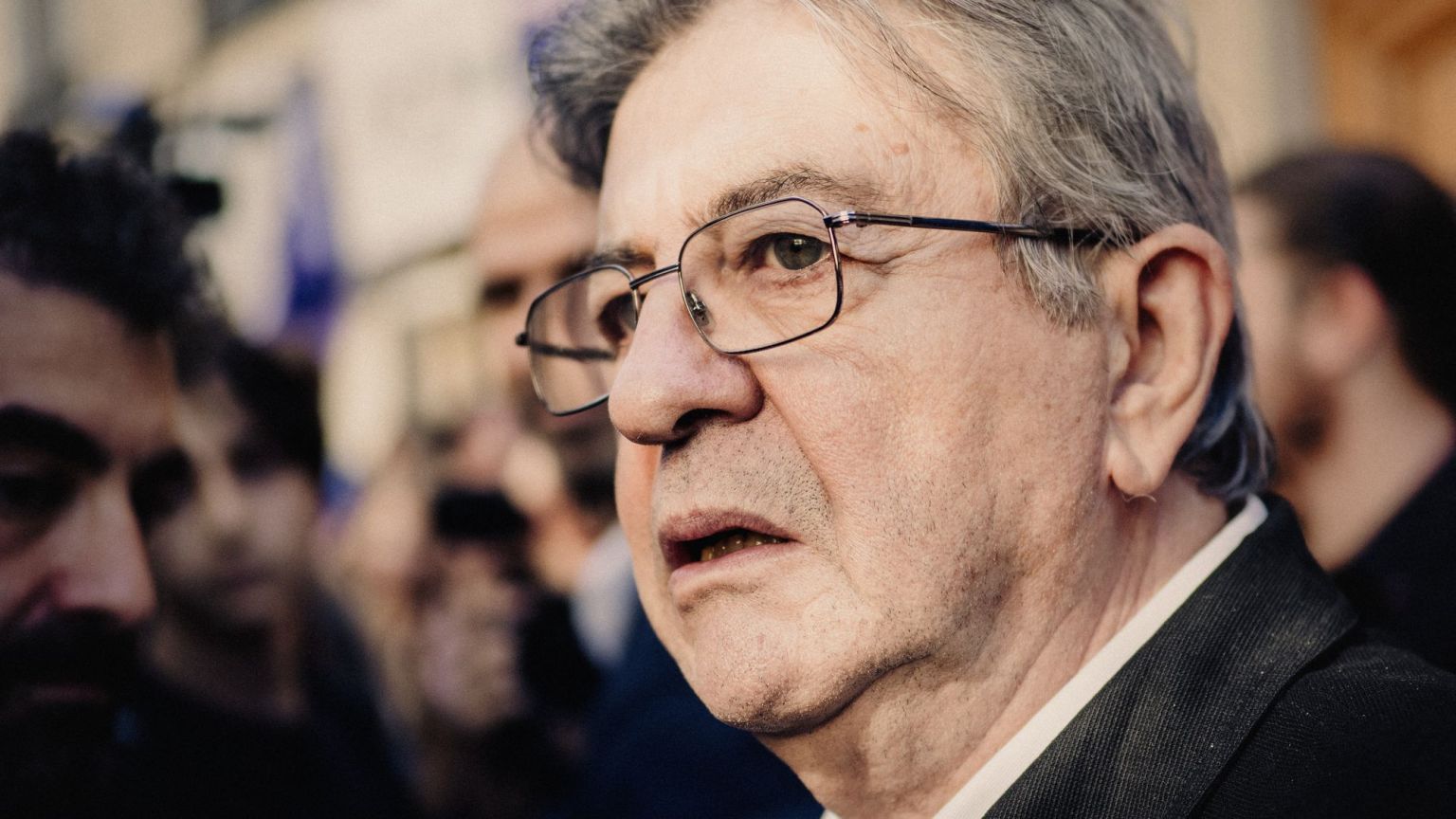
As France has descended into anarchy, enduring its most destructive and violent rioting in decades, most of the candidates to replace Emmanuel Macron as president have condemned the chaos and vowed a swift restoration of order. Not so Jean-Luc Mélenchon, the Islamo-left firebrand and presidential candidate for La France Insoumise (LFI), who has been busy fanning the flames.
According to French prime minister Sébastien Lecornu, Mélenchon, his party and his ‘ultra-left proxies’ are to blame for instigating the unrest. Lecornu has even accused Mélenchon of promoting a deliberate strategy of ‘bordélisation’ – loosely translated as ‘fucking things up’, sowing chaos – as a means to discredit the Macron government and the French state more broadly for the left’s political benefit.
Although there is clearly some political point-scoring going on here, there is no doubt that the 75-year-old Mélenchon has, at the very least, sought to exploit the disorder. The LFI leader was quick to jump on the bandwagon of what began last month as student protests. And he has been slow and reluctant to condemn the subsequent outbreaks of violence. He has tried to cast the young malcontents as heirs of the French Revolution and May ’68. ‘The Bastille has been retaken’, he posted on X alongside a video of students mounting the July Column in Paris’s Place de la Bastille, in what he described as ‘the most beautiful way possible’.
As for the undeniably ugly instances of arson, looting and assaults, Mélenchon’s response has been to deny, deflect and downplay. He blames the police for provoking street violence, insisting there are only ‘scenes of joy’ whenever the cops are not around. When asked about the staggering numbers of injuries that have been inflicted on officers, Mélenchon retorted that this was just ‘part of the job’. Are all cops bastards, as the ‘ACAB’ slogan being scrawled on French monuments suggests? ‘Depends on the day or the hour.’
If all this strikes you as an odd political strategy for winning over the majority of French voters, who are enraged and saddened at the sight of their cities being sacked and set alight, then you’re not alone. Mélenchon is currently polling second in the race for the French presidency, but is still a long way behind the frontrunner, Marine Le Pen. The right-wing National Rally is widely expected to benefit most from the disorder, having promised tough action against lawbreakers and a crackdown on migration (those from a migrant background are hugely overrepresented in the disorder). If she were pitted against Mélenchon in a second round of voting, polling suggests a Le Pen victory would be a fait accompli. Each new viral video of a beloved French building on fire brings her National Rally closer to victory.
Mélenchon’s nudges and winks to the rioters might make little sense in purely electoral terms, but his pitch is not really aimed at the majority of French voters. His overarching project is to construct what he calls a ‘New France’, with young, urban communities from migrant and especially Muslim backgrounds as the left’s new political base. The aim is not to assimilate new migrants into French culture, but to use migrants as a battering ram to help dismantle French culture. In this vision, the enemy – the ‘Old France’ – encompasses not only the right-leaning bourgeoisie, but also the traditionally leftist white working class. It means opposing not just social conservatism and the Catholic Church, as you’d expect of the left, but also the liberal, Enlightenment-derived republican values that the French left once held dear.
The Old France, Mélenchon wails, is ‘all white, all ugly’. Even its democratic system, he claims, is loaded with ‘white privilege’ and thus ‘obsolete’. He has even tried to argue that the French people and even the French language do not really exist any more, with both undergoing a process of ‘creolisation’. ‘Those who call themselves “native French”’, the LFI leader warns, ‘pose a serious problem for social cohesion’. The notion of a ‘native Frenchman’, he insists, ‘no longer exists and will never exist again’. In this vein, Mélenchon now self-identifies as ‘Maghrébin’, or North African. And while it is true that he was born in Tangier in Morocco, and moved to France as a child, he was part of a family of so-called pieds-noirs – that is, French people born in the Maghreb, but forced to relocate when the old empire began to fall. In the New France, most identities are welcome – except French, of course.
The most head-spinning aspect of Mélenchon’s identitarian turn has been his transformation from militant secularist to apologist for Islamism. In the 2010s, he fiercely rejected the term ‘Islamophobia’, insisting that we have ‘a right and, in some cases, a duty to criticise religion’. He described the Islamic veil as a ‘rag on the head’. And in January 2015, he delivered a furious eulogy for his late friend and ‘comrade’, Charb, one of the Charlie Hebdo cartoonists who had just been slain by Islamist terrorists. ‘You have been murdered by our oldest, cruelest, most constant and most narrow-minded enemies, the religious fanatics’, he told the gathered mourners.
On 7 January 2025, on the 10th anniversary of the Charlie murders, Mélenchon’s tone could not have been more different. His tribute took the form of a convoluted blog post, in which he mentioned the ‘criminals’ who killed his comrade, but not the ‘religious fanaticism’ that inspired their evil. To do so, he meekly explained, would only help to ‘divide us in order to weaken us’.
This mealy mouthed condemnation was bad enough, but Mélenchon and his party’s response to the 7 October massacre in Israel bordered on atrocity apologism. LFI’s statement on the deadliest day for Jewry since the Holocaust might as well have been written by the Hamas press office. The mass murder and rape of Israeli civilians were described as mere ‘armed offences by Palestinian forces’, which needed to be viewed ‘in the context of the intensification by Israel of the policy of occupation of Gaza, the West Bank and East Jerusalem’. Palestine, as you might expect, has since played a key role in LFI and Mélenchon’s campaigning.
Mélenchon has even turned to conspiracy theories to explain away Islamist terror. In 2021, he predicted that, ahead of the 2022 presidential election, there would be a ‘grave incident or murder’ that would be used to ‘point the finger at Muslims and to pretend there is a civil war’. He even claimed that terror attacks had been ‘written in advance’ to coincide with elections in the past, citing the 2017 murder of a police officer by a jihadist on the Champs-Élysées and the 2012 Toulouse killings, in which Mohamed Merah went on an anti-Semitic killing spree. (Merah, incidentally, is lionised in the rap song ‘M*R*H’, which has appeared in several viral videos of rioting teenagers in recent weeks.)
Accusations of anti-Semitism have also dogged Mélenchon since his Islamo-leftist turn. He once claimed to see the hidden hand of Israel in the defeat of fellow leftist Jeremy Corbyn, blaming Benjamin Netanyahu’s Likud party for Labour’s dire showing in the 2019 UK election. In the 2022 election, when invited to condemn the far-right presidential candidate Éric Zemmour, Mélenchon claimed that Zemmour’s anti-migration views stemmed from a ‘cultural script linked to Judaism’. In doing so, he implicitly framed Jews and Judaism as the left’s enemies, as part of the Old France that he is desperate to overturn. Ironically, although most French Jews actually hail from the Maghreb, like Mélenchon and his Muslim voter base, their place in the New France feels less than assured.
There was a time not long ago when Jean-Luc Mélenchon would have defended republican values and plainly condemned their enemies. Now he aspires to lead the very forces that are tearing France apart. For the sake of French civilisation, let’s hope that the Old France still has some life in it yet.
#JeanLuc #Mélenchon #France #burn