wellnessfitpro
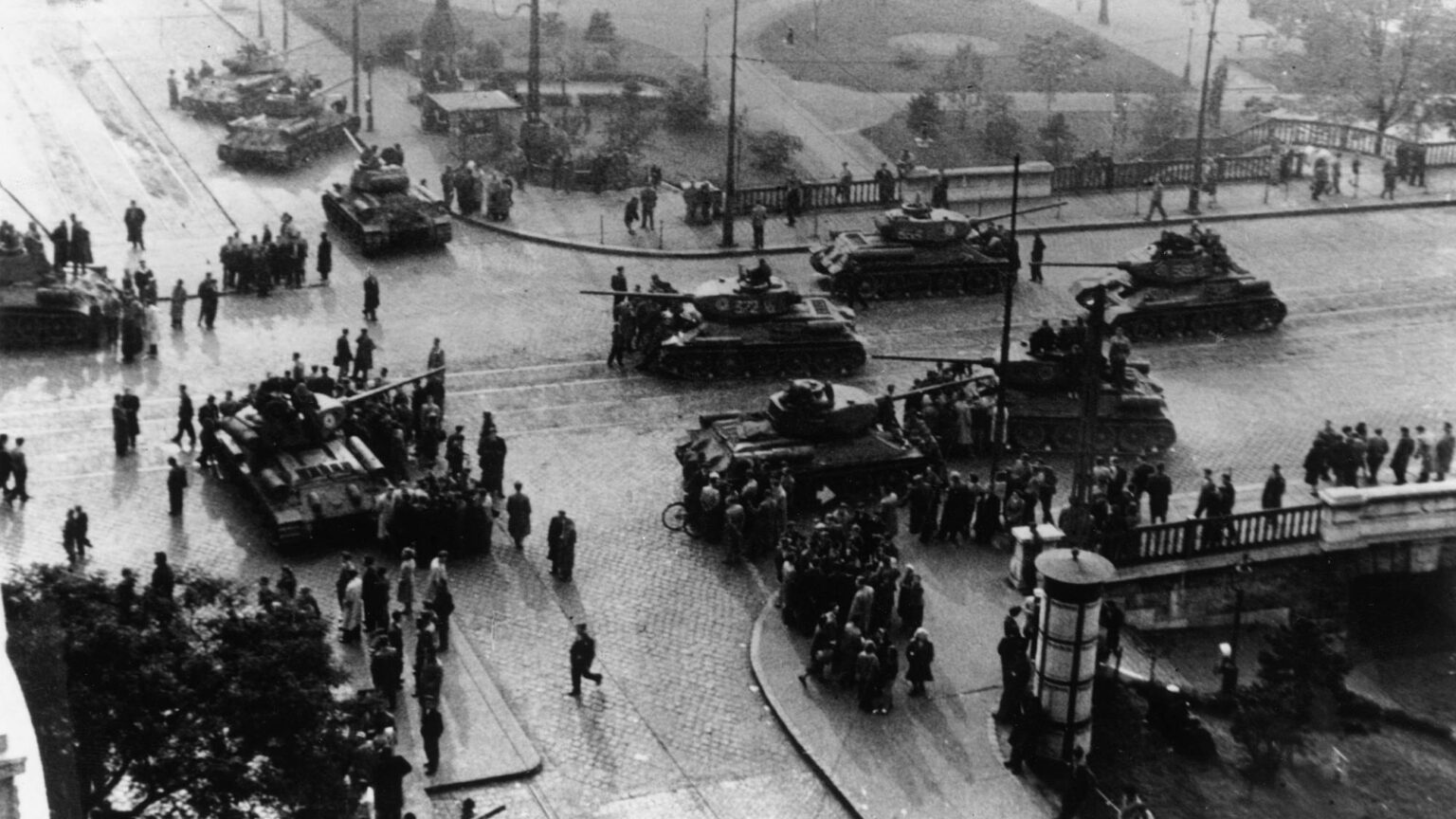
Maybe it is because 23 October marks the 70th anniversary of the Hungarian Revolution that my reflections on the riots in France have been frequently disrupted by my memories of what I saw and experienced in Budapest seven decades ago.
Outwardly, these two events share certain characteristics. Both erupted spontaneously and caught the state unawares. Each led to confrontations with the authorities, attacks on symbols of power and the escalation of initially peaceful demonstrations into violence. And just as in 1956, so students today played a central role in initiating the protests.
Yet these superficial similarities conceal profound differences. The Hungarian Revolution was directed against the Soviet Communist dictatorship, which denied its citizens fundamental political freedoms and national independence. As a nine-year-old child living in Budapest at the time, I witnessed levels of violence that were far more lethal than those experienced by the French over the past month. The French disturbances have taken place within a constitutional democracy, where citizens possess the right to organise politically, protest, vote and campaign for changes in government.
More importantly, the two movements are very different in their objectives, political imagination and relationship to society. In Hungary, the revolutionaries articulated a vision of national liberation and political self-government. In France, the violent disturbances have not been accompanied by a comparably coherent programme for transforming the political order. There is obviously a fundamental difference between a revolution and a school protest that rapidly descended into nihilistic violence.
One of the distinguishing features of the Hungarian Revolution was its determination to reclaim the sovereignty and national political authority that had been usurped by the Soviet-imposed Communist regime. In effect, the Hungarian people challenged the legitimacy of a political order that had denied them the right to govern themselves. As far as they were concerned, freedom could not be secured while the country remained under the domination of Moscow. The goal of national independence was frequently echoed by demonstrators shouting, ‘Russians Out’.
Seventy years ago, Hungarian nationalism was symbolically expressed by the destruction of the enormous statue of Stalin in Budapest. The revolutionaries also removed the Communist emblem – the hammer and sickle – from the Hungarian national flag, creating the distinctive flag with a hole in its centre.
Hungarians’ patriotic affirmation of their nation is alien to the outlook of the French rioters. Indeed, a distinctly anti-patriotic tone has prevailed among rioters in France. From the outset, the mob directed its destructive passions against the symbols of the French Republic, highlighted by the behaviour of the masked gangs who invaded the city hall in Marseille and hurled the bust of Marianne onto the floor.
The desecration of Marianne – the female personification of the French Republic – was not an accidental act of vandalism. The mob was symbolically giving France a good kicking.
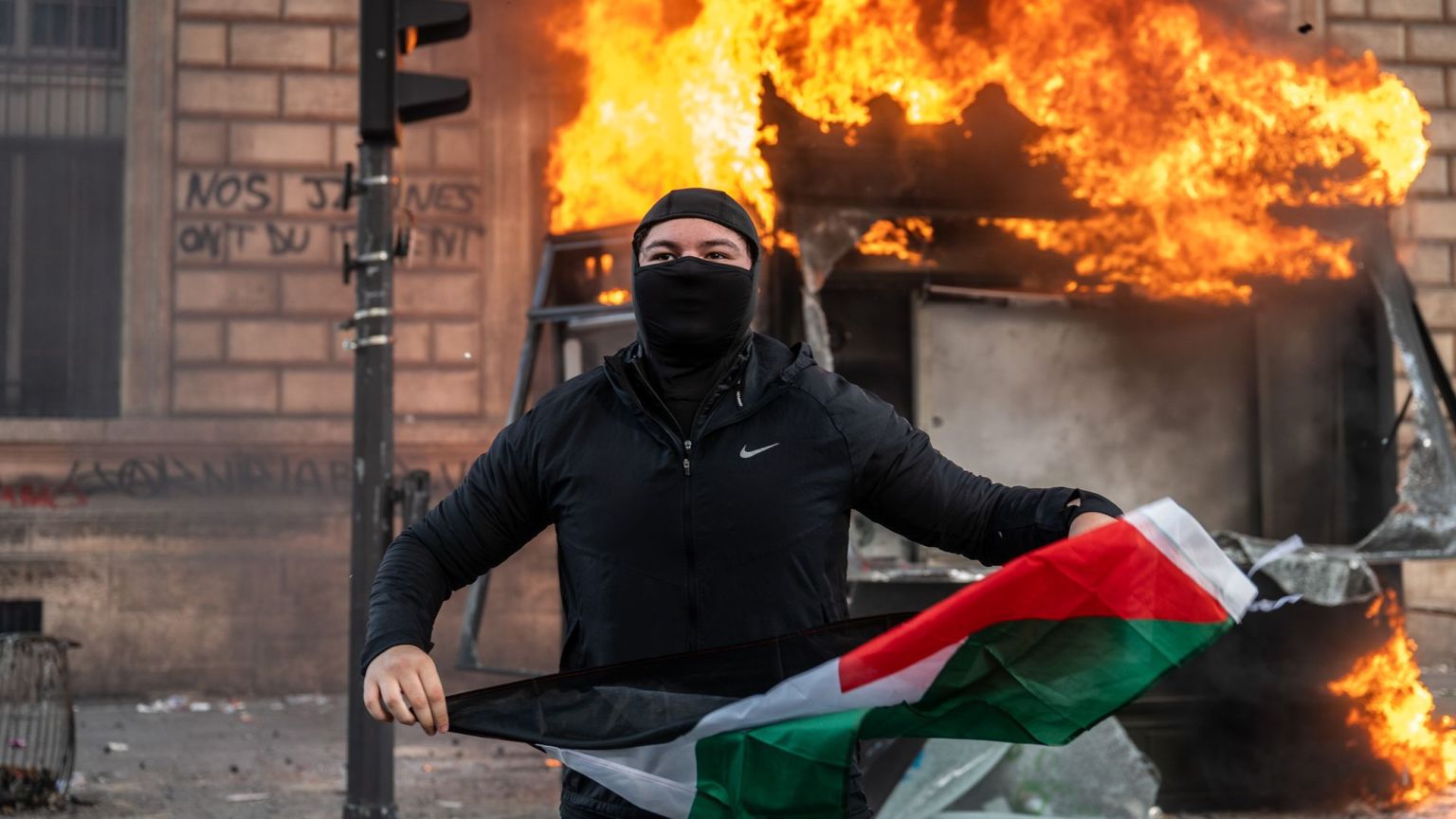
The French tricolore, which has frequently served as a symbol of popular protest, has been conspicuous by its absence during the riots. Instead, students and their adult allies were much more likely to wave the Palestinian flag. One video shows young students vandalising a school draped in Moroccan flags.
The attitude of the participants towards their community and their nation has been the starkest difference. Even though many shop fronts were destroyed by shooting and shelling in 1956, there was no looting. I still recall walking the streets of Budapest, amazed by the sight of abandoned shops with their stock intact. People understood that looting would undermine morale and community solidarity. There were strong community sanctions against anti-social behaviour. In France, looting has been common – in fact, it’s been the main objective for a significant section of the mob.
This is a critical point. Looting is a profoundly anti-social activity that conveys a sense of irresponsibility towards the welfare of a community. Similarly, the attacks on schools and public buildings suggest a complete disregard for future generations and the welfare of one’s fellow citizens.
Hungarian revolutionaries demonstrated a willingness to take responsibility for the consequences of their actions. In setting up workers’ councils and revolutionary committees, they expressed a commitment to establishing a radically different political future. The members of these newly established bodies were not simply thinking of themselves – they were fighting for the future of their nation.
The philosopher Hannah Arendt celebrated the greatness of the Hungarian Revolution and the democratic institutions that spontaneously emerged during the fighting. She felt that, despite its defeat by the armies of the Soviet Union, the revolution remained historically significant. In contrast, the French riots of 2026 have no positive legacy to transmit to successive generations.
If the events of 1956 can be seen as an inspiring attempt at regaining national sovereignty, the riots in France expressed the opposite: the moral disarmament of European society. Somewhere on the road from October 1956, we have dangerously lost our way.
#anniversary #Hungarian #Revolution #shows #Europe #fallen