wellnessfitpro
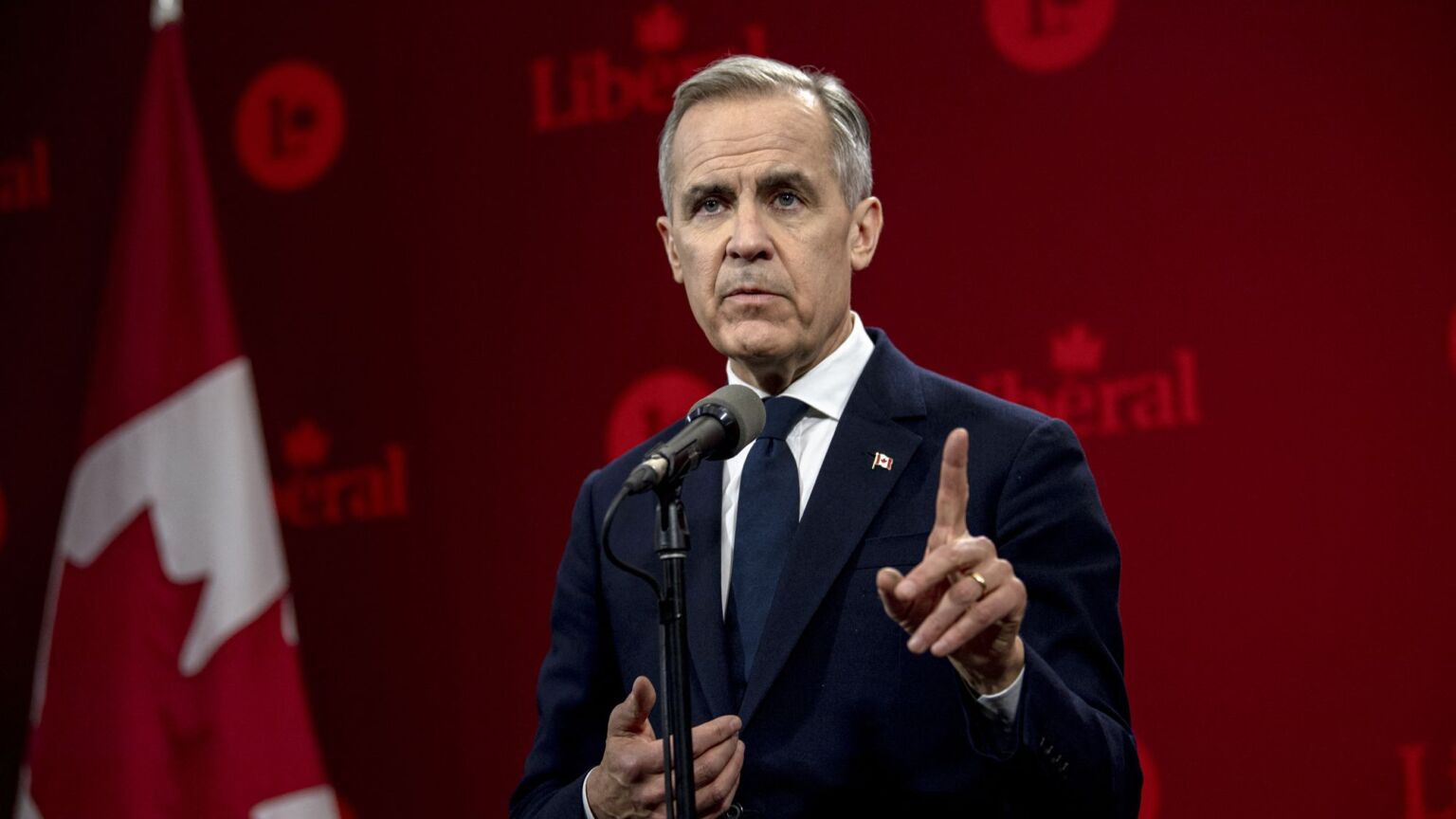
No one will miss Donald Trump’s inevitable departure more than Canada’s prime minister, Mark Carney. Carney, the ultimate globalist, who previously also held Irish and UK citizenship, has skilfully employed a strident nationalism that has proved a big winner among Canadians.
Carney claims Canada is ‘at war’ with its neighbour, and even some conservatives hail Ottawa’s ‘creative courage’ in what he suggests is a battle for ‘democracy’. His appeal to ‘middle powers’ to stand up against Trump’s threats has also made him a hero to such establishment mouthpieces as The Economist and the New York Times, both of which have embraced him as the anti-Trump globalist of their dreams.
Yet even as he plays to the applause of the big media outlets and the Davos crowd, Carney is leading his country into two rat traps, one with the EU and the other with China. Neither will turn out well.
If it takes root, Carney’s strategic shift towards the fading EU and ultra-mercantilist China could end up doing more damage to Canada’s future than anything coming from the imbecilic Trump. After all, Trump looks likely to get thumped at the polls in November, turning him into the lamest of lame ducks. And whatever happens in the midterms, he will be out of office in little over two years.
In contrast, autocratic China is likely to be led by President-cum-Emperor Xi Jinping for the foreseeable future. The EU, ruled by its unelected leaders, will likely remain the same dysfunctional organisation two years from now.
Of course, these ‘partners’ will say nice things about friendship and cooperation, making Canadians feel better about themselves. But few Canadians seem to recognise that realigning with Europe and China places their country, and their much-vaunted values, in jeopardy.
The alliance with Brussels is akin to marrying an aged dowager with not much in the bank. The EU may be a role model for Carney and his fellow technocrats, but nice suits and good food do not make a great partner. The EU is essentially a mercantilist institution and seems determined to become more so. European elites, suggests the Financial Times, are unlikely to make any trade concessions to a distant wannabe partner, particularly one granted poorly defined ‘associate member’ status.
Rather than a serious rejoinder to the US, the proposed alliance with the EU is, as the Guardian recently put it, mainly about ‘mood’. It may please the suits and professional America-haters, but it hardly constitutes a pathway to success. Instead, a European alliance, particularly if it advanced to full membership, would doom Canada to the usual EU embrace of high taxes, expensive green energy, an ever-growing public sector, more social welfare, regulation, particularly that aimed at small businesses, and censorship.
Let’s put it bluntly: the EU is a losing proposition. Most Europeans see the EU as failing, and increasing numbers, including those in France and Germany, are looking to relocate. With few exceptions, it has been stagnating economically for years, particularly in technology. In once-vibrant Germany, one in seven people plans to emigrate in the next five years, and it loses 15,000 industrial jobs a month. In France, those who say they would leave given the opportunity make up more than 25 per cent of the population – and that was before the current unrest.
At the same time, adopting Europe’s Net Zero programme – Carney has a long history as a militant backer of ‘green’ energy – will not do much for Canada’s biggest exports: oil and gas. Carney’s recent feint away from his deep-green past won’t wash with a Europe determined to keep fossil-fuel resources in the ground. Notably, he is proposing a huge push for renewable energy in Canada’s far north.
Carney’s strategy seeks to sever links with a neighbour now experiencing a tech boom, rising incomes and a promising manufacturing revival. The US is the economic monster next door: with four per cent of the world’s population but 25 per cent of global output and nearly half the world’s wealth, it could create opportunities for Canadian businesses. Overall, the US is becoming ever more dominant economically, particularly compared with declining Europe and Japan. These trends predate Trump’s second term and will probably continue in the near future.
It’s not as if Canada is booming on its own. It already suffers from one of the lowest growth rates in the West. After years of near parity with the US, Canada is now way behind on a per-capita basis. No Canadian province would be richer than any of the leading US states, and only Alberta would be in the middle of the pack. The two big provinces, Ontario and Quebec, would rank near the bottom.
Perhaps even more troubling, the quasi-alliance with Europe would erode Canada’s hitherto liberal culture, a trend that began under Carney’s doltish predecessor, Justin Trudeau. Today in Europe, free speech is regarded as just a mild irritant, while the Brussels grandees regularly ignore or try to reverse election results or target speech that does not follow the party line.
To be sure, Canada’s 1982 Charter of Rights and Freedoms guaranteed the right to ‘free expression’. But the Charter, unlike the US Bill of Rights, also provides an avenue for censorship, stating that speech is subject to ‘such reasonable limits prescribed by law as can be demonstrably justified in a free and democratic society’.
This leaves the prime minister and parliament to define ‘reasonable limits’, which is not a hopeful sign. Canada’s thoughtpolice recently enacted the Combatting Hate Act, which suggests, according to some, that the state could take ‘legal action’ against people who use social media to propagate ‘false and misleading information’. As the American free-speech advocate Greg Lukianoff suggests, Canada is moving from ‘free’ to ‘freeish’.
Canada has also spawned a Human Rights Tribunal that, according to the National Post’s Jamie Sarkonak, is descending into ‘complete madness’. Former chairman David Thomas has compared the tribunal to a ‘state-funded extortion ring’ that seeks to force those it attacks to make a deal to avoid greater financial claims or professional harm.
Not surprisingly, the spectre of Trump is now used to justify repression. Josh Dehaas of the Canadian Constitution Foundation notes that the current anti-American mood has allowed politicians like Trudeau and now Carney to push for more speech regulations that are more in line with European and potentially even Chinese norms.
In yet another embrace of European idiocy, Carney claims that Islamic values and those of his country – a product largely of European culture and Christianity – are the same. Perhaps the urbane PM has overlooked the fact that the freedoms enjoyed by women, gay people and dissenters in Canada do not exist in virtually every Muslim country.
It’s the same political logic we now see in Europe. Islamism has soared in Canada alongside the rapid growth of the Muslim population, which is now close to two million. Canada’s once-vibrant Jewish community, including my wife’s Montreal family, has barely 400,000 members and finds itself among the most harassed in the world. Some are moving to that relative outpost of tolerance, the United States.
But Islamism is not the only force pushing authoritarian approaches. Chinese penetration of Canada’s political system is widespread. A Chinese surge into Canada will turn the country into a home for screwdriver plants and a tourist haunt for the Middle Kingdom’s wealthy and, more than anything, reduce it to a semi-colonial resource provider. The now-lifted tariffs on Chinese electric vehicles will all but guarantee the demise of Canada’s $16 billion car industry, which employs 125,000 largely unionised workers, most of them at or supplying US-based firms.
At a political level, allying with China – which, after the US, is the only other global power – is even scarier. As for human rights, they barely exist there. Beijing also uses Canada’s large Chinese immigrant population to serve its political interests and identify enemies of the Chinese Communist Party.
Any American or Canadian should know that, although our countries differ, we are also very much joined at the geographic and demographic hip. We are each other’s leading trading partners, with the US accounting for around 70 per cent of Canada’s exports. In contrast, Canada absorbs under 20 per cent of US exports.
More important still are our family ties. Over 800,000 people born in Canada live in the US, while roughly 250,000 Americans have settled in Canada. We often watch the same television shows and the same films. And, at least before Trump’s moronic bombast, Canadians were constant visitors to the US, with many living there at least part-time in Florida.
Canada’s anti-Americans use Trump’s ugliness to demonise the American Republic and its citizenry. When Joni Mitchell, a long-time leftist and Canadian native now mostly associated with California, recently became a US citizen, she faced personal attacks from the Canadian left. This distaste is widespread: under Trump, only one quarter of Canadians see the US as an ally; under Biden, the figure was three times as high. Egged on by a long-standing anti-US elite, Canadians now think America is worse than China and a bigger threat to world peace than Russia. Canadians have lost their once-renowned cool.
For over two centuries, our economies and societies have interacted across what was a celebrated, largely demilitarised border. To be sure, some Canadians, and many among the elites, have long disliked their brutish neighbour and would love to see themselves as Europeans. If they prevail, expect a Canada that is poorer, less competitive and, worst of all, less free.
My counsel would be patience. Trump’s attacks on Canada were never popular, even within his own party. More Americans blame Trump than Carney for the trade disputes, and almost two in three oppose the renaming of Lake Ontario. The Canadian tariffs have little support in the US, including in GOP-leaning states along the border. In crucial Michigan, voters are hostile to the disruptive tariffs, as they are in Maine, where senator Susan Collins has denounced Trump’s trade policies.
As with many Trumpian messes, it will fall to the next president – even JD Vance or Marco Rubio – to restore the once-healthy US-Canada relationship. Let us hope Mark Carney’s gambit does not become so entrenched that reconciliation comes too late, to the detriment of both countries.
#Mark #Carneys #antiTrump #hysteria #nations #downfall