wellnessfitpro
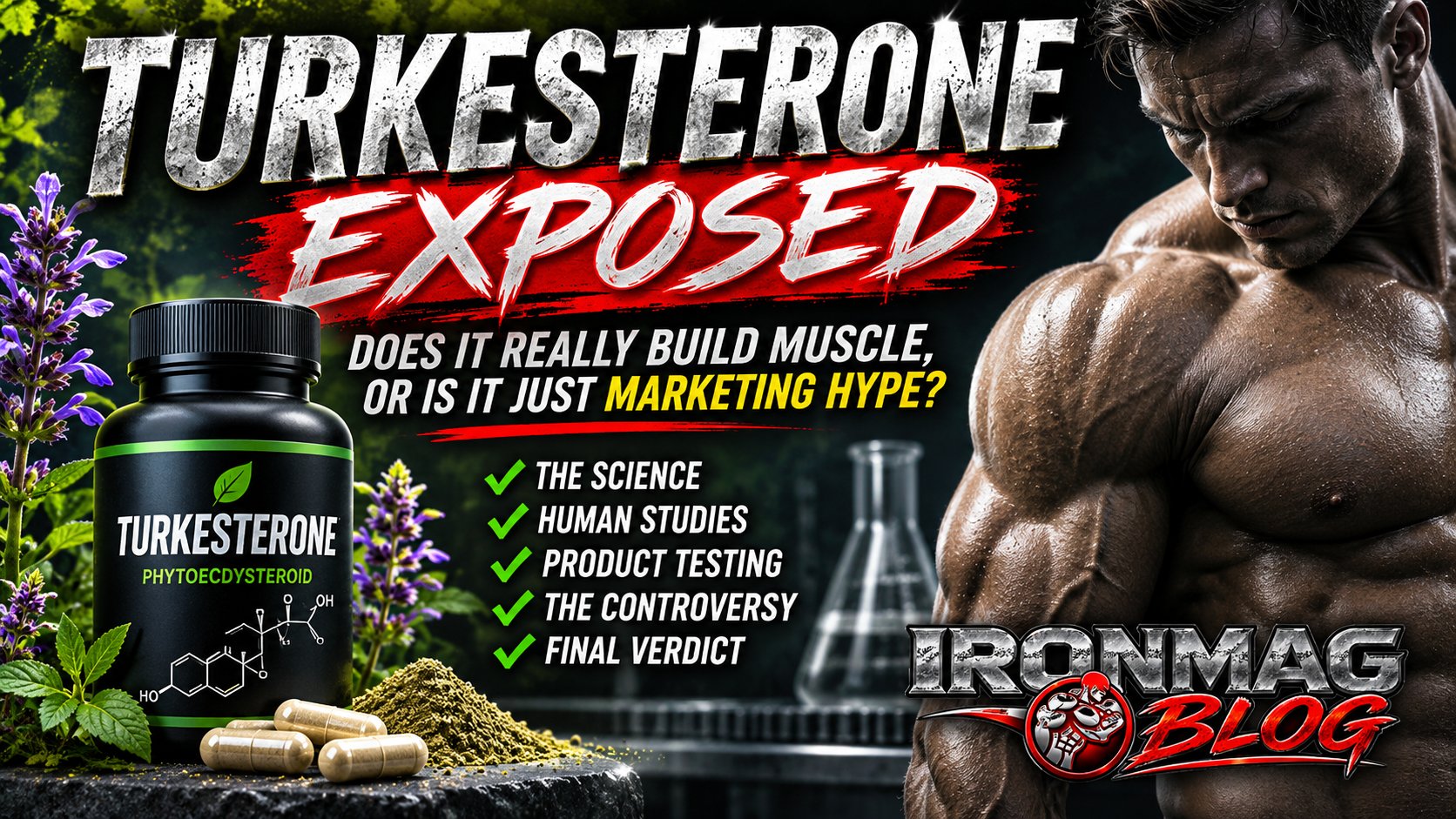
Turkesterone has been promoted as a natural alternative to anabolic steroids, promising increased muscle growth, strength, and recovery without the hormonal side effects associated with testosterone-based compounds. But does the science support the claims, or has the supplement industry turned another experimental ingredient into an overpriced bodybuilding fad?
Over the past several years, turkesterone has become one of the most controversial ingredients in the sports supplement industry.
Popular fitness influencers have promoted it as a revolutionary muscle-building compound. Supplement companies have marketed it as a natural anabolic agent, while consumers have spent considerable amounts of money hoping to experience steroid-like gains without using anabolic steroids.
The controversy has grown as independent laboratory testing, conflicting research, and public disputes between supplement companies and fitness influencers have raised questions about both the effectiveness and authenticity of turkesterone products.
One example is the YouTube video Greg Doucette’s Turkesterone Lie Just Got Worse | “Exposing Diagofit” Response, which examines controversy surrounding turkesterone marketing and the fitness influencer community.
Watch the video:
Greg Doucette’s Turkesterone Lie Just Got Worse | “Exposing Diagofit” Response
The larger question is straightforward: Does turkesterone actually work, and are consumers getting what they pay for?
What Is Turkesterone?
Turkesterone is a naturally occurring phytoecdysteroid found in certain plants, particularly Ajuga turkestanica, a plant native to Central Asia.
Ecdysteroids are compounds involved in growth and development in insects. Plants also produce related compounds, believed to help protect them against insect predators.
Turkesterone belongs to the same general family as ecdysterone, also known as 20-hydroxyecdysone.
Although these compounds have steroid-like chemical structures, they are not equivalent to testosterone or traditional anabolic-androgenic steroids.
Importantly, turkesterone has not been demonstrated to activate human androgen receptors in the same way as testosterone or anabolic steroids.
That distinction matters.
Traditional anabolic steroids increase muscle protein synthesis largely through androgen receptor signaling. Turkesterone’s proposed mechanism involves different biological pathways, including possible interactions with estrogen receptor beta.
However, much of this proposed activity comes from laboratory and animal research.
Demonstrating an effect in cultured muscle cells or rodents is not the same as proving significant muscle growth in humans.
Why Did Turkesterone Become So Popular?
The bodybuilding supplement industry has a long history of marketing compounds described as natural anabolic agents.
Ingredients such as methoxyisoflavone, ecdysterone, various plant extracts, and purported testosterone boosters have all enjoyed periods of popularity.
Turkesterone followed a familiar pattern.
Early experimental research suggested that certain ecdysteroids might stimulate protein synthesis. Supplement marketers combined those preliminary findings with testimonials, social media exposure, and the promise of natural muscle growth.
Fitness influencers helped turn a relatively obscure botanical compound into a mainstream bodybuilding product.
The appeal was obvious.
Who wouldn’t be interested in a supplement advertised as increasing muscle growth without suppressing natural testosterone production?
Unfortunately, scientific plausibility and marketing claims are two very different things.
What Does the Scientific Research Actually Show?
The most important issue is the limited amount of controlled human research specifically examining turkesterone.
While some research on the broader ecdysteroid family has produced interesting results, the existing evidence does not establish turkesterone as an effective muscle-building supplement.
1. The 2019 Ecdysterone Study
A frequently cited study published in Archives of Toxicology investigated ecdysterone supplementation during resistance training.
Researchers reported greater increases in muscle mass and improvements in bench press performance among certain supplemented participants compared with controls.
The findings generated considerable interest because they suggested that an ecdysteroid might enhance resistance-training adaptations in humans.
However, there is a critical distinction.
The study examined ecdysterone, not isolated turkesterone.
Although the compounds are chemically related, evidence supporting one compound cannot automatically establish the effectiveness of another.
Furthermore, a single positive study does not establish an entire category of supplements as effective.
Read the 2019 study
2. The 2024 Turkesterone Research
A study published in Muscles investigated acute doses of turkesterone and several physiological measurements associated with metabolism and potential anabolic activity.
Researchers examined doses of 1,000 mg and 2,000 mg.
The investigation did not find significant improvements in measured outcomes such as resting metabolic rate, IGF-1, or substrate utilization compared with placebo.
This research did not directly measure long-term muscle growth under a resistance-training program, so it cannot definitively rule out every potential anabolic effect.
Nevertheless, the findings failed to provide convincing support for turkesterone’s marketing claims.
Read the 2024 research
3. The 2024 Randomized Body Composition Study
Another investigation, presented in the proceedings of the International Society of Sports Nutrition conference, examined 31 physically active men and women.
Participants received either 500 mg of a turkesterone-containing Ajuga extract or a placebo daily for four weeks.
Researchers measured body composition and handgrip strength.
The results showed no statistically significant advantages for turkesterone in:
- Lean body mass
- Total body mass
- Body fat percentage
- Handgrip strength
The researchers concluded that four weeks of supplementation did not improve body composition or strength in these participants.
Although the study was small and relatively short, it directly challenges the idea that turkesterone reliably produces rapid muscle-building benefits.
Read the study abstract
4. The 2025 Ecdysteroid Supplement Study
A study published in the Journal of the International Society of Sports Nutrition examined a commercially available turkesterone-containing supplement.
Twenty-four young men and women were randomly assigned to a supplement or placebo group for four weeks.
The researchers evaluated body composition, handgrip strength, mood, and sleep quality.
This study adds to the limited body of controlled human research on products marketed around turkesterone.
However, studying a multi-ingredient or botanical supplement does not necessarily isolate the effects of chemically pure turkesterone.
The distinction is particularly important when supplement formulations contain varying concentrations of different ecdysteroids.
Read the 2025 study
The Bigger Problem: Is There Even Turkesterone in the Bottle?
Whether turkesterone works is only half the story.
The other major issue is supplement authenticity.
Independent laboratory investigations have demonstrated that some products marketed as containing turkesterone or other ecdysteroids contain substantially different quantities than their labels suggest.
In certain cases, products have contained little detectable turkesterone while containing larger amounts of the related compound ecdysterone.
A report presented at the 2023 Manfred Donike Workshop examined four supplements marketed as containing turkesterone.
Only one of the four products contained detectable turkesterone, and its concentration was substantially lower than the amount claimed on its label.
All four products contained 20-hydroxyecdysone.
These findings raise an obvious question.
If consumers purchase turkesterone but receive mostly ecdysterone, what exactly are they paying for?
A subsequent 2026 analytical study examining 13 commercially available ecdysteroid supplements also documented significant variability in ingredient concentrations, including discrepancies involving turkesterone.
These results do not prove that every turkesterone supplement is mislabeled.
They do demonstrate why independent laboratory verification matters.
Greg Doucette, Turkesterone, and the Influencer Controversy
Turkesterone has also become a source of public disagreement among prominent bodybuilding influencers and supplement companies.
Fitness personality Greg Doucette has been involved in controversies surrounding the marketing, testing, and promotion of turkesterone products.
The video referenced above, Greg Doucette’s Turkesterone Lie Just Got Worse | “Exposing Diagofit” Response, is part of that larger public discussion.
In July 2025, industry publication Stack3d reported that Doucette had publicized laboratory results concerning Gorilla Mind’s Turk-Plex supplement.
According to that report, the testing commissioned by Doucette’s side detected no turkesterone and approximately 8.96 mg of ecdysterone per capsule.
Those were publicly reported, company-commissioned test results—not proof that every production batch had the same composition.
The situation illustrates the importance of evaluating supplement claims independently of the personalities promoting or criticizing them.
A fitness influencer’s popularity does not establish the effectiveness of an ingredient.
Likewise, an accusation made in a YouTube video does not automatically establish fraud or intentional deception.
Product testing should be evaluated through the actual laboratory reports, analytical methods, sample identification, and reproducibility of the results.
For consumers, the most important questions are:
- Does the product contain the ingredients stated on its label?
- Are those ingredients present in the advertised quantities?
- Has the product been independently tested?
- Does credible human research support the advertised benefits?
- Are the safety claims supported by adequate scientific evidence?
Those questions matter far more than social media arguments.
Is Turkesterone Really Comparable to Anabolic Steroids?
Some supplement advertising has suggested that turkesterone can produce steroid-like muscle growth without the familiar hormonal consequences of anabolic-androgenic steroids.
This comparison is scientifically unsupported.
Anabolic steroids, including testosterone derivatives, have well-established effects on muscle protein synthesis, nitrogen retention, strength, and hypertrophy.
These effects have been demonstrated in controlled human studies.
Turkesterone lacks comparable clinical evidence.
There is also insufficient human research to establish whether turkesterone influences testosterone production, estrogen-related signaling, or other hormonal systems under typical supplementation conditions.
Claims that turkesterone produces anabolic steroid-like gains without suppression or side effects should therefore be viewed skeptically.
A compound cannot be considered a proven replacement for anabolic steroids simply because its chemical structure contains steroid-like features.
Is Turkesterone Safe?
Turkesterone is commonly advertised as a safe and natural supplement.
But natural does not automatically mean safe.
There is insufficient long-term human research to establish a comprehensive safety profile for turkesterone supplementation.
Potential concerns include inconsistent ingredient concentrations, contamination, undisclosed substances, and uncertainty about long-term biological effects.
The Department of Defense’s Operation Supplement Safety program has specifically warned that the safety and effectiveness of ecdysterone and turkesterone supplements remain inadequately established.
For competitive athletes, supplement contamination may also create anti-doping risks.
Ecdysterone has appeared on the World Anti-Doping Agency’s Monitoring Program, although being monitored is not the same as being prohibited.
Consumers should be particularly cautious about products making aggressive hormonal or anabolic claims without supporting clinical data.
Does Turkesterone Increase Testosterone?
There is currently no convincing controlled human evidence demonstrating that turkesterone reliably raises testosterone levels.
This is another area where supplement marketing often extends beyond the science.
The term anabolic does not necessarily mean that a compound increases testosterone.
Even if future research demonstrates that turkesterone influences muscle protein synthesis, it would not automatically follow that the compound raises circulating testosterone.
Consumers should distinguish between testosterone boosters, anabolic-androgenic compounds, and experimental substances that may affect cellular pathways unrelated to testosterone.
These are not interchangeable categories.
Is Turkesterone Worth the Money?
For most bodybuilders, the practical question is whether turkesterone provides enough measurable benefit to justify its cost.
Based on currently available human research, there is no compelling evidence that turkesterone supplementation produces meaningful increases in muscle mass or strength.
That does not prove the compound is biologically inactive.
It means the evidence is insufficient to establish its effectiveness in real-world bodybuilding applications.
Compare that uncertainty with supplements such as creatine monohydrate, which has been extensively studied and repeatedly demonstrated benefits for resistance-training performance.
Adequate protein intake, consistent progressive resistance training, sufficient calories, and recovery also have much stronger scientific foundations.
For athletes working with a limited supplement budget, spending money on an inadequately studied ingredient makes little sense when more effective strategies are available.
The Supplement Industry Needs Better Accountability
The turkesterone controversy highlights a recurring problem within the bodybuilding supplement industry.
A potentially interesting ingredient emerges from preliminary scientific research.
Companies recognize its marketing potential.
Influencers promote it.
Consumers purchase it.
Only later does more rigorous research begin addressing whether the original claims were justified.
This does not mean every supplement company is dishonest or that every innovative ingredient is worthless.
Innovation is important, and many legitimate products begin with preliminary research.
However, there is a meaningful difference between presenting an ingredient as scientifically promising and advertising it as a proven muscle builder.
Manufacturers should be expected to accurately identify their ingredients, verify concentrations, maintain appropriate quality controls, and avoid claims that exceed the supporting evidence.
Consumers deserve transparency.
Final Verdict: Promising Compound or Overhyped Supplement?
Turkesterone remains an interesting research compound, but its reputation as a natural anabolic muscle builder is far ahead of the clinical evidence.
Laboratory studies and research involving related ecdysteroids provide some scientific rationale for investigating its potential effects.
However, the available human data do not convincingly demonstrate that commercially available turkesterone supplements substantially improve muscle growth, strength, or recovery.
Product quality concerns create additional uncertainty.
The controversies involving fitness influencers and supplement companies should encourage consumers to ask tougher questions rather than automatically accepting either side’s claims.
The bottom line: Turkesterone is not a proven natural steroid alternative, and current evidence does not justify treating it as an essential bodybuilding supplement.
Future well-designed human trials may clarify whether this compound offers any meaningful advantages.
Until then, bodybuilders would be better served by focusing on proven training and nutritional strategies rather than buying into marketing promises that science has yet to substantiate.
Robert DiMaggio is the founder of IronMag, with decades of experience in bodybuilding, fitness publishing, and the supplement industry. A U.S. Army veteran with a bachelor’s degree from Colorado State University, he spent 14 years in information technology before becoming a full-time entrepreneur. Now semi-retired, he continues writing and managing online fitness communities, exploring the science and technology shaping health, performance, and everyday life.
Scientific References
- Isenmann E, et al. (2019). Ecdysteroids as non-conventional anabolic agent: performance enhancement by ecdysterone supplementation in humans. Archives of Toxicology. https://doi.org/10.1007/s00204-019-02490-x
- Harris DR, et al. (2024). The Effects of Multiple Acute Turkesterone Doses on Indirect Measures of Hypertrophy and Metabolic Measures: A Preliminary Investigation. Muscles. https://doi.org/10.3390/muscles3040031
- Antonio J, et al. (2024). Turkesterone supplementation and body composition research. Proceedings of the Twenty-First International Society of Sports Nutrition Conference and Expo. https://pmc.ncbi.nlm.nih.gov/articles/PMC11229765/
- Crisanti A, Silver T, Jiannine L, Antonio J. (2025). The effects of an ecdysteroid supplement on indices of physical and mental performance. Journal of the International Society of Sports Nutrition. https://doi.org/10.1080/15502783.2025.2550140
- Wilborn CD, et al. (2006). Effects of Methoxyisoflavone, Ecdysterone, and Sulfo-Polysaccharide Supplementation on Training Adaptations in Resistance-Trained Males. Journal of the International Society of Sports Nutrition. https://pubmed.ncbi.nlm.nih.gov/18500969/
- Todorova and colleagues (2026). Simultaneous LC–MS Profiling of Bioactive Ecdysteroids in Nutrient-Dense Plant Sources and Dietary Supplements. https://pubmed.ncbi.nlm.nih.gov/41976134/
- Operation Supplement Safety (2026). Ecdysterone and Turkesterone Dietary Supplements. https://www.opss.org/article/ecdysterone-turkesterone-dietary-supplements
Video Reference
Greg Doucette’s Turkesterone Lie Just Got Worse | “Exposing Diagofit” Response.
Disclaimer: This article is provided for educational purposes and should not be interpreted as medical advice. Supplement safety, efficacy, and regulatory status may change as additional research becomes available.
#Natural #Anabolic #Supplement #Build #Muscle #Marketing #Hype #IronMag #Bodybuilding #Fitness #Blog