wellnessfitpro
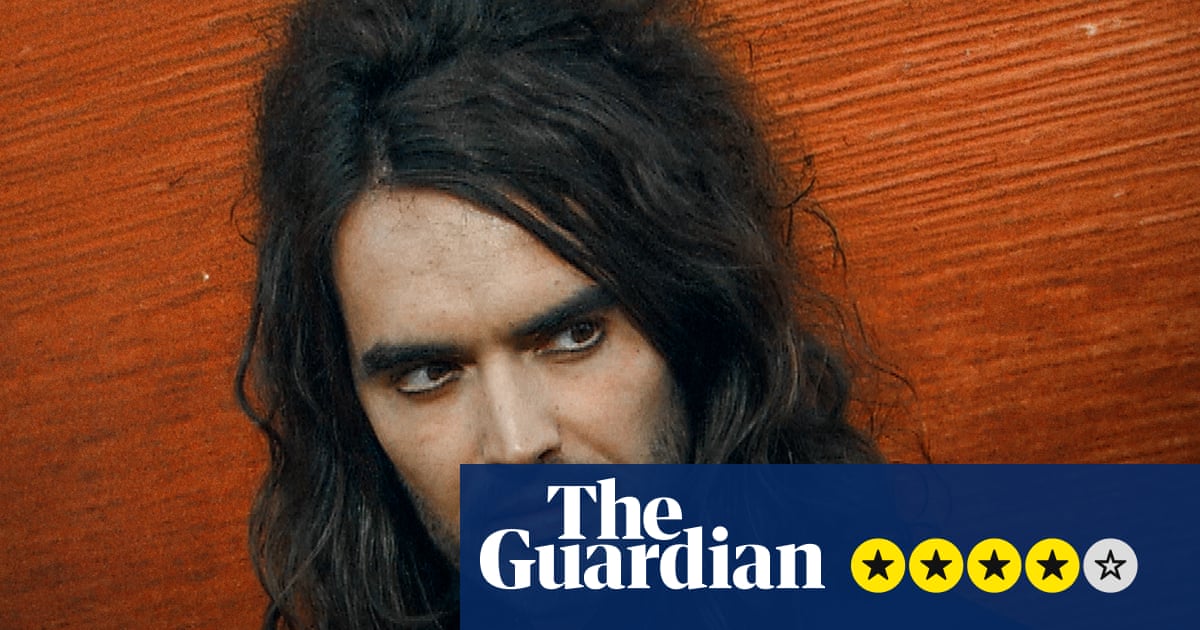
Last week was quite the week. Coming within a few days of each other, the sentencing of Russell Brand and the allegations about David Walliams have felt dizzying. As well as all the elation that justice has been served in relation to Brand, and the admiration for the women who saw that it was, there’s also an underlying sense of exhaustion about the sheer grubbiness of it all.
With this in mind, the thought of watching a feature-length documentary about the Sunday Times and Channel 4’s investigation into Brand might feel like willingly dunking your head into a toilet. However, Russell Brand: Open Secret is absolutely worth an hour and a half of your time. Not only is the film a tribute to Rosamund Urwin and Charlotte Wace, the journalists who spent years meticulously drawing the net closer to Brand – and, needless to say, to his victims – but it does a tremendous job of putting the whole sorry affair into a broader cultural context.
Because, at the time of his greatest fame, Brand’s behaviour wasn’t simply tolerated; it was actively celebrated, not least by him. We see clips of his standup that consist of him either dry-humping the air or delving into the seats to flirt with his audience. We see him signing cleavages and being followed around, Pied Piper-style, by crowds of young women. We see him reflect on the end of his BBC career, after the Andrew Sachs scandal, by boasting that he did worse things every single day. There is a clip of a podcast where he jokes about having raped someone.
And at the time, people couldn’t get enough. The tabloids crowned him “shagger of the year” three times in a row. Almost every single newspaper rapturously reviewed My Booky Wook. Whenever he put his voice to a cause, everyone involved fell at his feet, giddy at the attention that someone with his platform and fame could afford them.
Throughout, we hear testimonies from those involved in the Times’s investigation. Tellingly, his ex-girlfriend Jordan Martin wrote a book about the abuse she suffered at Brand’s hands. Even though she worked in PR herself, she couldn’t interest the press in her story. It might have been an open secret, but it was one that the establishment (and Brand’s lawyers) seemed motivated to ignore.
Obviously, the details of the allegations remain horrific. A number of his accusers speak up here – some on camera, some represented by actors – but they all follow a pattern of entitlement and power imbalance, of a man being told that he can’t have something and taking it anyway. For them to recount their experiences over and over again – to the press, to the police and now to a documentary crew – must have required a colossal amount of strength. But their willingness to put a human face on such traumatic stories makes the case against Brand undeniable.
The documentary isn’t only interested in what Brand did, though. It looks at how he repeatedly managed to find new audiences willing to forgive, overlook or simply ignore his behaviour. In the quarter of a century since he became famous, Brand’s career has surged and ebbed with bizarre regularity. He found fame on MTV, only to be sacked for dressing as Osama bin Laden on 12 September 2001. He was embraced by the BBC, only to be rejected after Sachsgate.
His film career ended, it is implied, because his reputation for sexual assault became too loud to ignore. So he moved back to the UK and involved himself in politics, until he realised that kneejerk Covid conspiracies got more views and found himself beloved by the right. Then, as the Sunday Times investigation came to light, he miraculously found Jesus. When it’s all threaded together like this, it is hard to see Brand as anything other than a drifting grifter willing to throw himself at anything that would keep him famous. Or, as standup comic Nish Kumar, who is interviewed here, puts it: a “moral vacuum”.
But perhaps the last few manoeuvres had a bigger purpose. The film moots that, by positioning himself as the voice of the truth, Brand was attempting to outplay the media. And so it came to pass. The night before the investigation was published, Brand uploaded a nauseating video where he told his viewers that the allegations were part of a coordinated attack designed to silence his criticism of mainstream media. Indeed, this was the exact line his lawyers used when they tried to stop the investigation’s publication.
Perhaps, given the mainstream media’s enthusiasm for making him a star in the first place, Brand had a point about its tendency to reach a consensus around its treatment of particular stars. But in the end, this was the very same institution that exposed him. There is something enormously satisfying about that.
#Russell #Brand #Open #Secret #review #real #tribute #journalists #victims #brought #justice #Russell #Brand