wellnessfitpro
I’ve been around long enough as a certified strength coach to hear my fair share of people and clients say how strength training helps improve speed, and there’s a good reason for that. Stronger athletes can usually produce more force, which helps them move faster and more efficiently.
At a basic level, strength training improves your ability to push force into the ground and propel your body forward. But when you look deeper, you start to understand that speed development involves much more than simply lifting heavier weights.
I have seen that athletes who improve speed the most aren’t always the ones lifting the heaviest weights. Usually, they’re the ones combining strength with the right type of movement and (more importantly) intent.
Strength training for speed exists on a spectrum.
On one hand, you have more general methods like maximum-strength work and accessory exercises. On the other hand, you have more sport-specific methods, like strength-speed drills and explosive movements, designed to transfer directly to athletic performance.
In this article, we will dive deeper and learn about some of the most effective exercises to develop athletic speed and how you can improve speed.
Disclaimer: This article is for informational purposes only and should not be used to treat or diagnose any condition. It is recommended that you speak with your doctor before starting any exercise program, making changes to your nutrition plan, or adding any new dietary supplements into your current regimen.
What is Speed Training?
Speed training includes exercises that help athletes improve their ability to run or move faster. Some methods focus on building explosive strength and power, while others improve speed endurance, enabling athletes to maintain higher speeds for longer periods.
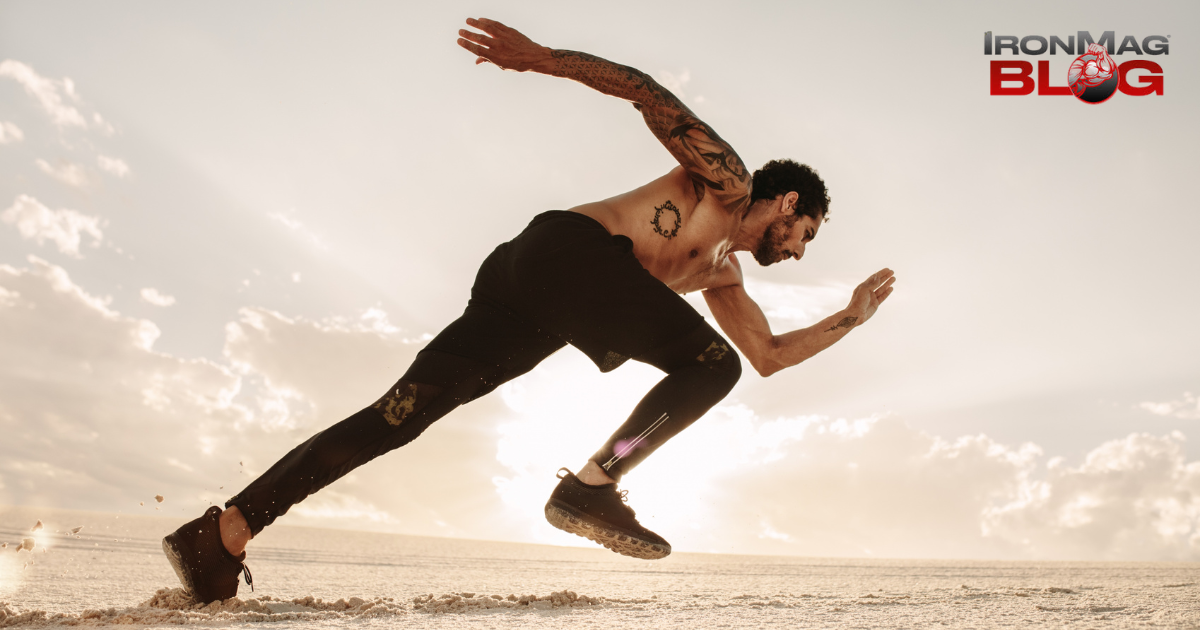
One of the most common speed drills is sprinting. Sprints are all about running short distances at maximum effort and are widely used in athletic training programs to improve acceleration, power, and overall speed.
Since the body cannot deliver oxygen quickly enough during an all-out sprint, sprinting mainly relies on the anaerobic energy system.
8 Exercises That Improve Speed
Whether you’re a serious athlete, someone who plays sports recreationally, or even a beginner starting a new fitness routine, improving your speed can benefit almost every type of physical activity.
Here are eight exercises that can help improve speed and overall performance.
1. Sprinting
When it comes to building top-end speed, sprinting remains one of the most effective exercises you can do. It trains the entire lower body, including the quads, hamstrings, calves, and tibialis anterior, while placing a major emphasis on the glutes for powerful force production.
2. Lunges
Lunges are excellent for improving lower-body strength, balance, and stability. They mainly target the hips, legs, and core while also helping improve movement control.
The bottom position of a lunge closely resembles the body position used during sprinting, which makes the exercise especially useful for speed and athletic performance.
Before progressing to advanced variations like lateral or reverse lunges, it’s important to first master proper form with the standard front lunge.
3. Box step-ups
Box step-ups are a versatile lower-body exercise that mainly targets the glutes while also working the quads and hamstrings.
The movement closely mimics the powerful hip extension used during sprinting and acceleration, making it especially effective for improving athletic speed and lower-body power.
4. Side throws
Stand sideways to a wall, roughly 10 feet away, and throw a medicine ball against it as powerfully as possible. Keep your back elbow elevated during the movement to reduce unnecessary stress on the shoulder and maintain proper throwing mechanics.
If you experience shoulder pain or discomfort while performing this exercise, it’s best to address it early rather than push through.
5. Sled drags & pushes
Sled pushes and drags are excellent for building acceleration strength and explosive power. These exercises place extra resistance on the acceleration phase of sprinting, helping athletes develop stronger force production in a controlled and effective way.
6. Hill sprints
Take your speed workouts outdoors and use hills to build power and acceleration. While you can use a treadmill with an incline, hill sprints outside usually feel more natural and challenging.
Sprint uphill at maximum effort for around 10 to 20 seconds, then take enough recovery time to let your heart rate come down before the next rep.
Since hill sprints can get very intense, start gradually. You don’t need a steep hill in the beginning. Begin with a few reps on a smaller incline, then slowly progress over time by increasing the incline, adding more reps, or reducing recovery time.
7. Back squats
While the back squat isn’t a direct speed-training exercise, it plays a major role in building the lower-body strength needed for faster running and better athletic performance.
When performed through a full range of motion, the back squat is especially effective for developing stronger glutes, which are essential for power and acceleration.
8. Jump ropes
Jumping rope is one of the best exercises to help improve speed, coordination, and footwork. Single-leg hops, in particular, can help increase leg speed and balance while training the lower body to move more quickly and efficiently.
Many physical therapy and athletic training programs also use jump rope exercises to improve mobility, flexibility, and overall movement control.
Author Bio:
Matt Weik, BS, CSCS, CPT, CSN, is a globally recognized health, fitness, and supplement industry expert with over 25 years of hands-on experience. He is the founder of Weik Fitness and one of the most prolific writers in the space, known for translating complex science into clear, actionable content. Matt holds a Bachelor of Science in Kinesiology from Penn State University and multiple industry certifications, giving his work both academic credibility and real-world authority. His writing has been featured on thousands of websites and in 100+ magazines worldwide, including FLEX, Muscular Development, Iron Man, and Muscle & Fitness UK, and he has authored 30+ published books. Trusted by leading supplement brands and media outlets alike, Matt is widely regarded as one of the most knowledgeable and reliable voices in health, fitness, and sports nutrition.
#Exercises #Improve #Speed #IronMag #Bodybuilding #Fitness #Blog