wellnessfitpro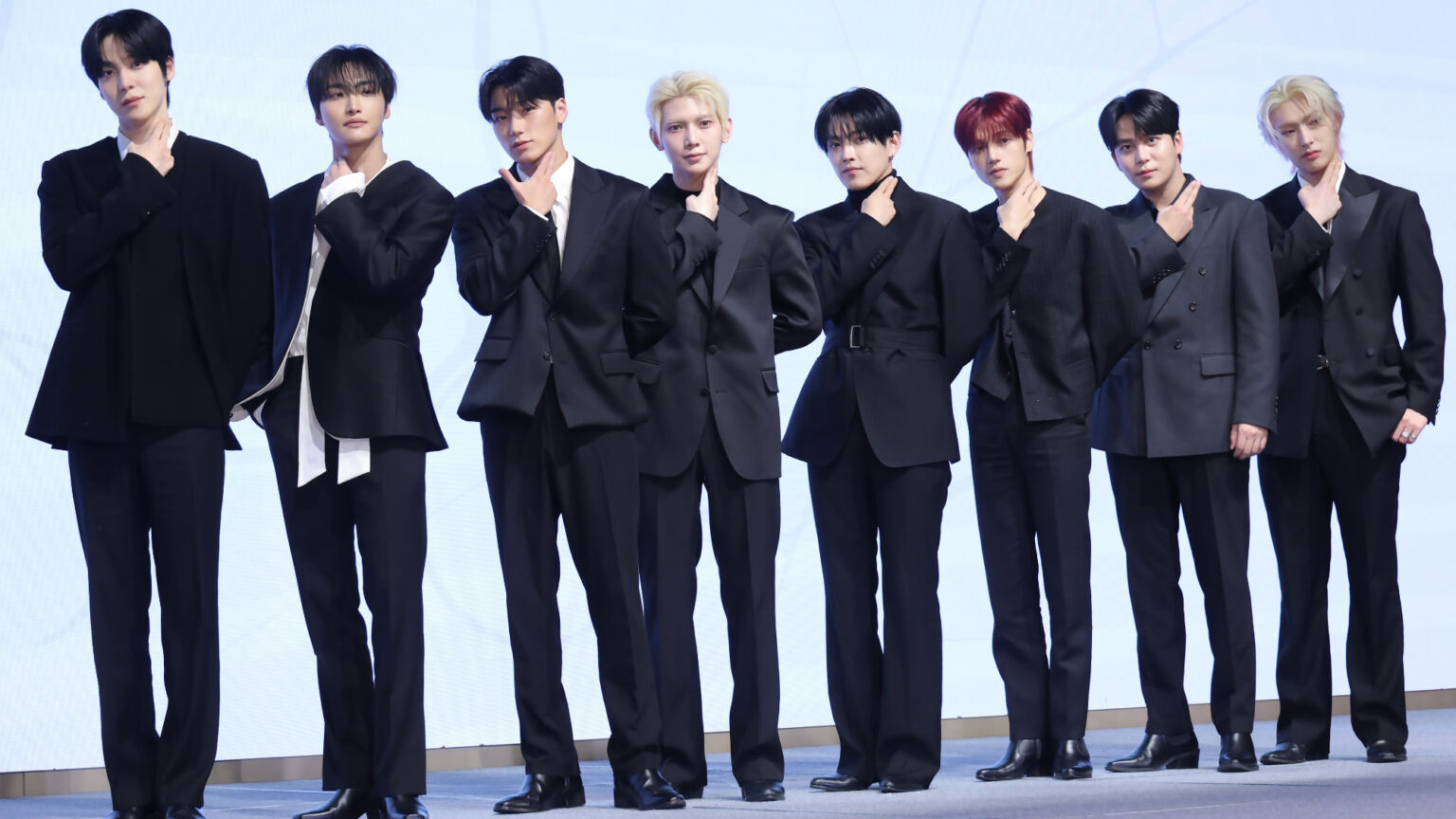
In recent decades, Hallyu – the ‘Korean wave’ – has been making its way around the globe. Denoting an obsession with South Korean culture, Hallyu broke first into the Chinese market in the mid-1990s, and subsequently exploded into the West following the release of Psy’s No1 hit, ‘Gangnam Style’, in 2012. In the space of a couple of generations, this tiny East Asian peninsula, once labelled an ‘economic basket case’, has not only transformed its economic fortunes – it has also managed to transform itself into a pop-culture powerhouse.
Most will be familiar with Korean film and drama by now, with Bong Joon-Ho’s Oscar-winning Parasite and hit TV-show Squid Game captivating even the most subtitle-averse among us. Others will be acquainted with Korean gaming and tech industries, or have heard Western influencers rave about the innovation of ‘K-beauty’. Few will have escaped the pervasive popularity of Netflix’s KPop Demon Hunters – an action-packed film about pop stars defending their fans’ hearts from corrupting evil spirits. It’s now won a Golden Globe as well as two Academy Awards for best animated film and best original song.
The success of KPop Demon Hunters is particularly telling. It points to the surge in popularity of the South Korean pop genre, K-pop, a fascination with its performers, K-pop idols. Indeed, Kim Eun-jae (Ejae), who voiced the character of Rumi and co-wrote many of KPop Demon Hunters’ musical numbers, once dreamed herself of becoming what is known as a K-pop idol.
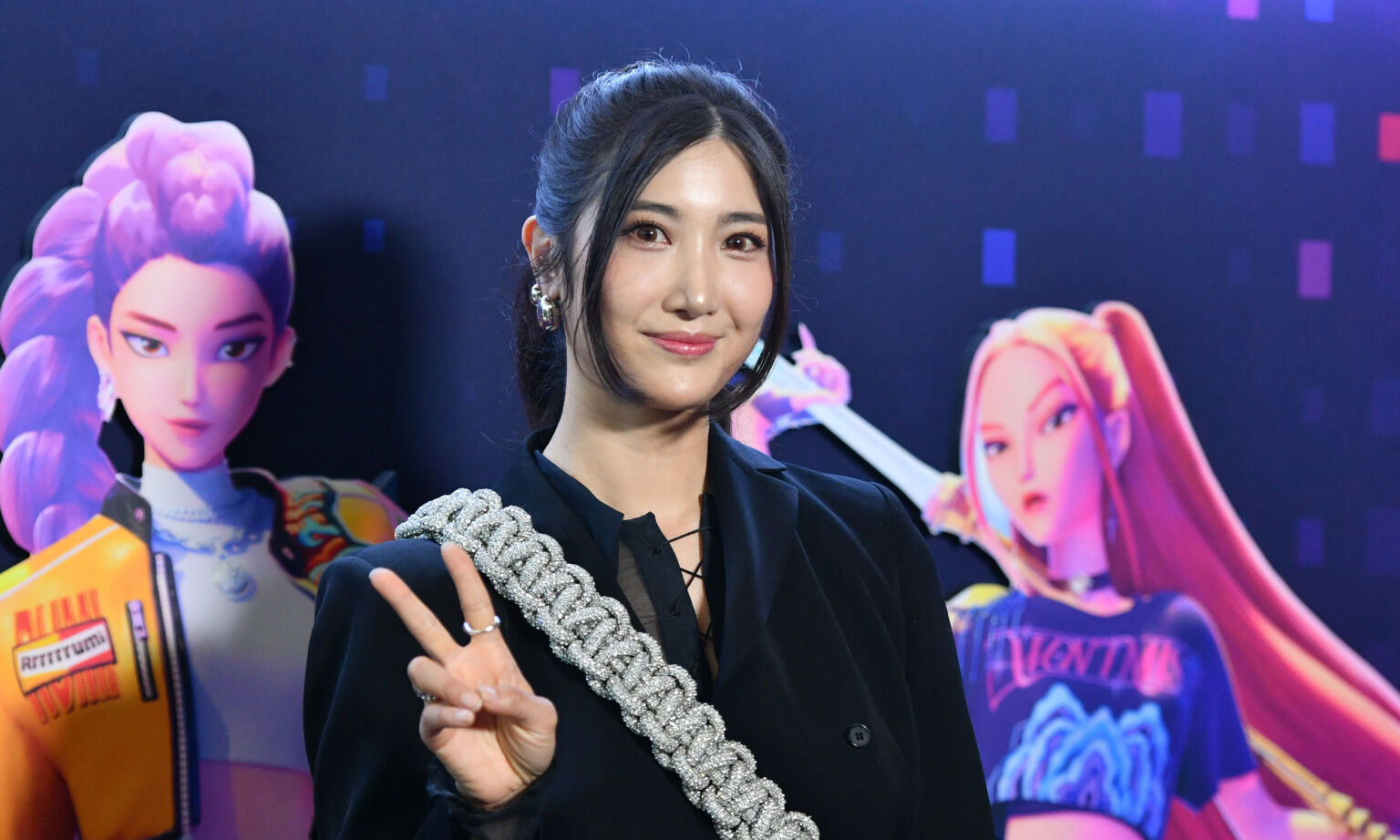
Ejae attends Netflix’s KPop Demon Hunters Special Screening at Netflix Tudum Theater, Los Angeles, California, 16 June 2025
‘Idol’ is the term used for pop stars in South Korea. They are so called because they are presented as the ideal: the perfect archetype of the beautiful, multi-talented squeaky-clean boyfriend or girlfriend. Unlike Western pop stars, idols are encouraged not to be specialists in just one area, but to ‘do it all’. Though modern autotune capabilities mean raw vocal talent falls lower on the priority list, they must be able to dance, with complex choreographies being a staple of K-pop performances. That said, the bar for both vocal and dance abilities can be lowered significantly for a candidate who looks the part.
What stands out about K-pop is its elaborate training process. For an undetermined period of time, young hopefuls live together in company dorms. They work from early morning until late at night to perfect not only their stage skills, but also their foreign-language abilities, media conduct and celebrity persona. This training period is intensely competitive, complete with internal ranking systems and regular ‘reviews’ to determine whether a particular candidate is worth keeping on.
Unsurprisingly, these ‘popstar factories’ provide fertile ground for all sorts of mental-health conditions, from anxiety to eating disorders – something exacerbated by Korean culture’s veneration of ‘effort’ and working hard. ‘Everyone was required to be no heavier than 47kg… regardless of their age or height’, said one ex-trainee, describing her experience to the BBC:
‘At weekly weigh-ins, your body would be analysed by the trainer and then they announced your weight to everyone in the room. If you were over the designated weight, then they would ration your food… “overweight” trainees would just be given water.’
The former trainee went on to detail how female K-pop candidates would willingly risk collapse in order to be seen as working hard enough:
‘Starving yourself was really normalised. Some trainees were anorexic or bulimic, and many of the girls didn’t have periods. It was common to pass out from exhaustion. Often we had to help carry unconscious trainees back to the dorms… The attitude among the trainees after that was like, “Good for her! She wants it so much!”.’
Few in South Korea have any qualms about rigorous dieting – particularly within a culture where physical beauty is a large determinant of success. Until 2019, it was legal for employers to request prospective job candidates’ weight and height. Around 40 per cent of Koreans report having been discriminated against based on appearance while seeking a job. So pervasive is looks-based hiring that it is deemed entirely acceptable for parents to ‘gift’ their children surgeries during senior year (17- to 19-year-olds) in high school in order to get ahead.
This is not just vanity. Korean culture is shaped by the Confucian belief that good outward presentation is a sign of inner order and responsibility. Such is the focus on looking good that Seoul has long since become the cosmetic-surgery capital of the world. It’s estimated that a third of South Korean women have undergone aesthetic alterations.
K-pop takes the obsession with outward perfection to the extreme. K-pop management companies routinely encourage trainees with potential to go under the knife. Korea’s beauty standard is infamously narrow, with luminous white skin, creased eyelids, a high nose bridge, small head and V-shaped chin among the most desirable features for both male and female idols. As a result of the premium placed on beauty, roles within K-pop groups have extended beyond just the ‘main vocalist’ or ‘lead dancer’, and now include ‘the visual’ – a member whose key talent is the ability to charm fans with his or her looks. More often than not, the visual is ‘perfected’ during his or her trainee days.
Some aspects of this focus on ‘visuals’ are particularly troubling, such as the preference for childlike features on female idols. Furthermore, it is not uncommon for idols to begin their career very young, with girl groups such as NewJeans aged between 14 and 18 when they first appeared. Like most female groups, NewJeans had a large male fanbase – a fan meet in 2023 led to around 60 per cent of tickets being snatched up by men. Furthermore, all idols, whether they’re age 14 or 30, are expected to pull ‘cute’ expressions and speak in high-pitched, infantile voices (known as aegyo) making some aspects of the K-pop performer-audience dynamic particularly disturbing. Especially when groups as young as NewJeans are releasing songs containing lyrics like the following:
‘Made a little cookie / It’s too soft… I’m hiding it / but I want you to see it more… Do you ever smell it different? (Taste it)’
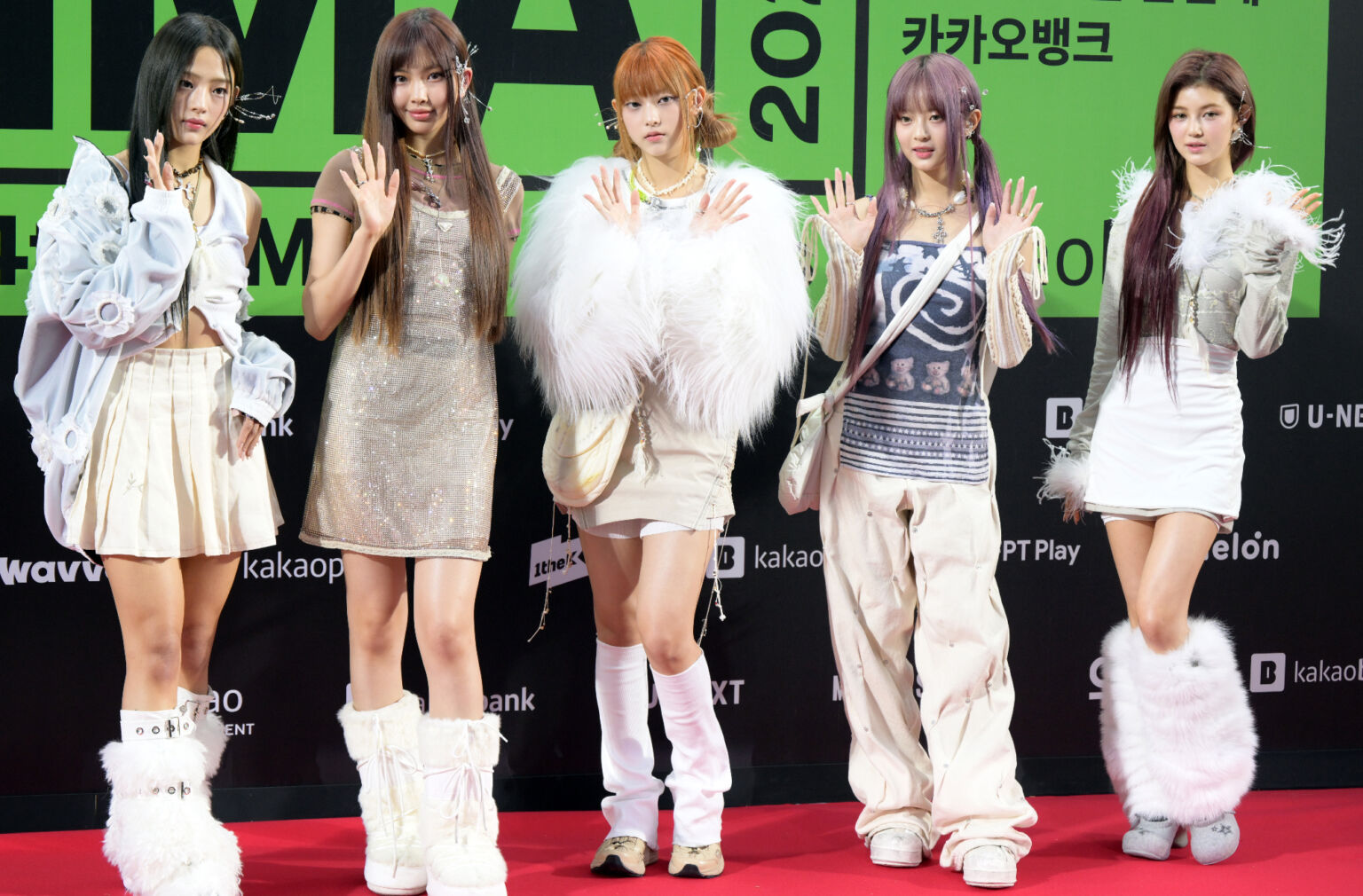
New Jeans at the 2022 Melon Music Awards at Gocheok Sky Dome, in Seoul, South Korea, 26 November 2022.
Beyond achieving the right ‘visuals’, K-pop idols are expected to maintain a spotless public persona. Even outside of studio hours, trainees’ behaviour is monitored rigorously. Some agencies reportedly assign candidates an ‘uncle-type’ figure, who will text his charges at night to ‘keep tabs’ on them. ‘If we didn’t text back’, explained one former trainee, ‘then we would immediately get a phone call, asking where we were’. Candidates are rarely given weekends or holidays off, and are largely severed from the outside world during their training period. Social-media and phone use are restricted to prevent hopefuls from accidentally sullying their own image.
In US and European pop culture, stars tend to build up a fanbase by putting out music and performing live for several years. That’s not the case with K-pop. Trainees have devoted fans prior to releasing a single song. If a trainee is deemed likely to debut (the term used when a new act is officially presented to the market), the agency may opt to tease photos and training videos of them online. ‘Who’s that girl???’ was the caption of a photo posted by K-pop artist Jennie’s agency back in 2013. The image alone created a buzz. As a result, Jennie was primed to be the next ‘it girl’ before anyone even knew her name. The group she eventually debuted in, BLACKPINK, would become K-pop’s most internationally successful girl group of all time.
Such intense fan loyalty is not always a benefit. Many idols deal with sasaengs – obsessive supporters who follow the idol to events and personal appointments, send gifts, wait outside their homes, book themselves on to the same flight whenever the idol leaves Korea, and sell their particular idol’s personal information online. Kim Jae-joong, formerly of the boyband TVXQ, awoke in his bed one night to the sensation of a fan kissing him, having broken into his home. BIGBANG’s G-Dragon allegedly received a letter covered in blood from a fan who had slit her palms and part of her neck. His former bandmate, Taeyang, received a similar letter – this one covered in menstrual blood and pubic hair. Nayeon, from band Twice, had a stalker from Germany who operated under the name ‘Josh 1994’, who followed her everywhere. ‘I want to make her happy’, he posted online. He hoped she would realise ‘that I am a good guy and develop feelings for me as well’.
Many trainees don’t make it. Kpop Demon Hunters’ Ejae spent over a decade of her life at SM Entertainment, one of the ‘big three’ K-pop management companies at the time, trying to earn the right to debut. But while young women in her cohort were being selected as members of Girls’ Generation (one of hallyu’s earliest successes beyond Korea’s borders), Ejae’s own debut date was held off indefinitely. She was eventually let go, after almost 12 years of training.
This is a common occurrence. There are countless trainees who never make it to the stage, despite giving up years of their childhood to prepare for it. Some find their contracts expiring in their early twenties, leaving them out in the cold with no real qualifications. Others are led to believe that they’ve made the final line-up of a group, only to have it snatched away at the last minute. Such was the case with Kim Ji-Hun, who spent 2011 living in a poorly ventilated dormitory with six other male trainees. Three of his roommates were minors, who by dint of being younger would sleep huddled together on the floor due to a lack of bunks. Kim spent every waking hour preparing to debut in a group with these boys, only to be cut at the final hurdle when his company decided his skills weren’t quite ‘there’. With the plug having been pulled on his dreams, he spiralled into a depression. His roommates continued working toward their debut without him. All six became members of the Grammy-nominated global sensation, BTS.
Of course, just because a trainee has debuted in a group doesn’t mean they’re out of the woods. BTS’s agency, HYBE (previously BigHit), released months of promo footage and teaser pics for its forthcoming girl group in 2022. Consisting of six members, LE SSERAFIM experienced an extraordinarily successful debut, breaking several records. But it wasn’t long before rumours about 16-year-old vocalist, Garam, began to circulate, with old schoolmates alleging that she had been a bully. Garam was swiftly dropped by HYBE, with little regard to whether or not the accusations had any substance to them. Choreography was reworked, old footage deleted or manipulated to exclude her, and LE SSERAFIM’s remaining members – likely as a result of contractual obligation – never mentioned her departure at all. It was as if she had never existed.
Scandals like Garam’s are a dime a dozen in K-pop. Though not all are career-ending, Korean fans don’t forgive easily, and idols can find themselves shunned for years over a single misstep. Strangely enough, the K-pop fandom is far more alarmed by controversies of the romantic variety than by bullying. Idols, whether male or female, are expected to maintain the illusion of being permanently available: the perfect partner who never actually dates anyone. They’re sexualised, but never actually having sex. Simply being photographed with a member of the opposite sex is enough to prompt outrage from fans. ‘Is the love given to you by your fans not enough?’ read an electronic billboard on the side of a ‘protest truck’, parked deliberately outside one female idol’s agency building. In this instance, protests were being directed towards Aespa’s Karina, a 23-year-old idol whose relationship with an actor had been ‘exposed’. She subsequently made a heartfelt apology, hoping to ‘heal the wounds’ she had inflicted upon fans. ‘I know many of you may have been disappointed… I want to show you a more mature side [of me]… I’m sorry, and I’m very grateful.’
Such controversy is the privilege of idols popular enough to generate it. Only a tiny fraction will ever achieve that kind of notoriety – let alone the salary that might make it tolerable. Agencies expect full repayment of training fees, which can amount to millions of US dollars per idol, including whatever surgeries they may have been pressured into at the time. Even moderately successful K-pop acts struggle to earn a living. Additionally, the constant influx of new groups – around 80 to 100 each year – means those that can’t compete are quickly disbanded. The most promising members of discontinued groups are often debuted again the next season in a new one. Some artists have been in two or three groups before finding a modicum of stability – or else calling it a day.
For some, the burden of striving for perfection is crushing. There have been a series of high-profile suicides within the industry. After dating a fellow musician, 25-year-old idol Sulli, member of the group f(x), faced a campaign of harassment online. ‘I feel like I’m lying to everyone by pretending to be happy on the outside’, Sulli said on a talkshow, before taking her own life in 2019. SHINee’s Kim Jong-hyun and Astro’s Moonbin were also found dead at their homes in the Gangnam district of Seoul.
For all its tenacity, innovation and glossy outward appearances, the K-pop model incorporates the best of Korean culture and the worst. While it can be argued that ‘lazy, sex-obsessed Western pop’ could learn a thing or two from K-pop’s more ‘wholesome’, diligent outlook, those who wish American acts were more like their Korean counterparts should question why K-pop groups are so desperate to break into the global market in the first place. More than money, an audience in the US often means greater freedom, fans that won’t disavow you for gaining a few pounds, and a brand of cancel culture which, while foreign in its obsession with ‘cultural appropriation’, does not yet seek to crucify adults for having romantic interests.
In an industry that offers no margin for error, exit often becomes the prize.
Georgina Mumford is a content producer at spiked.
#dystopian #world #Kpop