wellnessfitpro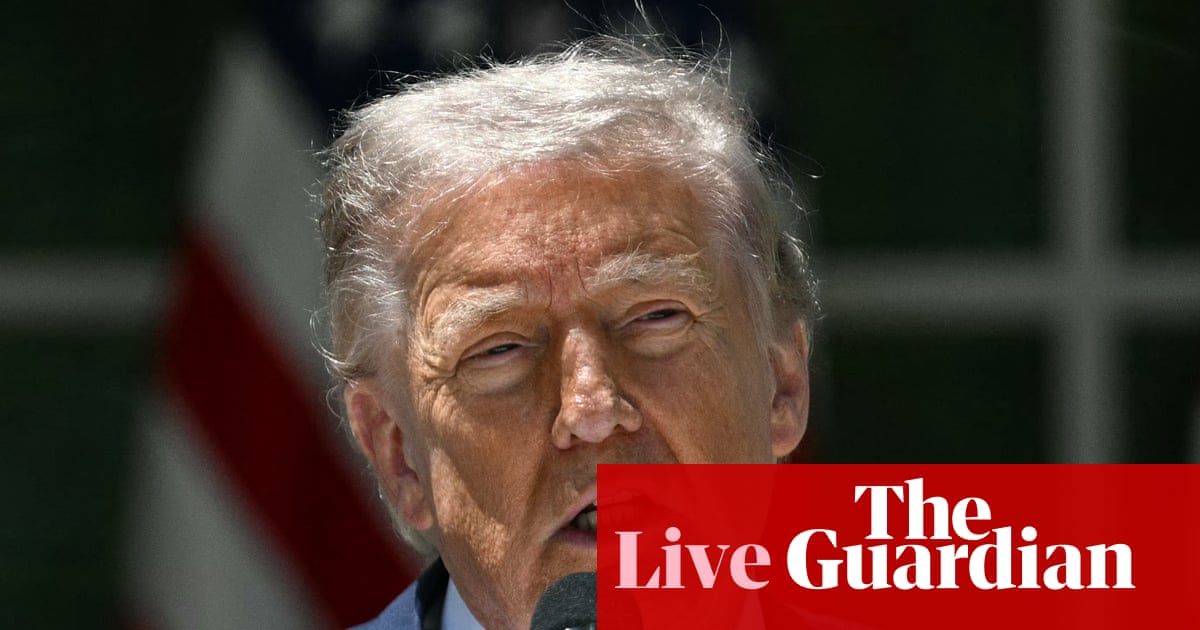
‘If I make a deal with Iran, it will be a good and proper one,’ Donald Trump posts online
Donald Trump has given an update of sorts about the ceasefire negotiations with Iran and the apparent lack of detail, adding that talks are still ongoing.
The US president wrote on Truth Social: “If I make a deal with Iran, it will be a good and proper one, not like the one made by Obama, which gave Iran massive amounts of CASH, and a clear and open path to a Nuclear Weapon.
“Our deal is the exact opposite, but nobody has seen it, or knows what it is. It isn’t even fully negotiated yet. So don’t listen to the losers, who are critical about something they know nothing about.
“Unlike those before me who should have solved this problem many years ago, I don’t make bad deals!”
Key events
Trouble may be brewing for the US-Iran deal as parties work to finalize an agreement. According to Al Jazeera English correspondent Ali Hashem, the US may be attempting to retreat on two key negotiating items: unfreezing Iranian assets and the extent of a ceasefire in Lebanon.
According to Hashem’s Iranian source, Israel seems to be pressuring the US to include language that would allow for further Israeli military operations in Lebanon. Iran is insistent on the ceasefire extending to Lebanon, as well.
“Tehran has informed all mediators, including Pakistan, that it will not sign the memorandum unless all clauses are fully agreed and guaranteed,” Hashem reports. “The overall picture suggests Tehran increasingly views Washington as backing away from earlier understandings reached through mediators.”
Naim Qassem, the chief of Hezbollah, said on Sunday he hoped the Iran agreement would be completed soon and include Hezbollah in the terms.
“God willing, this agreement will be finalized and there are signs of its completion, and accordingly that we too will be among those included in this agreement – an agreement of a full cessation of hostilities,” he said in a televised address, according to AFP.
Benjamin Netanyahu, the Israeli prime minister, said on Sunday that Donald Trump said he supported Israel’s fight against Hezbollah.
US government still obstructing some clauses of agreement to end war, says Iranian state media
Iran’s Tasnim news agency said that the US government is still obstructing some clauses of the agreement to end the war, including the issue of releasing blocked Iranian assets, according to Reuters. Some details of the deal are still unknown and nothing has been officially signed yet.
Axios and CBS report that the agreement with Iran is not expected to be signed today, with an anonymous senior Trump official telling Axios there are a number of details that still need to be finalized.
The senior official also said that the Iranian government at the moment moves slowly and that it may take several days for the agreement to go through all the approvals.
The chief of the Lebanese Hezbollah group said their disarmament is unacceptable, amounting to “annihilation”, according to the AFP news service.
Marco Rubio says the US is ‘beacon of hope’ at event in India
Secretary of state Marco Rubio said on Sunday that the US has served as a “beacon of hope, not just to around the world, but to individuals”, adding that his family were immigrants from Cuba.
“They came to the one place on Earth where people like them would have a chance to truly have a better life,” Rubio said during his speech at the Freedom 250 Independence Day reception in India.
Rubio’s statements sharply contrast with the Trump administration’s increasing attacks on immigrant communities nationwide. The administration has engaged in a “mass deportation” program to crack down on undocumented immigrants and has also targeted legal immigrants in the US.
Just this week, the Trump administration announced a significant change to immigration policy by requiring green card applicants to return to their home countries to apply.
The Israeli prime minister, Benjamin Netanyahu, said he and Trump agreed any final Iran deal must end “nuclear threat entirely”.
“President Trump and I agreed that any final agreement with Iran must eliminate the nuclear threat entirely. This means dismantling Iran’s uranium enrichment facilities and removing enriched nuclear material from its territory,” Netanyahu said in a statement, referring to a conversation between the two leaders on Saturday night.
Drop Site News this weekend reported that a senior Iranian official said Israel is attempting to undermine the deal.
“Israel is currently undertaking its final extensive efforts and applying considerable pressure to disrupt the formation of this agreement,” the senior official told the outlet. “We hope that the US administration will make its decision independently of external influence and in favor of the broader collective interests of all parties involved.”
Lebanon’s health ministry said an Israeli airstrike in the country’s south on Saturday killed 11 people, including six women and a child, despite a supposed ceasefire.
“The Israeli enemy strike on the town of Sir al-Gharbiyeh in the Nabatieh district resulted in a massacre whose final toll is 11 dead including a child and six women, and nine wounded including four children and a woman,” the ministry said in a statement.
We have not been able to independently verify any of this information yet.
In his Truth Social post, Trump said former president Barack Obama’s 2015 nuclear deal, formally known as the Joint Comprehensive Plan of Action, or JCPOA, was one of the “worst” deals the US had ever made. He promised that whatever agreement he will reach with Iran will be far superior.
Trump wrote: “It was a direct path to Iran developing a Nuclear Weapon. Not so with the transaction currently being negotiated with Iran by the Trump Administration – THE EXACT OPPOSITE, in fact!”
Under the JCPOA, international sanctions were lifted in exchange for limitations on Tehran’s nuclear programme.
As my colleague Oliver Holmes reports in this story, in 2018 Trump upset his European allies by unilaterally taking the US out of the deal and reinstating sanctions. He disliked the pact and was discouraged from diplomacy by Israel. As a result of the US withdrawal Tehran began stepping up its nuclear programme.
Now, after launching an unprovoked attack on Iran in February, Trump appears to be chasing a deal along the same contours as the JCPOA – and may even be offered worse terms.
Trump says he has told his representatives to not ‘rush’ into a deal with Iran
In a post to Truth Social, Donald Trump said talks with Iran are “proceeding in an orderly and constructive manner”, adding that he has told his representatives to not “rush” into a deal because time is on their “side”.
The US president said the blockade on Iranian ports will remain in “full force” until an agreement is reached. “Both sides must take their time and get it right. There can be no mistakes!” he wrote.
Echoing the comments given to the media earlier by the secretary of state, Marco Rubio, Trump said Iran cannot “develop or procure” a nuclear weapon or bomb under any circumstances.
He said the US’s relationship with Iran is becoming much more “professional and productive” and thanked Middle Eastern countries for their “support and cooperation”.
Israeli military orders residents of more Lebanese towns and villages to evacuate ahead of attacks
The Israeli military has ordered residents of more Lebanese towns and villages to evacuate immediately by a “distance of no less than 1000 meters to open areas” in advance of attacks against the locations.
The affected towns and villages are: Kfar Sir, Sir al-Gharbiyyah, al-Zrariyah, Ansar, Mazra’at Kouthariyat, al-Riz and al-Khuraib, according to a social media post by the IDF’s Arabic-language spokesperson, Avichay Adraee, who claimed the attacks are being launched due to Hezbollah violating the US-mediated ceasefire agreement Israel signed with the Lebanese state in mid April.
Earlier, the IDF ordered the evacuation of ten villages in southern Lebanon.
International law experts say Israel’s warnings are inconsistent and often overly broad and open-ended. Sometimes there is no warning at all before the airstrikes. More than one million people have already been displaced by the renewed Israeli war on Lebanon which started when Hezbollah launched missiles at Israel on 2 March after the US-Israeli bombing of Iran in late February.

Patrick Wintour
News of the potential US-Iran deal triggered dismay among Republican hawks, who had spent years calling for US military action against Iran, and deriding the 2015 deal to limit Iran’s nuclear enrichment in return for sanctions relief negotiated during the Obama administration.
Trump withdrew from that international deal, known as the joint comprehensive plan of action (JCPOA), in 2018.
Mike Pompeo, who served as CIA director and secretary of state during Trump’s first term, denounced the current proposed agreement as too close to what Barack Obama’s negotiators had achieved and a boon to Iran’s Islamic Revolutionary Guard Corps.
“The deal being floated with Iran seems straight out of the Wendy Sherman-Robert Malley-Ben Rhodes playbook: Pay the IRGC to build a WMD program and terrorize the world,” Pompeo wrote on social media, referring to Obama’s chief negotiators.
The alternative, Pompeo added, is “straightforward: open the damned strait. Deny Iran access to money. Take out enough Iranian capability so it cannot threaten our allies in the region.”
Malley responded: “Not quite the path Wendy, Ben or I would have taken. But if this deal brings an end to an unlawful, unjustifiable war, to the senseless loss of life and destruction and to the cascading global economic fallout, I am quite sure we’d willingly accept it over the alternative.”
You can read more here:
A Bahraini court sentenced nine defendants to life in prison and two others to three years in jail for collaborating with Iran’s Revolutionary Guard Corps (IRGC) to carry out what it described as “hostile and terrorist acts” against Bahrain, the state news agency said, Reuters reports.
The defendants were involved in gathering information on sensitive sites and facilitating related financial transfers, the statement said.
Bahrain’s interior ministry said on 9 May that it had arrested 41 people it said were linked to the IRGC. The ministry said security authorities had uncovered a group tied to the IRGC while public prosecutor investigations also involved cases related to sympathy with Iranian attacks.
Sources have told Reuters the proposed framework for peace would unfold in three stages: formally ending the war, resolving the crisis in the strait of Hormuz and launching a 30-day window for negotiations on a broader agreement, which can be extended.
Two Pakistani sources told the news agency that, according to the proposed memorandum, the Strait would be opened immediately after the US lifted its blockade. Marco Rubio said that, if the outline was agreed on, it would mean “completely open straits”, and “without tolls”.
The IRGC-affiliated Tasnim news agency said any changes in navigation through the strait of Hormuz were conditional on implementation of other commitments by the US. It also said some Iranian funds that have been frozen globally as part of sanctions must be released in the first phase of the deal.
One of the Pakistani sources said if the US accepted the memorandum, further talks could take place after the Muslim Eid holiday ends next Friday.
Israel issues first response to potential US-Iran peace deal
According to the NY Times, the Israeli government has issued its first response to the potential US-Iran deal.
In a written statement given to journalists, an unnamed Israeli official said Benjamin Netanyahu had discussed the agreement with Donald Trump last night over the phone.
The NY Times reports that the official described the deal as an initial understanding about the reopening of the strait of Hormuz that would lead to further talks on a final agreement.
The official said that Netanyahu made it clear to Trump that Israel would not be constrained in responding to “all threats”, including across the border in Lebanon.
Netanyahu is said to actually want to resume the war on Iran in order to degrade the country’s military capabilities further and continue attacks on its infrastructure.
Donald Trump, whose poll ratings have suffered in the US over the deeply unpopular war, seems more interested in reaching an agreement with Tehran, although he has repeatedly said he will resume attacks if one cannot be reached and gives often contradictory statements.
Iran has said an end to Israel’s war on Lebanon has to form part of any agreement with Washington.
#Middle #East #crisis #live #Trump #claims #dont #bad #deals #questions #remain #negotiation #progress #Middle #East #north #Africa