wellnessfitpro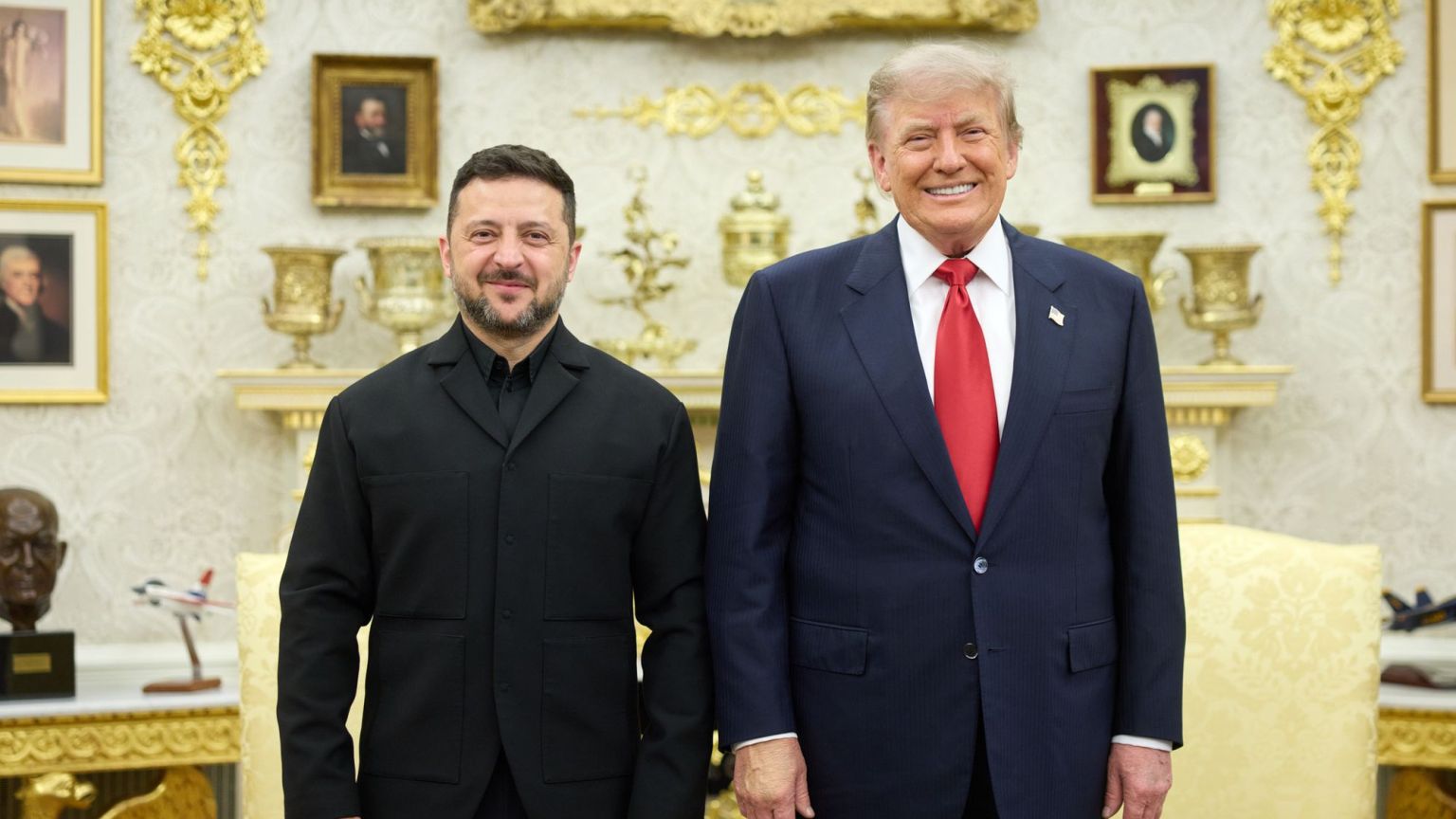
There is an old Ukrainian proverb: a gentle calf suckles two mothers. ‘Gentle’ has never been Ukrainian president Volodymyr Zelensky’s style.
‘Clever’ is a better fit. And he has been clever from the very beginning: the olive t-shirt, the unshaven weariness led to him being embraced by leaders across the West. Watching his week in Washington, I found myself amending the proverb. A clever calf suckles two mothers.
For the past year, we have watched America step back from Ukraine’s war. Washington froze new military aid packages in 2025, using the pause as leverage to push Kyiv towards negotiations. Since returning to power, US president Donald Trump has ended direct deliveries of US arms, instead allowing European countries to buy weapons for Ukraine. America, he insisted, was not a party to this conflict.
Western Europe took the vacated seat. The EU structured a €90 billion support package for 2026-27, including €28.3 billion for defence capabilities. Germany committed €11.5 billion for 2026, prioritising IRIS-T air defence, drones and artillery. Norway’s assistance for 2026 is worth about 10.9 billion Norwegian kroner. London announced its largest-ever single-year package of £600million for air defence, partly financed from confiscated Russian assets.
Then came Iran – and the West split in two. When US and Israeli strikes began on 28 February, Spain denied American forces the use of bases that had hosted US troops for more than 70 years. Shortly after, Italian prime minister Giorgia Meloni, Trump’s closest European ally, broke publicly with Washington: ‘When we don’t agree, we must say it. And this time, we do not agree.’ Germany’s foreign minister said Berlin had no intention of joining military operations in the Strait of Hormuz. Two camps formed on the map of the free world: one around Zelensky, one around Trump.
This was decidedly in Russia’s favour – at least according to Moscow’s interpretation. Yes, Ukraine’s long-range campaign was hurting: Russian refineries were struck at least 194 times from January to early July 2026, knocking out roughly a third of Russia’s refining capacity, triggering fuel shortages and queues at petrol stations. But the front moved slowly, stubbornly, in one direction.
But then Kyiv made a move of chess-like precision. On 25 July, on the eve of Zelensky’s American visit, a Ukrainian long-range drone struck an Iranian cargo vessel in the Caspian Sea. Tehran erupted on cue. ‘What the freeloader in Kyiv did CANNOT GO UNANSWERED’, foreign minister Abbas Araghchi wailed. Zelensky also shared intelligence with the US showing that Russia has passed satellite imagery of US bases in the Gulf on to Tehran.
The message to Trump required no translation. While Europe’s capitals had rejected his war, Ukraine had just drawn Iranian blood. Here, the strike said, is who you can actually count on in Europe.
This might have proved to be a masterstroke. On 28 July, Trump and Zelensky met in the Oval Office and discussed licences for Ukrainian production of Patriot interceptors – a ‘good meeting’, in Zelensky’s words. It was a sign that a once-frosty relationship was beginning to thaw. That evening, more than 60 senators met the Ukrainian president, and the Senate held a procedural vote on the Russia and Iran sanctions bill: 86 in favour. The bill imposes secondary tariffs of up to 100 per cent on countries that keep buying Russian oil and gas – China and India first among them – and targets Russia’s shadow fleet of ageing tankers.
The vote fell on the day of the funeral for former Republican senator Lindsey Graham. On 10 July, Graham and Democratic senator Richard Blumenthal had announced their deal with the White House – a day before Graham’s sudden death, just after he returned from Kyiv. In their last conversation, Graham told Blumenthal the deal was a ‘big effing deal’. It was. Russia, which had supported Iran half-secretly and half-openly, watched the picture on the political board change overnight. Zelensky watched from the gallery as the Senate advanced a bill that now bears Graham’s name.
In July 2026, having survived the leanest stretch of its relationship with the White House, Ukraine returned to its original model: allied with the whole West, on both sides of the Atlantic. The calf found both mothers again.
One detail remains. In late June, Zelensky set a 40-day clock for Putin to become more accommodating at the negotiating table. The timer runs out in the first days of August. We are about to find out whether it worked.
#Zelensky #winning #Washington