wellnessfitpro
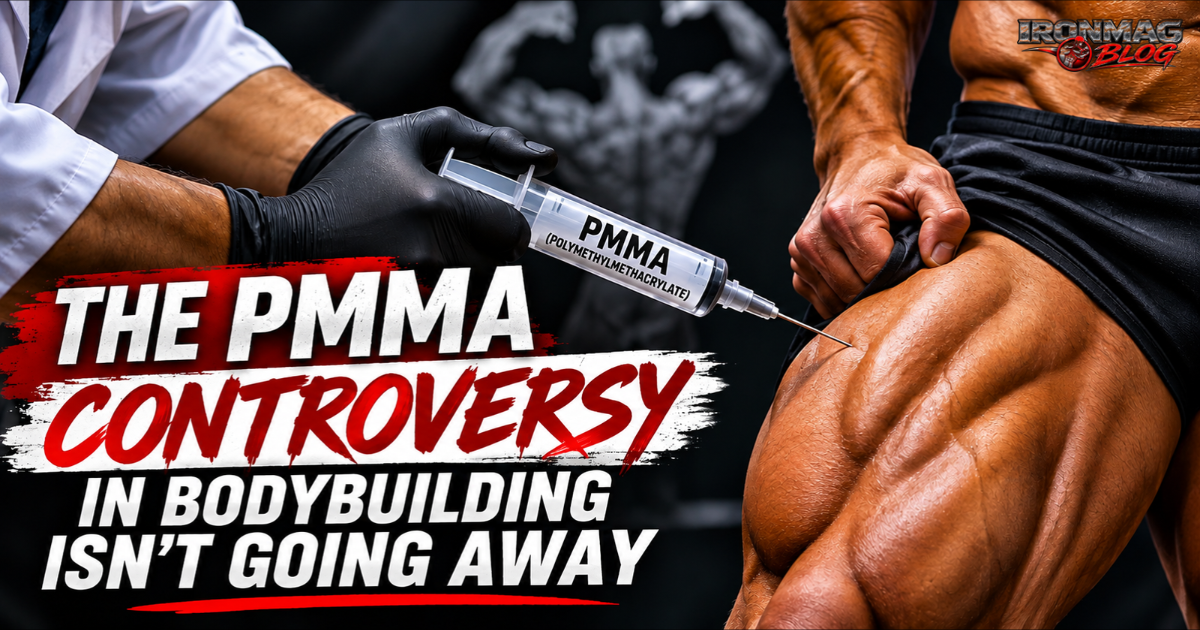
The bodybuilding world has another problem on its hands. And this PMMA issue is one that needs to be addressed before it becomes an even bigger issue.
Lately, we’ve been seeing a bunch of articles from various media companies talking about the PMMA issue in the IFBB. I’m going to weigh in with my opinion. And yes, I very well know people will come out of the woodwork to disagree with me (the fact is, I don’t care).
The controversy surrounding PMMA injections and allegations of artificial muscle enhancement has reignited conversations about the integrity of competitive bodybuilding. Sarah Villegas has been vocal about the issue, and her recent interview with USA TODAY has brought the debate back into the spotlight.
And honestly, I agree with her stance.
Bodybuilding is about building your body. It’s about years of training, discipline, sacrifice, and pushing yourself to develop a physique that most people could never achieve.
It’s not about injecting plastic (or site enhancement oil) into your muscles to make them appear bigger. At that point, you might as well just get implants for all your lagging body parts, right?
If we’re going to allow that, we might as well stop calling it bodybuilding.
What Is PMMA and Why Is It Becoming a Problem?
PMMA stands for polymethylmethacrylate. It’s a synthetic, non-biodegradable material that has been used in certain medical and cosmetic applications.
The concern is its alleged use as a way to artificially increase muscle size and create the appearance of greater muscular development without actually building that tissue.
Unlike traditional muscle-building methods, PMMA injections can create additional volume without requiring the individual to develop the muscle through resistance training.
Think about that for a second.
You spend years trying to bring up a lagging body part. You train it relentlessly, adjust your nutrition, and work to make improvements. Meanwhile, someone could potentially use injections to create the appearance of greater size.
That’s not bodybuilding. That’s cosmetic enhancement.
And I don’t care who is doing it. It has no place in competitive bodybuilding.
Sarah Villegas and Natalia Coelho Put the Issue in the Spotlight
The controversy gained significant attention following allegations made by four-time Women’s Physique Olympia champion Sarah Villegas regarding Natalia Coelho.
Villegas accused Coelho of receiving PMMA injections to artificially enhance her physique ahead of winning the 2025 Women’s Physique Olympia.
According to USA TODAY’s November 9 report, Villegas received information from a licensed health professional in Brazil who allegedly had firsthand knowledge of the procedures. USA TODAY confirmed that the individual shared information with Villegas and reviewed material provided by the source.
Coelho has not confirmed or denied receiving PMMA injections. When asked about the controversy at a public seminar in September, she reportedly responded, “If I get into that, I’m not doing any good for the sport.”
To be clear, allegations are not proof. I’m not declaring that Coelho used PMMA. That’s not my place.
However, the larger issue doesn’t depend on whether one particular competitor is guilty. The possibility of artificial muscle implants being used in professional bodybuilding is enough to warrant serious attention.
The IFBB Pro League Needs to Establish Rules Against PMMA
Perhaps one of the most frustrating parts of this entire situation is the reported response from the IFBB Pro League.
Villegas told USA TODAY that when the issue was brought to league leadership in December 2025, she was told there were no rules prohibiting PMMA plastic muscle implants.
Seriously?
How is that an acceptable position?
If the organization responsible for overseeing professional bodybuilding doesn’t have rules addressing artificial muscle implants, it’s time to create them.
We already have enough issues with the direction of the sport. We don’t need to introduce another shortcut that further distances bodybuilding from what it is supposed to represent.
The IFBB Pro League should establish clear rules prohibiting artificial muscle implants, implement appropriate verification procedures, and establish consequences for competitors who violate those rules.
There should be no exceptions based on someone’s popularity, reputation, physique, or championship history.
We Already Have a Drug Problem in Bodybuilding
Let’s not pretend bodybuilding doesn’t already have serious issues with performance-enhancing drugs.
Anabolic steroids and other performance-enhancing substances have been part of the professional bodybuilding landscape for decades. The health consequences of PED use are serious, and the sport has experienced the loss of athletes amid ongoing concerns about drug use and extreme bodybuilding practices.
I don’t support the abuse of these substances. However, there’s an important distinction worth discussing.
Anabolic steroids can enhance muscle growth, recovery, and performance, but the athlete still needs to train. They still need to put in the hours in the gym, follow a nutrition plan, and develop the physique they bring to the stage.
PMMA is an entirely different conversation.
You’re potentially creating the appearance of muscle through an injected material rather than building that muscle through training.
It’s essentially like getting implants to improve a lagging body part.
Where does that leave the athletes who have spent their entire lives building their physiques?
PMMA Also Presents Serious Health Concerns
Beyond competitive integrity, there are legitimate medical concerns.
PMMA is a permanent, non-absorbable material. The FDA warns that permanent fillers can be difficult or even impossible to remove. Reported complications involving dermal fillers include infections, granulomas, permanent nodules, tissue damage, and material migration.
Brazil’s health regulator, Anvisa, has also warned about serious complications associated with inappropriate PMMA use, including tissue necrosis and systemic complications.
These are not risks that should be brushed aside for the sake of a bigger-looking muscle.
And the fact that complications can appear long after an injection makes this even more concerning.
Bodybuilding Needs to Put Its Foot Down
I’m going to say it again. Bodybuilding is about building your body.
It’s not about finding a cosmetic surgeon who can make your quads, shoulders, arms, or calves look bigger through artificial implants or fillers.
If competitors are allowed to go down this road without consequences, what’s next?
At what point does the sport become less about training and more about who can find the next procedure to improve their appearance?
The IFBB Pro League needs to address PMMA now. Like, right now. Establish the rules. Create enforcement procedures. Protect the athletes who are putting in the work and preserve the integrity of the sport.
And this shouldn’t be about Sarah Villegas versus Natalia Coelho. It shouldn’t be about picking sides or defending a favorite competitor.
It’s about bodybuilding.
I don’t care who is doing it. PMMA injections to create artificial muscle volume should not be accepted in competitive bodybuilding.
We’ve already pushed the limits of what the human body can handle in pursuit of bigger, better physiques. We don’t need plastic injections becoming another accepted part of the sport.
Build your muscles. Don’t buy them.
That’s what bodybuilding is supposed to be about.
Author Bio:
Matt Weik, BS, CSCS, CPT, CSN, is a globally recognized health, fitness, and supplement industry expert with over 25 years of hands-on experience. He is the founder of Weik Fitness and one of the most prolific writers in the space, known for translating complex science into clear, actionable content. Matt holds a Bachelor of Science in Kinesiology from Penn State University and multiple industry certifications, giving his work both academic credibility and real-world authority. His writing has been featured on thousands of websites and in 100+ magazines worldwide, including FLEX, Muscular Development, Iron Man, and Muscle & Fitness UK, and he has authored 30+ published books. Trusted by leading supplement brands and media outlets alike, Matt is widely regarded as one of the most knowledgeable and reliable voices in health, fitness, and sports nutrition.
#PMMA #Controversy #Bodybuilding #Isnt #IronMag #Bodybuilding #Fitness #Blog