wellnessfitpro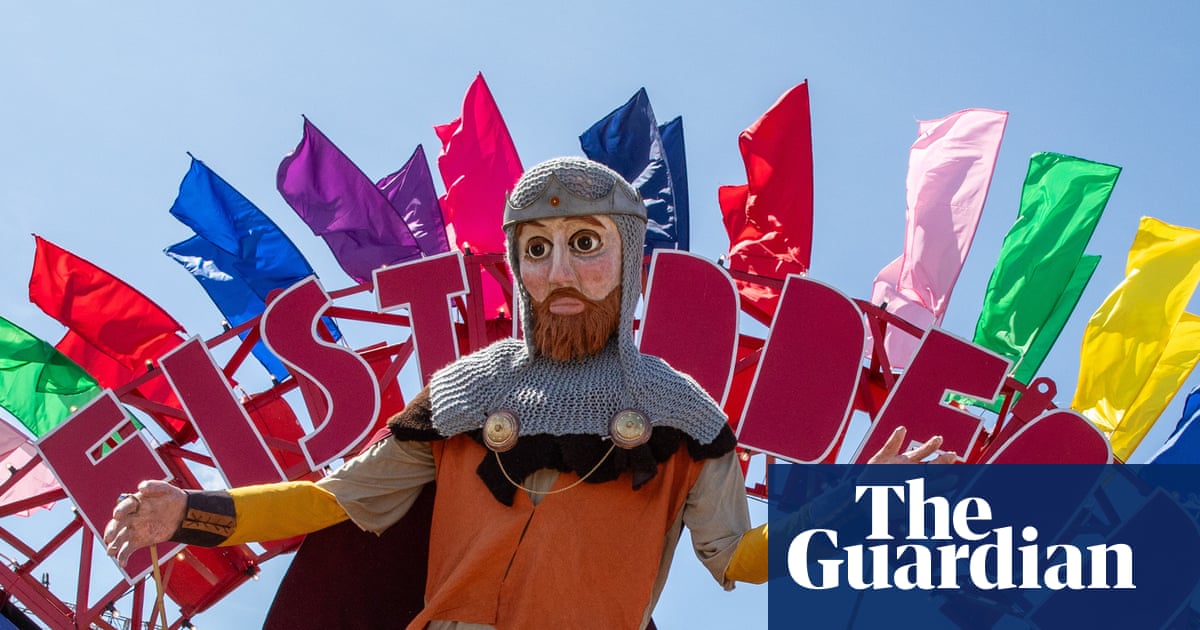
By 1176, Lord Rhys ap Gruffydd, a medieval Welsh prince, had become one of the most powerful rulers the country had ever known. He’d successfully banished Norman invaders from his lands, made peace with King Henry and rebuilt Cardigan castle in stone.
Prosperous and secure, he threw a grand holiday tournament, inviting bards and musicians to play and compete under his patronage in the first recorded eisteddfod, roughly, a “sitting together” – a tradition that still lives on today. This year’s national eisteddfod, a celebration of Welsh language, culture and creativity, has returned to its roots near Lord Rhys’s castle for its 850th birthday.
The eisteddfod is the oldest and one of the largest touring cultural events in Europe, moving between north and south Wales each year. This year’s Eisteddfod y Garreg Las – meaning blue rock, after the celebrated bluestone in the nearby Preseli hills that was used to construct the inner circle of Stonehenge – features more than 1,000 events and activities between 1 and 8 August and is expected to attract 150,000 visitors.
“The eisteddfod is Glastonbury on wheels, basically, so I don’t know why it goes so under the radar in the rest of the UK,” says Marc Rees, the creative director who has brought Lord Rhys back to life as a 5-metre puppet for this year’s event.
“It’s this massive festival of music and poetry and dancing and some incredible bands: the Super Furry Animals are playing this year. It has a different character every year and it’s always so joyful.”
Lord Rhys, created with input from the community by Cardigan’s Theatr Byd Bach, has been touring the area after being “awoken” from his deep sleep in St David’s Cathedral, visiting towns and villages around the area in the run-up to the eisteddfod’s opening on Saturday. Travelling with him have been this year’s crown and chair – the traditional prizes for the best free-verse poem, since Lord Rhys awarded a chair at his table to the first winner – as well as Teifi, his faithful hunting dog.
Since this year’s location was announced in 2024, local fundraising committees have raised £400,000 for staging the event, and hundreds of volunteers have prepared the site near the village of Llantwd for this week’s festivities.
John Davies, chair of Eisteddfod y Garreg Las’s executive committee, says: “I hope that Lord Rhys himself would have enjoyed the trip … 850 years is a long time, and it is amazing that the eisteddfod is still developing and evolving every year and is a dynamic and modern festival that offers something for everyone.”
After Lord Rhys’s time, bardic schools in Wales were closed during the Edwardian conquest, and eisteddfodau to some extent fell into abeyance.
The tradition enjoyed a revival in the 18th century thanks to London-based Welsh literary and cultural societies, and the modern iteration owes much to the Gorsedd Cymru – at the time a secret society of poets, writers and musicians, heavily influenced by druidism and mysticism.
after newsletter promotion
Iolo Morganwg, an eccentric antiquarian and poet who founded the Gorsedd, came up with much of what he said was the modern eisteddfod’s ancient lore and history while high on laudanum – but his colourful and imaginative creation proved enormously popular, and lives on in the pageantry today.
“It’s like the eisteddfod has had a homecoming,” says Naomi Chiffi, 45, from Tenby. “My kids are all in Welsh-medium education; the first Welsh school in Tenby opened a decade ago now. Events like this on our doorstep show them that the language is a living, fun thing.”
The Wilyman family, visiting from Haverfordwest, said they were delighted to be close to the festival this year; mum Elliw, 48, is taking part in several competitions throughout the week.
“We’ve been fundraising since February,” she says. “It’s so nice to see it all come together.”
#Glastonbury #wheels #bards #musicians #flock #eisteddfod #celebrate #Welsh #culture #Festivals