wellnessfitpro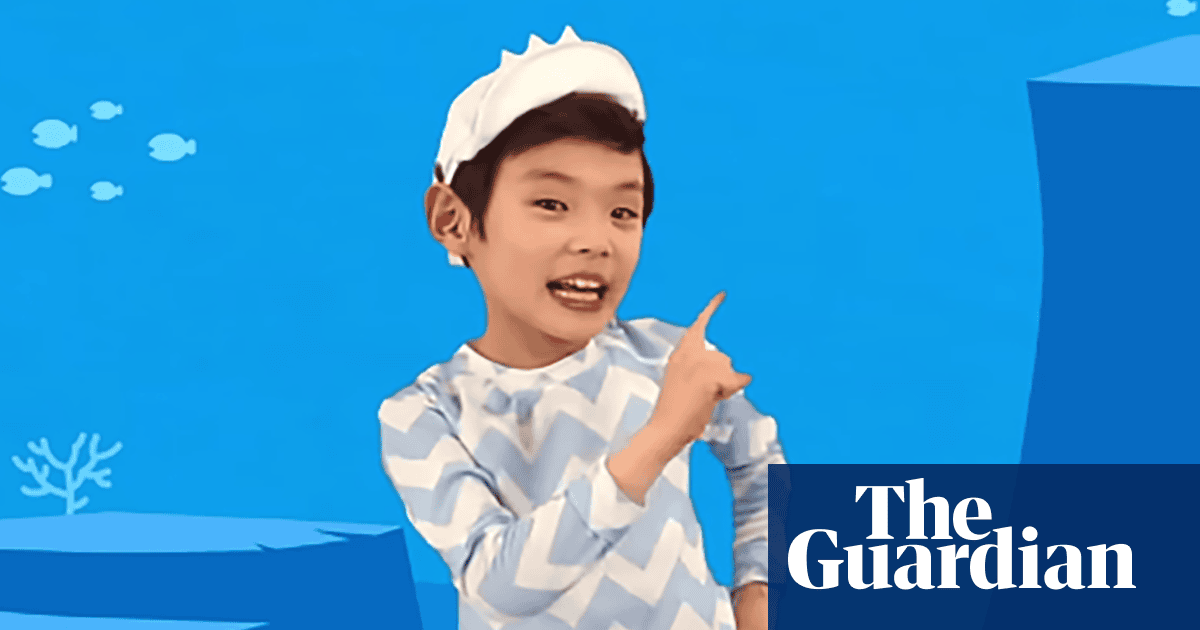
“I just remember having fun dancing and playing on what felt like a huge set,” Geonroung Park says, recalling the day 10 years ago when he was filmed, aged seven, doing the hand movements to a children’s song about a family of sharks.
That footage became Baby Shark Dance, now the most-watched video in YouTube’s history. It has racked up more than 17.2bn views and has held the platform’s global no 1 spot for 69 consecutive months.
Despite becoming one of the most recognisable faces online, growing up as “the Baby Shark kid” was, Park says, mostly ordinary. Friends at school knew about the video and thought it was “cool”, but otherwise treated him much like everyone else.
He remembers the song staying stuck in his head for a while after filming wrapped, catching himself humming it “without even realising it”.
He found fame in a song, yet almost nobody has actually heard Park sing. The vocals belonged to another child performer. Now 17, Park is keen to change that. “Ten years ago, I was dancing next to Baby Shark,” he tells the Guardian. “Now, I want to share my own voice and the stories I’ve written myself.”
Park makes his debut on Thursday as K-pop singer Baby Shark Boy, releasing his first single, Wave, featuring Joohoney of Monsta X, the same K-pop group whose members once performed the Baby Shark choreography during its viral peak.
Wave opens with the familiar Baby Shark melody before shifting into an electropop sound, a structure Park says mirrors his own journey. “To me, Baby Shark Dance feels like the first wave that started 10 years ago”, he says. “That small wave grew into something much bigger than I ever could have imagined, and I feel like I’ve grown along with it.
“I also thought there was something fun and meaningful about the idea of the little boy who once danced to the song growing up and now sharing a new song in his own voice,” he says.
Baby Shark ‘isn’t a past I want to leave behind’
The clip he featured in simmered for about a year before exploding in 2017 via the #BabySharkChallenge in Indonesia. It then got a further push from a run of other K-pop stars, including Blackpink, Twice and Girls’ Generation, performing the choreography on television.
By 2019 it had reached number 32 on the Billboard Hot 100 and no 6 on the UK singles chart, and had even become the walk-up song for a Major League Baseball team, the Washington Nationals, on their way to winning that year’s World Series.
The song itself is much older than the video. Baby Shark is widely believed to date back to North American summer camps in the 1970s, a singalong chant with hand motions that existed long before Park was born.
The company behind the video, then known as SmartStudy, uploaded an animated version in November 2015, then the choreography-led clip in June the following year, turning the folk tune into a catchy singalong with a K-pop-style beat.
South Korea’s supreme court settled the question of ownership in August 2025, ruling against a children’s songwriter who had claimed the song copied his own arrangement, and finding his version had not been altered enough from the original chant to qualify for its own copyright protection.
The Pinkfong Company, the South Korean children’s entertainment company that built Baby Shark into a global franchise of TV shows, films and merchandise, describes Park’s single as a real-life growth story, rather than a conventional idol launch. Park himself says it feels “more like a new beginning than a one-off project”.
Park briefly reappeared last year in short-form video marking the song’s 10th anniversary, which drew more than 24m views, a sign the character never really left public memory.
The teenager is keen to be known for more than a childhood clip and to “gradually find my own style as an artist” but is happy with the opportunity it has given him.
“To me, being the Baby Shark boy isn’t a past I want to leave behind,” he says.
#boy #Baby #Shark #phenomenon #hum #realising #South #Korea