wellnessfitpro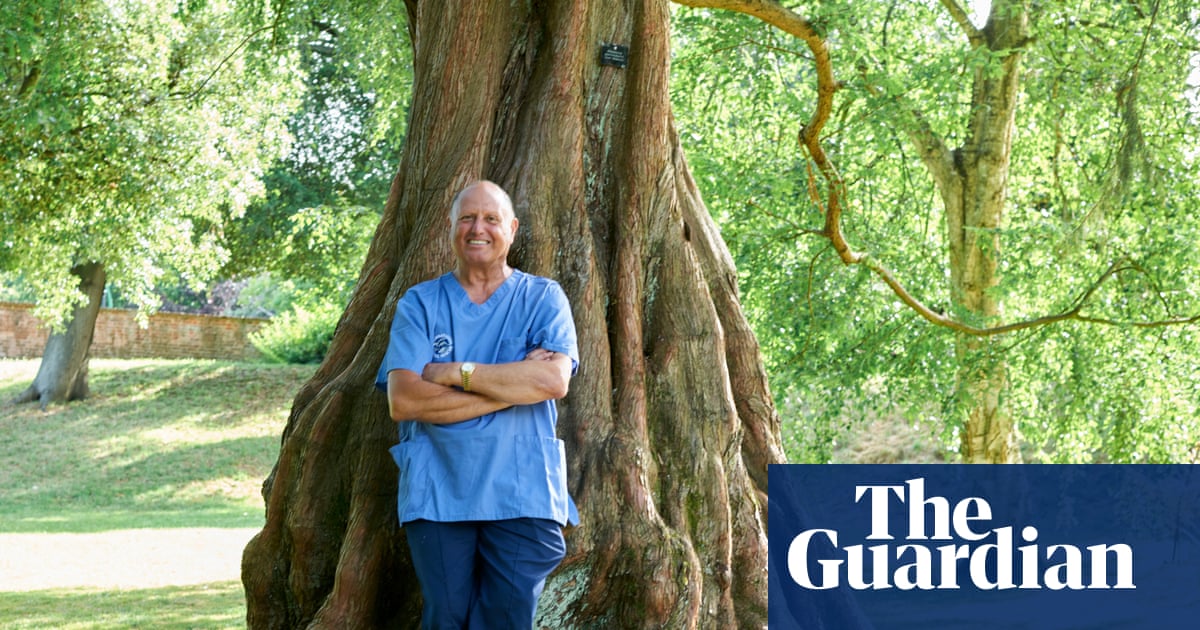
I’ve been a dentist for 40 years. I spend most of my time treating patients at my surgery in Chichester, West Sussex. When I studied to become a dentist in the 1980s, I didn’t think I’d be getting my hands anywhere near the teeth of any exotic animals.
Twenty years later, in 2000, that changed. A patient of mine, Alan Knight, the CEO of International Animal Rescue (IAR), showed me photographs of the inside of a bear’s mouth. The bear was called Jojo and his teeth had been broken off by poachers. Some of the teeth were too rotten to be saved – if left untreated, Jojo would become more prone to infection and abscesses.
Alan told me Jojo wasn’t the only bear in need of dental care. Poachers would kill mother bears and grab their cubs. When the cubs got older, the poachers would break their teeth using a hammer to make them look more docile. I knew I had to help.
That was how I ended up in India ready to perform dentistry on my first animal patient – a 14-year-old sloth bear named Anthony. He had a massive benign tumour on his gum that was preventing him from eating. He was 180kg, which is especially big for an Indian sloth bear, and already anaesthetised when I first saw him.
It was supposed to be a relatively straightforward operation – remove the tumour and any bad teeth. I was working alongside a veterinary dentist, Lisa Milella. We’d prepared for over a year – I felt ready.
I started by removing the grapefruit-sized tumour from Anthony’s gum, then the tooth that had been underneath the lump. More than three hours into surgery, I was feeling more at ease – perhaps treating a bear wouldn’t be so different from treating a human.
I was about to take out some of Anthony’s other broken teeth when his pulse rate plummeted. Within minutes, the local vets monitoring him could no longer detect a pulse. His breathing stopped and he was pronounced dead.
The anaesthesia had killed him. In those days, the local anaesthetists only had experience injecting anaesthesia, and had used darts to put Anthony to sleep. We did not know how long it would last, so it had to keep being topped up. If an animal is unwell, administering too much anaesthetic can be lethal.
The local vets walked out of the operating room, saying: “You’ve killed our bear.” I couldn’t process what had happened. I’m a dentist – I had never dealt with a patient dying mid-surgery before.
Lisa brought me back to reality. She said: “We’re going to get him back. Get the emergency drug box! Get the crash kit!”
I started performing CPR on Anthony. We gave him adrenaline, and I pounded his chest. It was an excruciatingly long three minutes before he was able to breathe by himself again. He was still under anaesthetic. We knew he was alive, but not if he was well. We waited. When he woke up, I felt triumphant. He went on to live for another 10 years.
Since then, I’ve continued working with the IAR, performing dentistry on 200 bears, half a dozen tigers, a couple of lions, a few hyenas, and a handful of gorillas and orangutans. I’ve even been nicknamed “Bear Drills”.
after newsletter promotion
Operating on animals presents a unique set of challenges. For one, their teeth are much larger than a human’s – and with big teeth come big tools. A file used for root‑canal treatments on people is about a quarter of the size of those used on tigers.
Over the years, I’ve seen all sorts – a 300kg tiger with multiple facial abscesses, a bear we fitted with a gold crown and nicknamed Bling Bear, and a lion having a ketamine-induced fit during an extraction. I very nearly had to do some crowns on beluga whales that were used for submarine warfare by the Soviet Union, but they escaped from their holding pen before I flew out.
Anthony’s resuscitation was a memorable introduction to animal dentistry. I travel to IAR sanctuaries to treat rescued animals every year. It’s more stressful than my day job, but it’s incredibly fulfilling. The local teams at every sanctuary monitor the animals after I leave, and always report positive changes in their behaviour. They have suffered so much, and I feel privileged to play a part in bringing them relief.
As told to Emmy Raynor
Do you have an experience to share? Email [email protected]
#Experience #brought #bear #life #Life #style