wellnessfitpro
Before I joined ProPublica in 2021, I had spent a year writing about a Georgia prison physician named Carlo Musso, one of the rare doctors who’d openly talked about his role in lethal injections. After he stepped away from that work, I wanted to know who replaced him, so I filed open records requests for documents that would shed light on that.
The role Musso held is so controversial that more than a dozen states have made it illegal to disclose the names of those involved with lethal injections. Georgia is among them. The state has gone to great lengths to hide the details around how it carries out lethal injections.
Georgia wouldn’t release records I had requested, claiming that its secrecy law is needed to prevent those helping with its executions from getting harassed by opponents of the death penalty.
I ended up suing the state. A few years later, a panel of three judges sided with me, and the state released some of the documents.
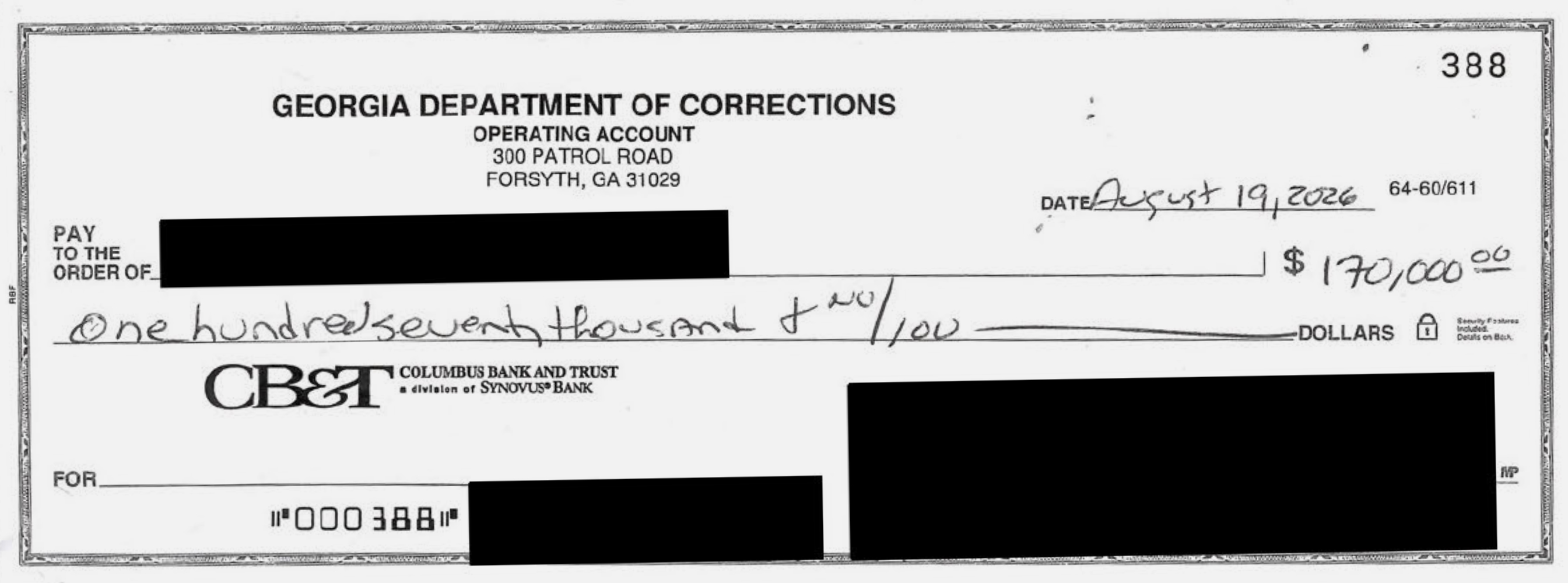
What I received reveals new details — and revives old questions — about Georgia’s lethal injection process. Among the discoveries: Georgia has made payments of more than $1.1 million since the COVID-19 pandemic for at least one contractor to work with the Corrections Department on its lethal injection process. During that period, the state carried out just a single execution.
The records also show that Georgia is paying far more for lethal injection-related costs than it did in the past. The state’s Corrections Department has spent an average of over $150,000 a year on those costs over the past decade. That’s substantially more than what it agreed to pay in the years before 2017, the records show.
Secrecy laws like Georgia’s shield the public from awareness of the growing costs of pharmacists concocting drugs and the doctors administering the injections. Legal experts say those costs reflect the challenges that corrections officials face in finding help with carrying out lethal injections, which can subject prisoners to torturous levels of pain.
“You wouldn’t have to pay this much money if the lethal injection process was an acceptable one,” said Deborah Denno, a Fordham University law professor who is an expert on the death penalty. “The process itself is so problematic that a lot of money has to be paid.”
Even after releasing the records, the Georgia Department of Corrections declined to answer my questions about the rising costs and the secrecy around lethal injections. The state attorney general’s office, which has represented the department in the lawsuit I filed for the records, also declined to comment for this story. State officials previously said that the Lethal Injection Secrecy Act allows the Corrections Department to protect contractors who would otherwise “find themselves at the center of a firestorm of hate mail and midnight callers.” They have repeatedly argued that, without the secrecy law in place, Georgia wouldn’t be able to carry out lethal injections.
The secrets of Georgia’s death penalty process could face scrutiny in the coming days. After a recent Georgia Supreme Court ruling, which removed a barrier that had paused executions, state officials recently scheduled an execution for Sept. 16, which would be its first in two years.
For every new scheduled execution, a new set of questions about the people behind the injections is likely to emerge.
It wasn’t long after Georgia traded the electric chair for lethal injections in the early 2000s that the state ratcheted up its secrecy.
That’s when opponents of the death penalty increased pressure on pharmaceutical companies to stop selling lethal injection drugs to states that could be used for executions.
By the end of that decade, the advocates’ campaign started to work. The last U.S. factory to make a key ingredient for lethal injections stopped doing so. States across the country scrambled to find new sources of the drugs.
Georgia, for its part, purchased drugs from a wholesaler whose business operated out of the back room of a London driving school.
But that backfired. The Drug Enforcement Administration seized the state’s supply of lethal injection drugs in 2011. Soon after, the European Union — made up of countries that oppose the death penalty — effectively banned companies from selling drugs to states if they were going to use them for executions.
Faced with dire lethal injection drug shortages, states turned to a more secret and at times sketchier source of drugs.

As Georgia’s supply was set to expire in 2013, it became one of the first states to place an order with compounding pharmacists, who mix raw ingredients to make custom drugs for patients. Although compounding pharmacies have legitimate uses, they are minimally regulated and their costs can be exorbitant.
That avenue was ideal for states that couldn’t buy execution drugs from more scrutinized pharmaceutical companies. But medical experts say that scant oversight of the compounding pharmacies increased the odds of a drug not working as intended.
In a 2013 affidavit filed on behalf of a Georgia prisoner, one pharmacy expert wrote that “highly unpredictable, rapidly evolving and potentially painful and agonizing, not to mention life-threatening, reactions may ensue” as the result of a lethal injection drug made by a compounding pharmacist.
Right around that time, Georgia lawmakers passed the Lethal Injection Secrecy Act. State prosecutors soon defended it in court. “Once that compounding pharmacy’s identity is revealed, how will the Department of Corrections ever get another compounding pharmacy to sell to us?” an assistant state attorney general said in a 2013 court hearing. “How will we get a doctor knowing that he is going to be, or she is going to be, dragged into court?”
At that time, I was reporting on how Georgia’s new secrecy law could affect Warren Lee Hill, who had been scheduled to be killed with drugs obtained from a compounding pharmacy. Hill’s attorneys said that their inability to get information about the drugs could cause “irreparable harm” to their client — and that argument won Hill a lengthy reprieve. He died by lethal injection in 2015.
In recent years, Texas, Indiana, and Arizona have all spent six-figure sums to renew their drug supplies from confidential sources. Defense attorneys have also tried to learn more information about those involved with the lethal injection process. They had hoped extra records might help them protect their clients’ rights.
But in Georgia, none have been successful.
Other states likewise spend large amounts of taxpayer dollars on secret contractors involved in the lethal injection process. Oklahoma went from paying a doctor $300 per execution to $15,000. And the American Civil Liberties Union discovered that the Federal Bureau of Prisons had spent millions on staffing needed to carry out executions.
When I first requested records about Georgia’s lethal injections, the Corrections Department withheld entire documents that had “identifying information” about those involved with the process.
I asked the department to comply with the Georgia Open Records Act by releasing the documents with redactions. It refused. With the help of an attorney, I sued the department.
Georgia Attorney General Chris Carr, who defended the Corrections Department, wrote in a court filing that releasing the records “would not serve the interest of the public.”
The names of the people involved with the lethal injection process were redacted from the records that Georgia ultimately released to me. But the records show more than just the spending. They show the lengths the state took to protect its contractors.
Georgia is on the hook for attorney’s fees for its contractors should they face certain kinds of legal challenges, the records show. That means that taxpayers could shoulder the costs of legal representation in “any non-judicial proceeding.” One such example could be if a licensing board threatened to punish medical providers for participating in the lethal injection process — a threat that’s happened in North Carolina.
The records also show that Georgia officials may have disregarded their own financial policies. The Corrections Department requires detailed purchase orders to be kept and logged in the state’s financial system. But all that the department’s lawyers could provide me were handwritten checks, plus a series of one-page documents containing scant information about what the state was paying for — documents that hardly resembled the invoice of an official agency.
I’ve asked the department to provide purchasing records that had more details to comply with its policy.
It couldn’t.
“There are no other records,” wrote a lawyer for the Corrections Department.
#Georgia #Spending #Lethal #Injections #Records #Reveal #ProPublica