wellnessfitpro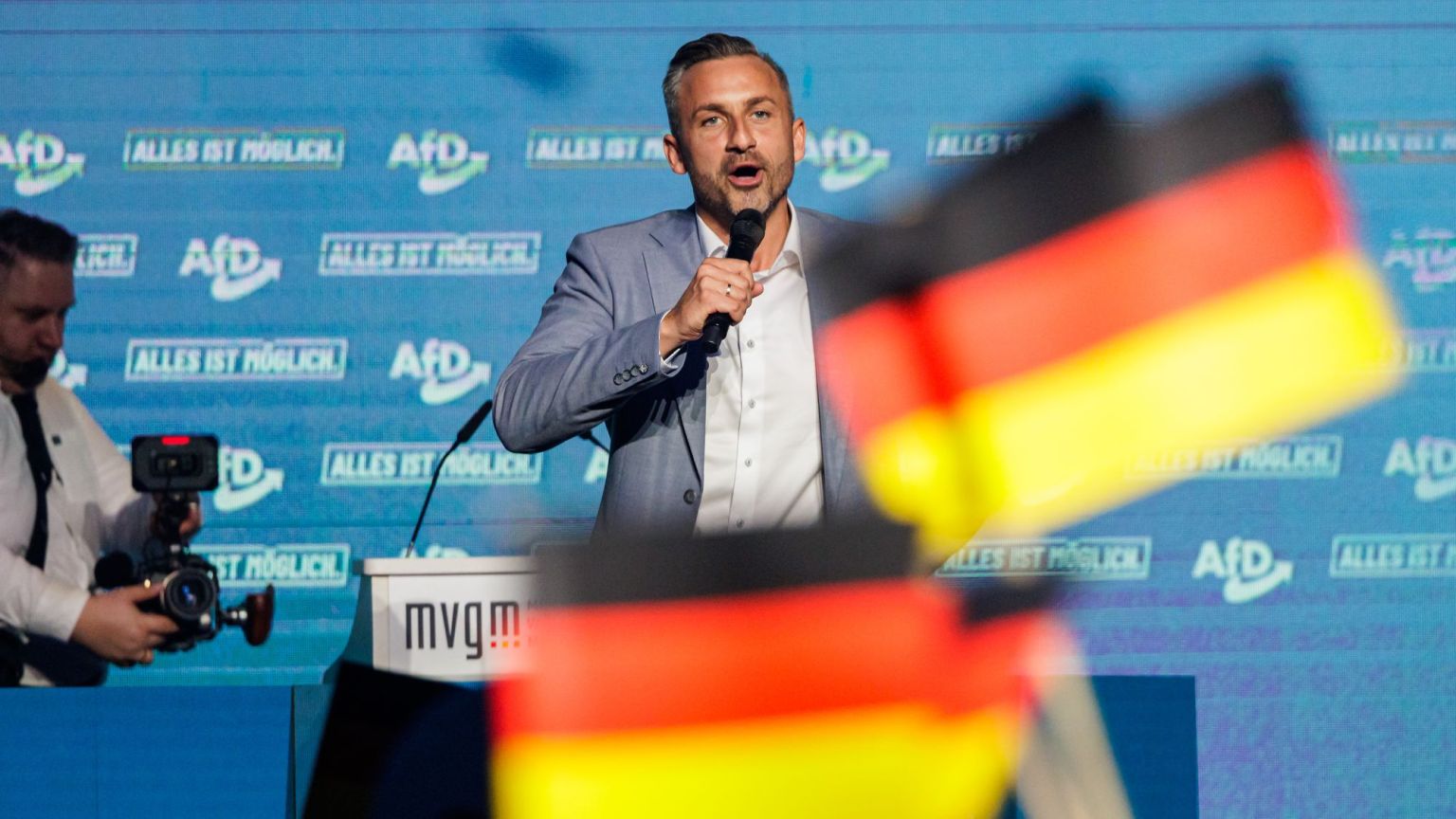
A political earthquake would be too weak a description of the shock caused by last Sunday’s election in the small German state of Saxony-Anhalt. The governing Christian Democrats (CDU) won a measly 17.2 per cent – down nearly 20 points from the previous election – while the right-populist AfD came out on top with 43.8 per cent.
The CDU was shell-shocked. So humiliating was the result that Germany’s federal chancellor and leader of the CDU, Friedrich Merz, did not even dare step in front of the cameras. He showed himself only briefly at a press conference the next day, where he feebly emphasised the emotional impact the result was having on him and his party.
Speculation is now rife over whether Merz’s days are numbered. The chancellor – who once famously promised to halve the AfD’s vote share (when it was still much smaller) – was already so unpopular before the election that he was kept at arm’s length from the electorate. A now-infamous photo captured him being quickly ushered by security personnel past astonished passers-by to a campaign event that was closed off to the public. ‘Shielded from the electorate: Is the chancellor hiding from angry voters?’ ran the headline from public broadcaster Deutschlandfunk.
Everyone recognises the significance of last Sunday’s election result. Yet, as always, interpretations differ depending on which side of the populist revolt one stands on.
For the anti-populists, Germany is back on a dangerous path towards authoritarianism, if not outright fascism. ‘In Saxony-Anhalt, an 80-year-old dam has burst’, claims Berthold Kohler, a leading editor at FAZ – a clear reference to Germany’s Nazi past. Just hours after the election, calls arose to invoke rare coercion powers (Bundeszwang) that would force Saxony-Anhalt to take orders from the federal government – powers that have never been used in postwar German history. As if to go one further, Merz warned in the Bundestag on Wednesday that the AfD seeks ‘ethnic cleansing based on skin colour and national origin’ in Germany.
Kohler may be right that a dam has burst – but not in the sense he intends. In reality, the election result reveals a loss of authority and trust in the traditional parties, which will not easily be repaired.
For years, the debate in establishment circles has been dominated by the claim that the AfD is a de facto fascist party that must be prevented from gaining power at all costs. This view was even validated by Germany’s domestic intelligence agency, which classified the AfD as a ‘right-wing extremist movement’ back in November 2023. Even before this designation, the main parties all agreed to uphold a so-called firewall (Brandmauer) against the AfD and refuse all collaboration with it at either the federal, state or local-council level.
Now we know that countless voters simply don’t care what the government and its institutions tell them about the AfD. This is not because over 40 per cent of the people living in Saxony-Anhalt have become right-wing extremists. It is because they dislike the mainstream parties so much that they won’t be put off voting for what they see as – and what has indeed become – the biggest opposition party in the country. Indeed, one of the worst effects of the firewall has arguably always been that, in excluding the AfD, it alienates the party’s voters – telling a large and growing share of the electorate that their political choice lies beyond the pale of legitimate debate.
Admittedly, the perception that the AfD is extreme has gained some legitimacy thanks to a few of the party’s more unpalatable figures. According to FAZ, one local candidate fraudulently obtained his university placement using a forged secondary-school diploma and had previously been convicted of theft. Another is alleged to have connections to a banned neo-Nazi and anti-Semitic group and to have hosted a party at which a Hitler Youth song was sung (both allegations are denied).
Yet this is clearly not what is resonating with voters. In an article for the Swiss publication Die Weltwoche, American scholar Russell Berman describes the mood in Saxony-Anhalt as he encountered it while travelling through the state before the election. Even among potential AfD voters, he detected little direct enthusiasm for the party as such – and certainly no neo-fascist cult of leadership. What he did find, however, was a vague sense that something is going seriously wrong in Germany and that the AfD offers a chance to change course.
There are surely several reasons why the AfD has become the party currently benefiting most from this desire for change. One is that it has positioned itself most clearly against mainstream orthodoxy, addressing the issues that matter to people more credibly than other parties. Of particular concern to voters are uncontrolled mass immigration, Germany’s ideology-driven energy and climate policies, and the left’s tendency to view German history solely in negative terms (rather than acknowledging that, despite the well-known crimes committed in the early 20th century, there are also parts of that past which could be a source of pride).
The AfD has also addressed the war in Ukraine in a way that many voters evidently either appreciate or don’t oppose. And even those who don’t share the party’s stance – it wants to end sanctions against Russia and halt arms deliveries to Ukraine – must admit that German policymakers have boxed themselves into a corner. Many Germans are asking how much longer they will be expected to pay for a war that shows no signs of ending – and that German politicians have no plan to end.
Of course, it remains to be seen whether the AfD proves worthy of being the channel of this desire for change. There are good reasons to believe it might not be. Ulrich Siegmund, the AfD’s leader in Saxony-Anhalt, has never had to prove himself in the rough and tumble of actual government.
Still, last Sunday’s election was encouraging. It showed that voters reject the stifling dictates of the mainstream parties. Though most politicians in the governing parties – and the CDU especially – are holding still for now, waiting with trepidation to see what the equally important elections in Berlin and Mecklenburg-Western Pomerania at the end of September will bring (the AfD is polling well in both regions), cracks have nonetheless already appeared.
The deputy chairman of the CDU in Mecklenburg-Western Pomerania has called for Merz to step down as chancellor. Demands to finally abandon the firewall are now also emerging from within Merz’s own party. And while the chancellor’s defenders were still speaking of an electoral disaster and a dark day for German democracy on election night, Sven Schulze, the CDU’s incumbent minister-president of Saxony-Anhalt, was already offering a different perspective. Having acknowledged his party’s massive defeat, he said:
‘I’ve heard people say this is a black day for our country. But I want to tell them: this is democracy. We’ve had voter turnout like never before in this election, and people have had their say.’
He’s right on this much, at least. Populism has clearly mobilised people to do what democracy is all about. Germans are demanding the right to be heard and taken seriously, and fighting to change a government and its policies that are no longer working for them.
Sabine Beppler-Spahl is spiked’s Germany correspondent.
#German #elites #deserve #punishment #beating