wellnessfitpro
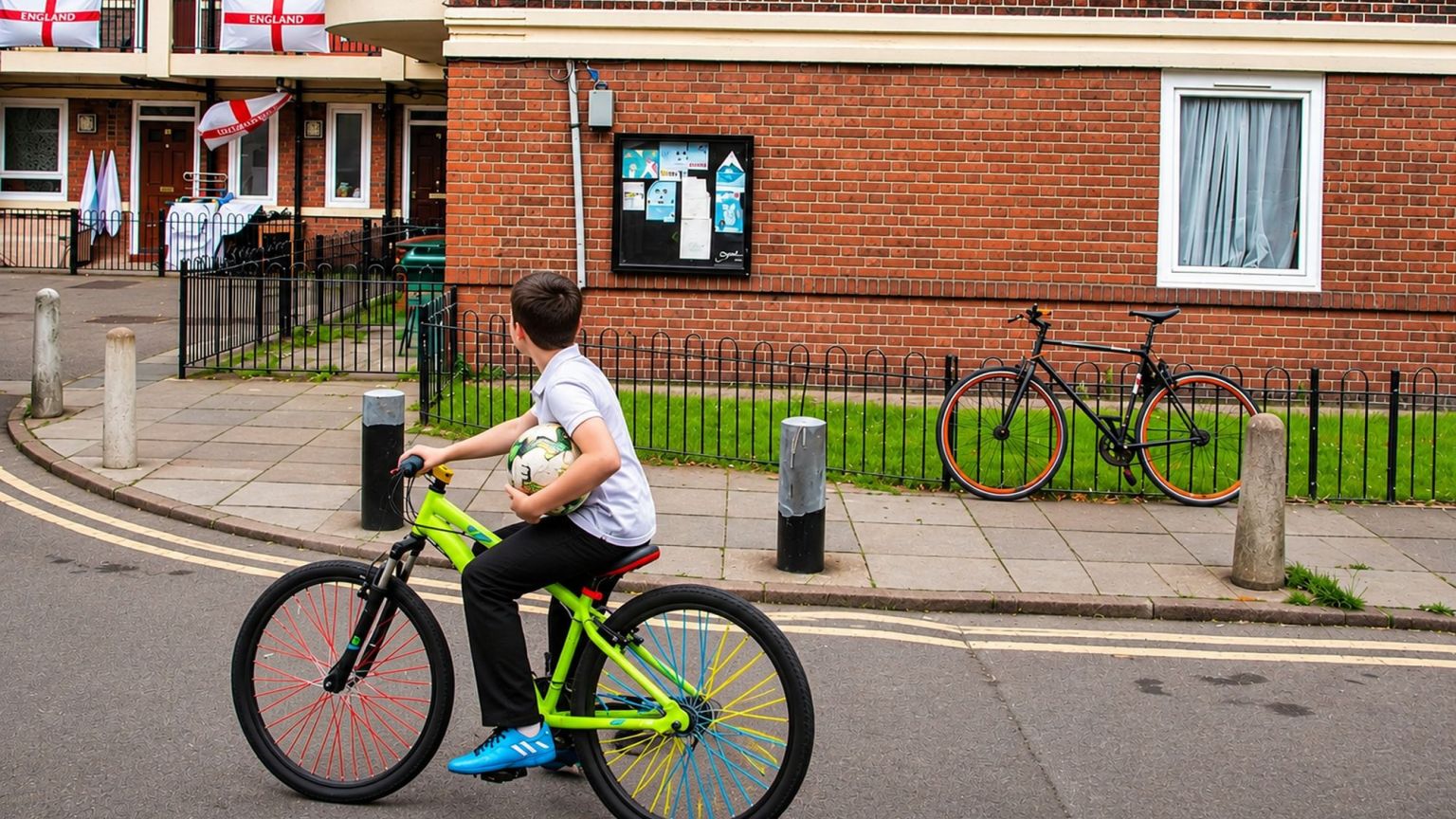
One of the luxuries that comes with living in a relatively homogeneous society is that you can have grievances without having to make them racial.
For most of the past century, Britain had such a luxury, as its society was overwhelmingly white and remarkably homogeneous. Ask a working-class person who they were and they would tell you something based on their class, place and nation. Scousers, Geordies, English, absolutely. White? A racial group? Not really.
Then Britain changed. In recent decades, with mass immigration and the rise of multiculturalism, race came into the picture. But that alone didn’t make white people think of themselves as white, or cause a ‘racial awakening’ as such. In fact, ask most of them about race, as I have done, and they’ll tell you two things. One, judge people by their character, not the colour of their skin (you know, that Martin Luther King idea we all seem to have forgotten about). The other thing you might often hear is, ‘I actually don’t really think of myself as white’.
But in our race-obsessed society, this position is no longer allowed. Judge people by merit, by character? You must be daft. You don’t see your own race? Well, that’s your privilege speaking. It reminds me of a scene in Chimamanda Ngozi Adichie’s 2013 novel, Americanah, where a character asks why we can’t all just be human beings, and is told that being able to ask is exactly what privilege is.
As race became a central preoccupation in modern Britain, a game came along with it, and the white working class ended up dragged into it: the game of identity politics. This ugly game, with no end in sight, has certainly produced its winners and losers.
And who are the winners? Well, the people who maintain the new system. The diversity chiefs, the DEI departments, the HR professionals, the campaigners and the institutions that have built entire careers and industries around ‘managing’ – by which they mean amplifying – grievance and inequality. Other winners are the groups that learned how to weaponise their particular identities into political claims.
The losers are those who find themselves on the wrong side of the new hierarchy of grievance. And one such group has been the white working class.
And it has lost big. While institutions became increasingly concerned with representing some groups, giving some groups targeted opportunities and addressing some forms of disadvantage, the white working class was increasingly left to pretty much fend for itself. Because, with all that privilege and all, it was supposedly capable of doing just that. It’s deeply perverse.
We live in the age of apologies. Britain is constantly being asked to apologise for this or that, to atone for what happened to this group or that group. Fine. Then let’s add the white working class to the list. The British state owes this group an official acknowledgement of harm and an apology.
At this point, someone will ask: who exactly are ‘the white working class’? It is hardly a neatly defined group. But neither are many of the groups whose particular experiences we now routinely recognise, organise around and make policy for. The state and our institutions seem perfectly capable of finding the boundaries of a group when there is a political reason to do so.
And then comes the other question: what exactly will the state be apologising for?
This is an easier question to answer. It is for the race-conscious diversity schemes that have made race an increasingly important factor in public life, to the exclusion of people who are poor and white. For the grooming-gang scandal and the institutional failures that allowed the abuse of predominantly working-class girls to continue for years. For the persistent failure to deal with the educational underachievement of white working-class children – now the worst-performing demographic in the English school system.
The issue of education is perhaps the most startling example of the establishment’s contempt for the white working class. In 2014, a House of Commons committee found that white working-class underachievement was ‘real and persistent’. In 2021, another committee criticised the ‘decades-long neglect’ of the white working class. In June, a third inquiry said it once more. Yet nothing has changed, nor does it ever look likely to.
The white working class has been on the wrong end of a galling double standard. This was highlighted in 2019, when two of Britain’s best-known schools – Dulwich and Winchester – turned down a combined £1.2million donation for a scholarship intended to help poor white boys, on the grounds that it would breach equality laws. Imagine the reaction if the intended beneficiaries had been poor black boys.
The best way forward is to stop playing the game of racial politics. No one should have to weaponise their identity to garner sympathy, acknowledgement, special treatment or resources. We should judge and treat people as individuals and assess disadvantage according to need, not race. But, if the state and our national institutions insist on organising society through racial categories, then they cannot be surprised when people start asking why the rules seem to apply differently to different groups.
If one group can have its grievances recognised, its history acknowledged and its disadvantages acted on, then the same must be true of every other group. That includes the white working class.
#white #working #class #deserves #apology