wellnessfitpro
The bathroom is dark except for a narrow strip of light coming through the half-open door. I am holding a half-empty bottle of water in one hand. I have already used the first half to wash my backside, and now I am trying to use what remains to wash my hand.
In Iran, this is not unusual. For most of us, washing with water after using the toilet is simply part of being clean, and toilet paper is not really considered enough. The problem today is that the electricity is out, there is barely enough light to see what I am doing, and there is only so much water left in the bottle. So an act that normally requires no thought suddenly becomes a small engineering project. One hand holds the bottle, the other does the cleaning, my body has to bend in the right direction, and I have to make sure I do not waste too much water. The half-open door has become part of the equipment because the little light coming through it is necessary. For a few minutes, my entire existence has been reduced to two hands, a plastic bottle, a dark bathroom and a piece of shit that I would very much like to get off my hand.
In Iran, questions about energy and electricity are not an abstract matter of policy. It’s about when the bathroom goes dark, when the water pump stops, when the lift stops working, when your phone is dying and you have no way to charge it, or when you take time off work to go to a university or government office because something has already been delayed, only to be told that there is no electricity and nothing can be done.
A problem in the electricity grid travels through all these institutions of daily life until it arrives at your body. In the summer, the calculation becomes acutely physical. The electricity goes out and the air conditioner stops. The room gets hot. You become tired and irritated. If it happens twice a day, you begin the day already knowing that some part of it will be spent waiting for the power to return. In southern Iran, where temperatures are generally higher than in the central parts of the country, the consequences are even harder to ignore. During periods of military attacks and missile strikes, people were also dealing with the ordinary problem of keeping themselves cool.
One story that circulated was of a father preparing a block of ice for his child so the child could cope with the heat while the electricity was unavailable. There is something almost absurd about the combination: missiles in the sky and a parent worrying about whether his child can stay cool enough to sleep. But war does not cancel out ordinary needs. People still need water, electricity, food, refrigeration and a working fan.
The electricity problem, however, did not begin with the war. For many Iranians, including me, power cuts are something we remember from years before the current crisis. Iran has long struggled with an electricity-supply gap, shortages of gas for power generation, ageing infrastructure and the difficulty of financing new investment.
None of this means that every blackout has a single cause. But it does mean that the problem cannot be explained simply by pointing to one summer, one war or one damaged power plant. This is where foreign policy becomes difficult to keep outside the electricity discussion. Sanctions and diplomatic isolation do not physically switch off a lamp in an Iranian apartment, and it would be too simple to claim that every blackout is caused by external sanctions. But they do affect the environment in which a country tries to invest, modernise infrastructure, obtain technology and attract capital. Iran also has political priorities of its own, and those priorities shape where money, attention and international relationships go. The technical problem is therefore sitting inside a political system.
Iran is also a country with enormous potential for solar power. There is no shortage of sun or desert. But turning sunlight into reliable electricity requires money, equipment, transmission lines, storage and long-term investment. A country that has spent years under sanctions and diplomatic pressure has fewer easy options for building all of this. Even something as obvious as the sun can therefore become part of a much larger political problem.
This is why ‘bad diplomacy’ can eventually mean something much more ordinary than foreign-policy headlines suggest. It can mean the extra hour at a bank because the electricity is gone. It can mean taking another day off work to return to a university because the previous visit achieved nothing. It can mean standing in a hot office waiting for the computers to restart or charging your phone in the car because you do not know when the electricity at home will return. The connection between diplomacy and daily life is not necessarily dramatic. Sometimes it is simply that the system has become harder to maintain, finance and modernise, and ordinary people carry the cost. There is also a strange official answer to all this: tolerate it.
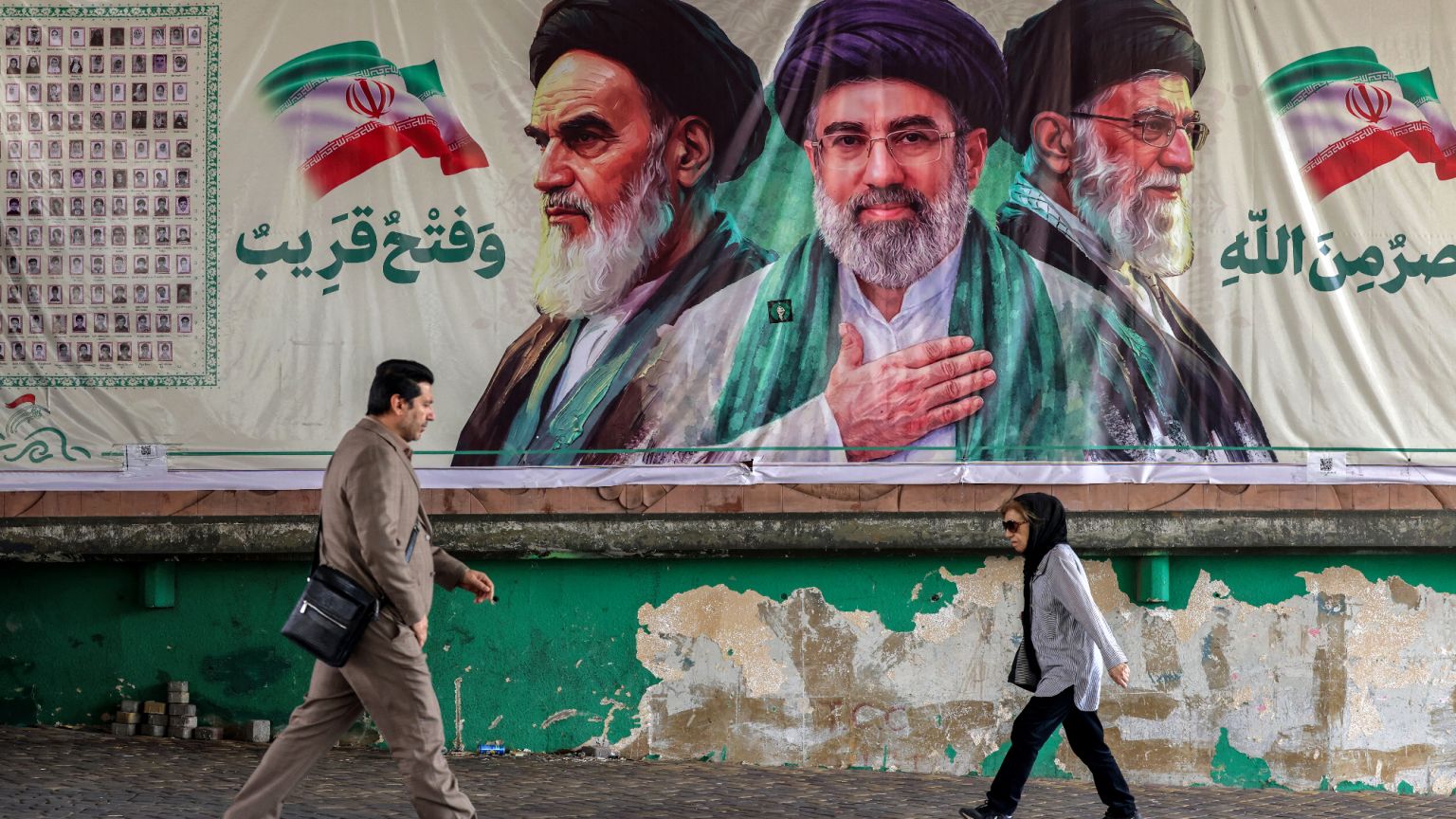
When Iranian president Masoud Pezeshkian encouraged people to take off their jackets rather than rely on air conditioning during a period of energy shortages, it was presented as an example of ‘conservation’. It is an understandable gesture from a government trying to reduce consumption, but it raises a very Iranian question: Mr Pezeshkian, when the bank has no electricity and we have been waiting for an hour, can we take off our t-shirts completely, or will the bank staff throw us out? And when we are sitting in a university exam, are we allowed to arrive in shorts and an undershirt?
The joke is obvious because taking off your jacket does not create electricity. It may reduce consumption at the margin, but it does not replace investment in power plants, transmission networks, gas supply or alternative sources of generation. Asking people to tolerate the heat is not the same thing as fixing the system that produces the heat problem in the first place.
I once heard a taxi driver explain the situation in a way that was much less technical than anything I have read in an energy report. He told me:
‘They take the electricity to Iraq, then we don’t have electricity. I go home and there is no electricity, and in the morning when I go to work there is no electricity. For two weeks I haven’t been able to shower in the mornings because the water doesn’t get pumped upstairs when there is no electricity.’
Whether every part of his explanation about where the electricity goes is technically correct is almost beside the point. What matters is what the shortage looks like from his side of the system. He goes home, there is no electricity, there is no water upstairs and eventually, even his own body becomes part of the story. After two weeks without a proper morning shower, he is not thinking about energy diplomacy. He is thinking about the smell.
Many Iranians also believe that electricity and other resources are being spent on regional military commitments while ordinary people are being asked to accept shortages at home. Whether or not every version of that belief reflects the technical reality of the electricity grid, it is part of how people interpret the situation. When you are sitting in a dark apartment without water upstairs, explanations about regional politics do not feel very far away. They are connected, at least in people’s minds, to the question of why the basic infrastructure around them is failing.
There are real complexities behind these complaints. Iran does trade electricity with neighbouring countries, including Iraq, and the electricity relationship with Iraq has itself been affected by sanctions and wider political relations. It would therefore be too easy to turn a taxi driver’s explanation into a complete account of Iran’s power shortages. But people do not experience national energy policy as a spreadsheet. They experience it as a shower they cannot take, a phone they cannot charge, a room they cannot cool and another morning in which something that should have worked simply does not.
For me, the same thing happens when I teach privately. The electricity goes out in the middle of a class, the internet becomes weaker, the connection starts breaking up and suddenly, a lesson that should be about whatever I was teaching becomes a lesson in trying to keep the technology alive. I cannot control the electricity or make the internet stronger. We just continue, badly, until the power comes back. Sometimes the lesson ends with both of us knowing that we have technically spent the time together without really having had a proper class.
That is also what makes the heat so exhausting. You become less patient. You sleep badly. You cannot concentrate. A small problem that normally would not bother you becomes unbearable because you have already spent hours dealing with the heat, the darkness, the dead phone and the uncertainty of when the electricity will return. None of these things is dramatic enough to become a national crisis on its own. Together, they become the atmosphere of everyday life.
Human beings are remarkably good at adapting to bad conditions. After a while, you stop asking why something is difficult and start asking how to get around it. You learn the workaround. You develop the trick. You keep going. But sometimes the workaround itself becomes exhausting. I think again about that bathroom. The electricity is gone. The door is half open because I need the light. The bottle is half empty because I have already used some of the water to wash my backside. Now I need to wash my hands.
There is nothing grand about the scene. No speech, no protest, no political slogan. Just a person trying to finish a very ordinary task in the dark. At first, the electricity goes out in my house and my room becomes dark. Then it goes out at the bank, at the university, at the office, in the water pump, in the network, in the systems that are supposed to make ordinary life possible. And after enough time, I start wondering whether it is only the lights in my room that are going out, or whether somewhere else, much larger, the lights are going out, too.
#Iranians #life #daily #humiliation