wellnessfitpro
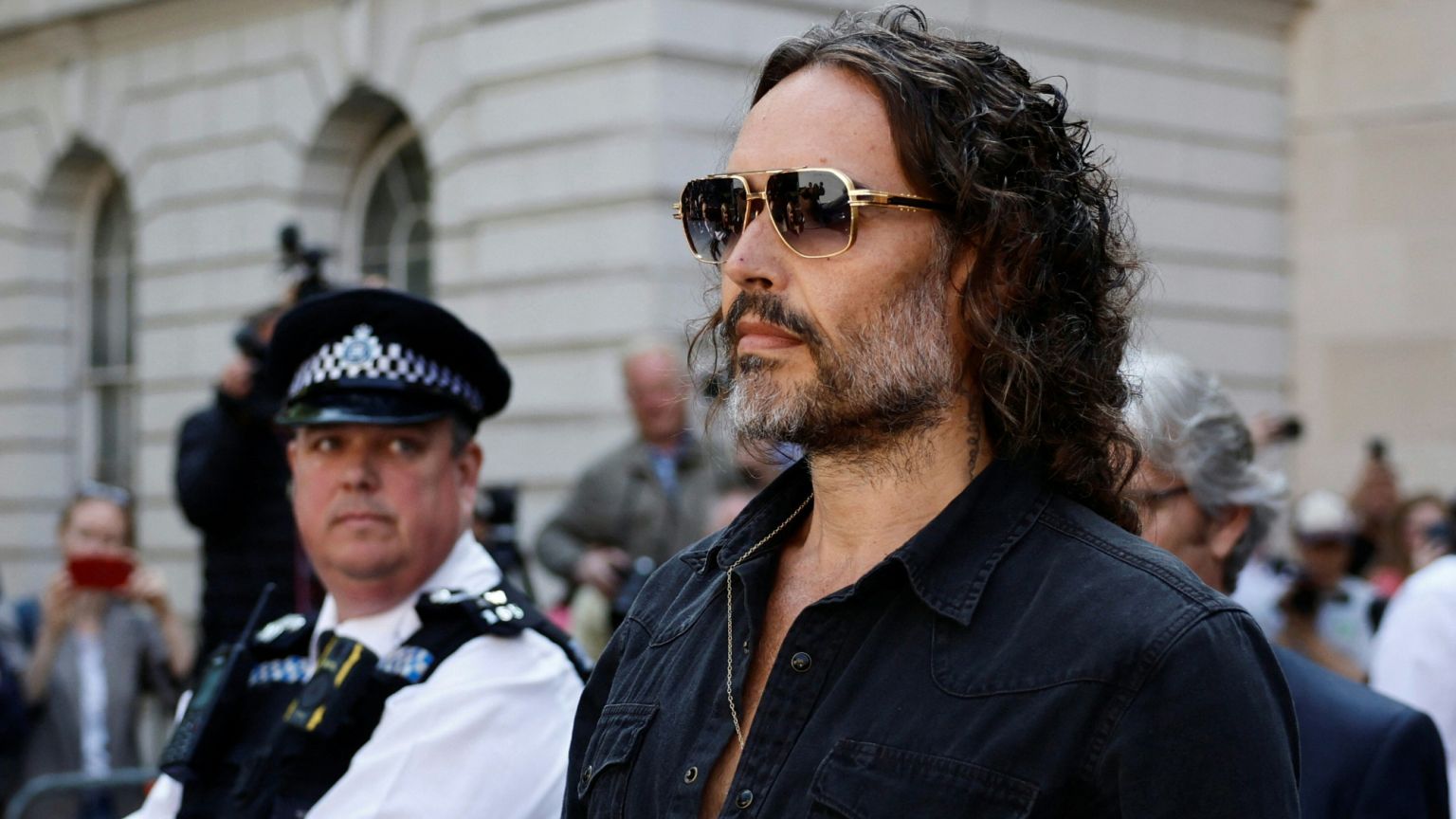
Never mind the exploitation and rape of thousands of young girls in towns and cities across the country by mainly Pakistani Muslim men. Only now, with Russell Brand and David Walliams accused of sexually assaulting teenage girls, are we having a national conversation about grooming and consent. Working-class girls who were drugged, raped and passed between men? Forget it. That was a ‘dogwhistle’, we were told. A right-wing bandwagon. But rich, white men who have fallen out of favour with the left-wing political and media elite? Suddenly, UK government ministers are keen to discuss changing the law.
Walliams is accused of grooming teenage girls for sex once they reached the age of consent. He is also accused of sexually assaulting another girl when she was just 15 and he was 36. The police are currently investigating the comedian for serious sexual offences (all of which Walliams denies). Brand is already in prison for rape and sexual assault, and more women are coming forward with accusations against him. One woman, Mia Latter, has waived her lifelong right to anonymity to make public her claim that Brand raped her when she was just 16 and he was 30.
Latter is now campaigning for a staggered age of consent. Rather than a single age of 16, she would like to see the law changed to prohibit sex between 16- and 17-year-olds and older adults.
Politicians have welcomed her proposal. At the weekend, de facto deputy prime minister Louise Haigh said, ‘It clearly would be a massive step to change the age of consent, but it deserves proper consideration and scrutiny’. One suggestion is that it could become illegal for people over 20 to have sex with a 16-year-old, and for people over the age of 21 to have sex with 17-year-olds. Or, the UK could adopt a similar approach to Florida, where the age of consent is 18, but someone aged 16 or 17 will not be criminalised for having sex with a person under the age of 23.
It is possible to feel huge sympathy for the women targeted by Brand and Walliams, but, at the same time, ask why we are having a national conversation about the law on consent and grooming now – rather than when the abuse suffered by young girls at the hands of Pakistani rape gangs became clear. Women from towns such as Bradford, Oldham, Telford and Rotherham might reasonably argue that existing laws were not enforced when they complained of abuse. Some victims tell harrowing stories of having reported rape and sexual assault to police officers, social workers and doctors. But even though some victims were as young as 10, and therefore unable to consent to sex, they were not offered protection. Not only were they disbelieved, but some were even treated as prostitutes, too. Before introducing new laws, we should make sure we enforce the laws we already have.
When we get this right, then we can have a conversation about the age of consent. After all, it was back in 1885 that it was set at 16 for heterosexual couples – a very different era. Only in January 2001 was the age of consent set at 16 for all relationships. At the time, this was celebrated as a victory for LGBT equality. It sent a message that lesbian and gay people were no less mature or trustworthy than their straight peers.
Culturally and socially, what it means to be 16 has changed. Back in 1885, and even in 2001, 16-year-olds could leave school and work full-time. Go back a couple of generations, and older teenagers not only worked but some also married and had children. Nowadays, young men are far more likely to live with their mum than with a wife. Today’s 16-year-olds are not trusted to buy cigarettes, get a tattoo or gamble. Soon, they will no longer have unrestricted access to the internet.
If 16- and 17-year-olds really are more like children than adults, then perhaps staggering the age of consent is appropriate. But the government cannot have it both ways. The prospect of parliament rushing through legislation to lower the voting age to 16 while effectively raising the age of consent to 18 is enough to make anyone’s head spin. If 16-year-olds are too young to decide who to have sex with, then they are surely too young to determine the fate of the country.
But it’s not just our attitude towards 16-year-olds that has changed. Post-#MeToo, our attitudes to sex have changed, too. In the past, ‘age gap’ relationships were seen as completely normal. Indeed, one reason why men and women became entitled to state pensions at different ages was the recognition that men were typically around four years older than their spouses. And although the ‘ladette’ culture of the 1990s and early 2000s gets a bad rap nowadays, the argument that women could have sex on the same terms as men was seen as striking a blow for feminism.
The reckoning prompted by the #MeToo movement replaced (sometimes misguided) notions of fun, freedom, love and desire with a far more depressing discussion of power and consent. Sex came to be viewed as transactional, rather than romantic. Since this time, women have all too often been perceived as victims, with men as predators, rather than potentially equal partners. We need to put love, passion and – crucially – relationships back into our conversation about sex.
There may be a good case for revisiting the age of consent. But this discussion requires level heads, not another round of #MeToo hysteria. The actions of criminals like Russell Brand and creeps like David Walliams should not be another excuse to further infantilise older teenagers.
Joanna Williams is a columnist at spiked. Her latest book, The Breaking of the Education Contract: Why We Need to Keep Politics Out of Schools, is available from Civitas. You can also follow Joanna on Substack.
#grooming #wont #talk