wellnessfitpro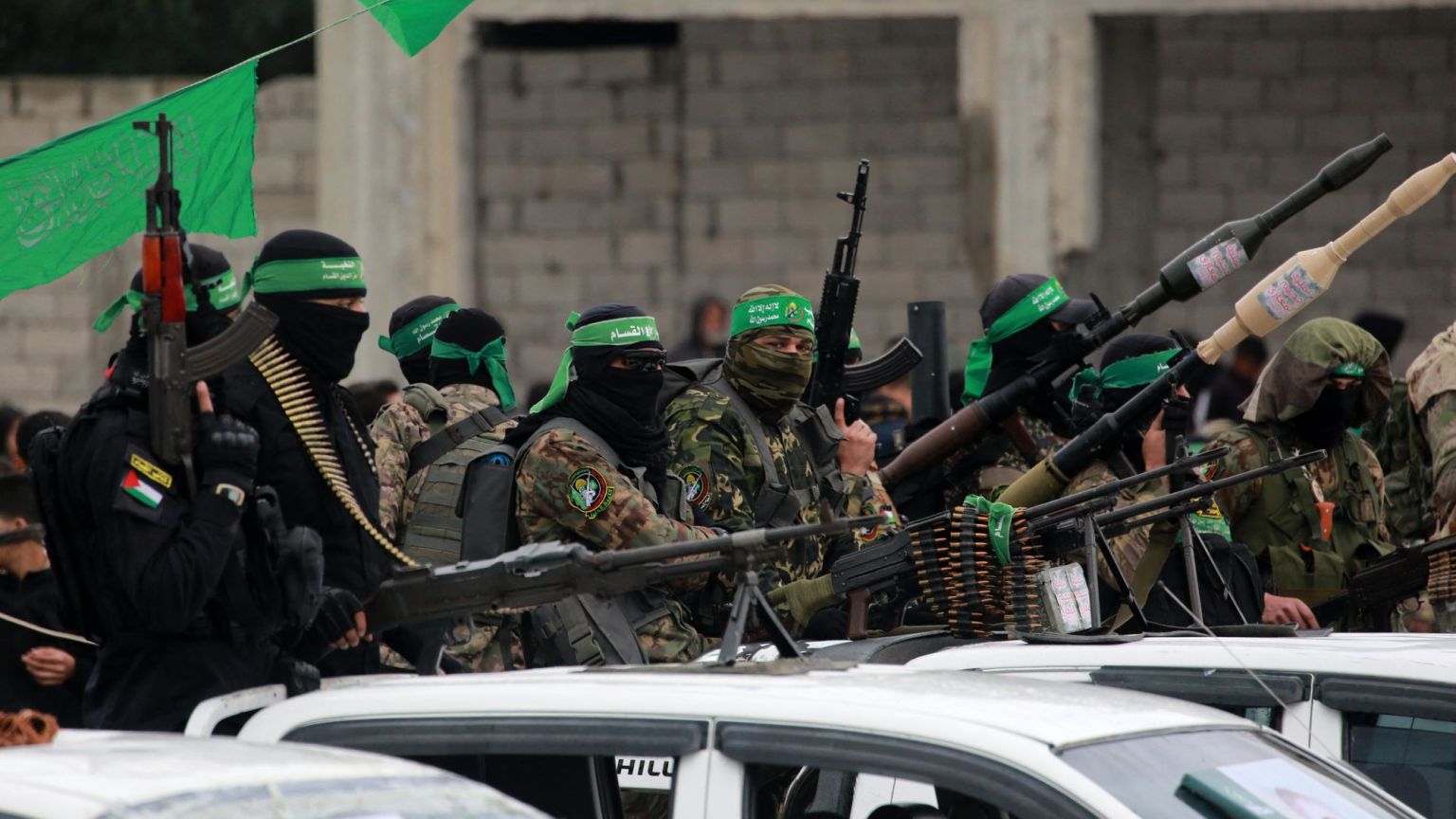
US president Donald Trump announced last week that the Board of Peace, set up by the White House last year, had secured Hamas’s agreement to a ‘roadmap’ for its ‘complete disarmament’. After nearly three years of bloodshed, it sounded like the decisive ending Gaza and Israel both needed.
But within hours, Hamas negotiator Ghazi Hamad punctured the celebration. ‘We didn’t say disarmament, we didn’t say handing over the weapons’, he told the Wall Street Journal. He added that the weapons would instead be kept in a storage facility, overseen by the National Committee for the Administration of Gaza, a Palestinian-run technocratic group. That exchange with Hamad should halt the flow of champagne in Washington.
According to the full text of the deal with Hamas, ‘A Roadmap for Completing the Implementation of President Trump’s Comprehensive Peace Plan in Gaza’, Gaza’s proposed new technocratic authority will assume control of police weapons. Heavy weapons and tunnels will enter a later process of ‘decommissioning and storage’. Every phase of this process is linked step by step to an Israeli withdrawal. The timetable and enforcement rules remain to be written.
The sequence of the steps to be taken is significant. Israel must fulfil its ceasefire commitments and remove itself from Gaza before the technocrats enter, after which Palestinian factions will start to surrender their heavy weapons. This will be easier said than done. The new Palestinian-run National Committee will in fact find itself surrounded by a still-armed movement. Hamas understands what it is doing here: bank the concessions (Israeli withdrawal, etc) and defer the dangerous obligation to hand over weapons.
A senior Board of Peace official says surrendered arms will remain in the strip before being dismantled and melted down, and operatives who surrender weapons may receive money and amnesty. While the ceasefire holds, the official says, the IDF is not expected to operate in Gaza. In practice, the deal means that Hamas gets a protected interval as its enemy pulls back and its own men are paid.
Survival has been Hamas’s overriding aim since its 7 October gamble brought catastrophe to Gaza and wrecked much of its military organisation. A pause provides the raw material for recovery. It can recruit from a traumatised young population, while acquiring reconstruction funds. At the same time, Israeli attention will eventually shift elsewhere.
The Arabic word to describe this deal is hudna: a truce that suspends the fighting without settling the cause. Hamas is thinking in long-term timescales. It is measuring victory by endurance. Even the military disaster of the past three years can be reframed in decades to come as an act of steadfastness if Hamas outlasts the soldiers who tried to destroy it. Its surviving cadres have years to educate a successor generation.
Western powers continue to misunderstand Hamas. They treat it as a stack of rifles with a political office attached. But it’s far more than an armed force. It ruled Gaza for almost two decades and infested its civil machinery. It shaped schooling through the education bureaucracy. The health sector operated under its government, while Hamas-run courts enforced its authority. Municipal employees and emergency committees kept its presence visible when formal ministries broke down. Collecting the weapons of Hamas and other factions removes an immediate threat of armed force, but it leaves Hamas’s human infrastructure in place.
The proposed handover to the National Committee exposes the danger. Hamas has sought to carry over 40,000 civil servants and security personnel into the new technocratic order. Roughly 10,000 belong to the Hamas-run police. A new nameplate on a ministry changes little if the same officials control salaries and local permits, with loyal policemen on the streets. Hamas can surrender the administrative title while retaining its governance networks.
Hamas’s behaviour during the ‘ceasefire’ does not bode well for the Board of Peace plan. Hamas gunmen reappeared as Israeli forces withdrew last year, crushing local rivals. The movement then resumed enforcing order with extreme brutality. Its remaining bureaucracy collected revenue and paid loyalists. Israel now says Hamas continues to recruit and rebuild. Every month of quiet exposes the superficial appearance of calm, even as renewed Hamas coercion demands another violent confrontation.
Verification of Hamas’s surrendering of weapons is going to be nigh-on impossible. No audited inventory exists for an arsenal dispersed across ruins and private buildings. Inspectors must prove the absence of hidden rifles and explosives across a dense urban landscape designed to frustrate surveillance. Hamas can hand over expendable weapons and reveal tunnels Israel already knows about, while continuing to conceal those Israel is unaware of. The commanders who remember how to rebuild can remain underground or melt into civilian employment. A weapons store controlled by a fragile administration remains a future armoury.
Hamas’s leaders are unusually candid about their objectives. Political bureau member Bassem Naim said the agreement preserved ‘our strategic project’. He praised the ‘Al-Aqsa Flood’, Hamas’s codename for the 7 October pogrom, and called for other arenas to advance the ‘liberation’ project.
The Board of Peace’s roadmap therefore offers Hamas an opportunity. Surrender enough metal to secure Israeli withdrawal, then protect the organisation embedded within Gaza’s new administration. Rearmament can wait until scrutiny fades. The weapons left inside Gaza will be waiting, too.
Andrew Fox is a retired Parachute Regiment officer, a senior fellow at the Henry Jackson Society and co-host of The Brink podcast.
#Hamass #disarmament #deal