wellnessfitpro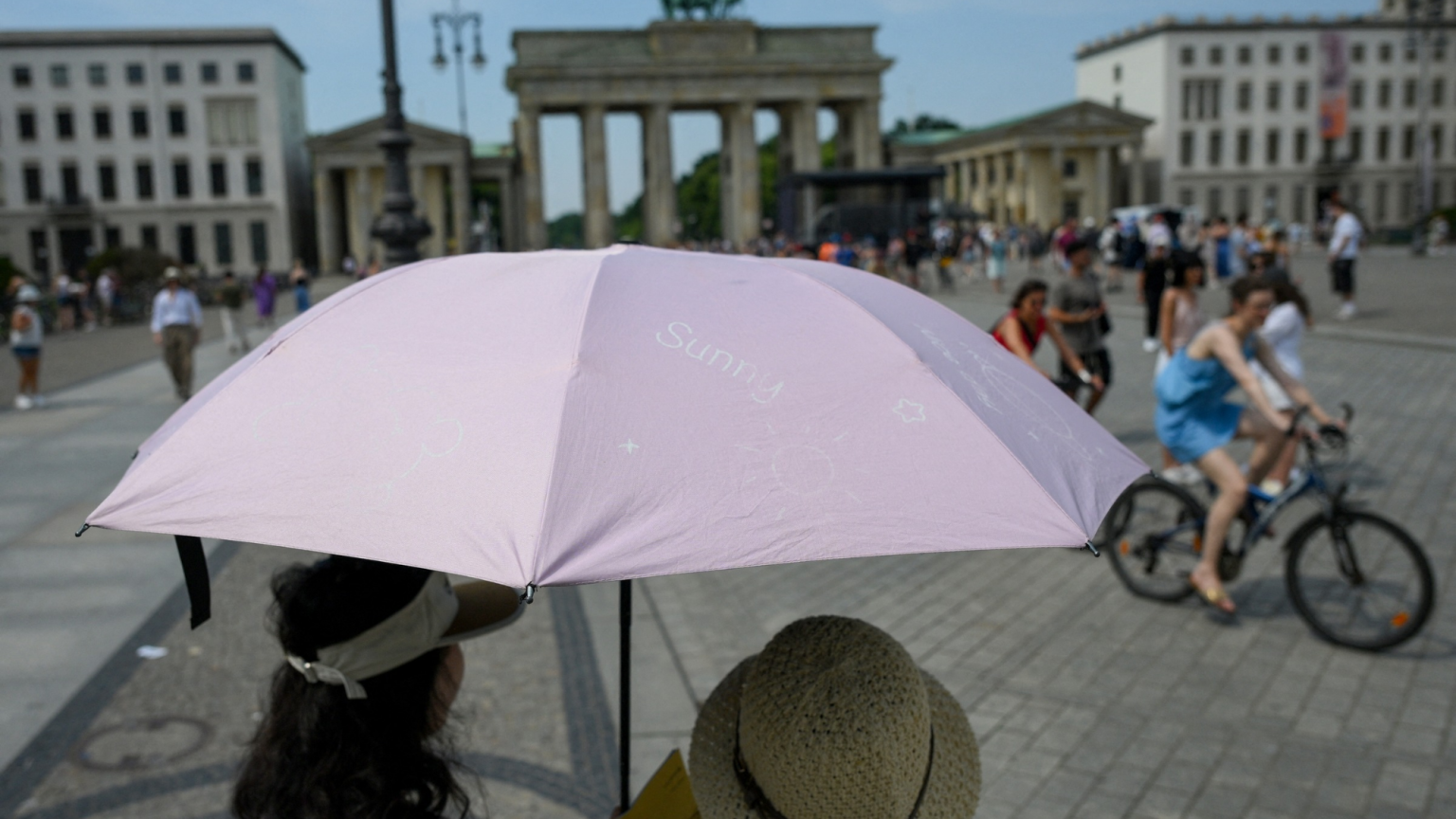
Germany, like much of Europe, has experienced a summer of recurring heat waves. You might think this would be good news for the Green Party, and it has certainly been seized on as an opportunity for scaremongering, but they nevertheless appear to be losing their grip on the public.
Take the poster the Greens have put up in Berlin, a few weeks ahead of September’s mayoral election. ‘Climate change hasn’t gone away. Just because no one wants to hear about it any more,’ reads the bright yellow script, laid over an image of the Earth as a beach ball running out of air.
This frustration over voters’ alleged indifference to global warming is partly fuelled by Alternative for Germany’s strong poll numbers. The AfD, which campaigns with posters railing against ‘climate hysteria’, is polling ahead of the Greens, even in liberal Berlin. Unable to explain how people could still be in a mood of denial, some green-leaning ‘experts’ have accused voters of being too stubborn. The heat, one such expert argued on a talk show, must have ‘triggered yet another defence mechanism’ in a segment of the population.
She needn’t have resorted to such speculation had she actually listened to people more carefully. A YouGov survey published in June is more instructive. It found that a large majority of people in Germany do consider man-made climate change to be real, yet the issue’s importance to them has declined sharply in recent years.
The survey authors describe this as a ‘paradox’. But this finding is only puzzling to those who believe that they – and only they – have the right policies to combat global warming. Those mainstream voices, in other words, who have defined Germany’s politics in recent decades. And it is precisely these powerful voices and their policies that ever more voters have begun to question.
For a growing number of voters, the lesson of the heat waves is not that global warming should make us cower before our betters, but that, if we want to do something, it must at least be effective and helpful. More importantly still, many have concluded that the political choices of recent years, including on climate change, have made the German state and its infrastructure increasingly unfit for purpose and worryingly ill-equipped for the challenges ahead.
Consider heat-related deaths. According to the latest figures published by the Robert Koch Institute in August, they amount to nearly 12,000 people – a truly shocking number. But people are right to ask whether it was really the climate, or the wrath of some evil fate, that robbed so many of their lives, or was it simply the lack of air conditioning in German care homes and hospitals.
‘Most hospitals currently have to mitigate the heat using simple and largely ineffective measures, such as shading and fans’, said the deputy head of the German Hospital Federation back in summer 2025. That was the same summer the German government introduced a ‘Heat Action Day’ and announced several ‘heat-protection plans’. Yet nothing improved by 2026, with most hospitals and care homes still lacking appropriate cooling systems.
It’s no secret that most of those who have died were old and frail. In June, the Apotheken Umschau reported on a study from Ontario, Canada, which found that the likelihood of dying on hot days is eight per cent higher in nursing homes without air conditioning than in those with it. Ontario, the report noted, made air conditioning mandatory for nursing homes back in 2021.
It was surely public outrage over the lack of air conditioning that led the Green Party – to the surprise of many – to demand an air-conditioning programme for Germany. ‘Greens call for immediate programme for air-conditioning systems’ was a news headline in June. The elderly and children, the party leader said, should have the right to be protected with air conditioning ‘in care facilities, hospitals and schools’.
Until then, the consensus among Germany’s elites had been that ‘air conditioning is not the solution’ – a message peddled tirelessly across countless newspaper articles and TV talk shows. Even the Apotheken Umschau article quoted above included the seemingly obligatory expert caveat that, despite the Canadian findings, air conditioning couldn’t be the solution for Germany: ‘We can no longer afford air-conditioning systems that consume large amounts of energy, heat up the outside air even further, generate noise, or run on climate-damaging refrigerants’, the expert said.
The strangeness of this demonisation of air conditioning was on full display when Germany’s public broadcaster, ZDF, ran a segment in 2025 on how to cope with the heat. The advice included keeping windows closed until it cools down, rolling up carpets because they store heat, and switching off all electronic devices because they emit heat even in standby mode. Buying an air conditioner did not feature. In 2024, German public television aired a programme titled When Cooling Devices Heat Up the Climate, lamenting that ‘19 per cent of Germans already have air conditioning’ at home – even though, as the report explained, such devices only make global warming worse. Air conditioners, the programme lectured, are responsible for almost four per cent of global greenhouse gas emissions worldwide. The anti-American undertone in such warnings was hard to miss, as journalists often pointed to the many air conditioners used in the US.
It’s good that the Greens have now graciously conceded that air conditioning in care homes, hospitals and schools might be a good thing after all. But most people won’t be too impressed. They won’t forget that it is green policies, and the German elite’s pursuit of Net Zero, that have led to the current situation. What, many will rightly ask, have all the ‘heat plans’ announced by successive governments actually achieved?
Adaptation to a changing climate has clearly been dangerously neglected – so much so that during the hottest days of late June, key elements of Germany’s infrastructure literally collapsed, to widespread shock. While some problems might indeed have been hard to foresee or avoid, such as streets having to close because the asphalt simply became too soft, others were plainly the result of bad planning and wrong political choices.
Take the thousands of people left standing on scorching, overcrowded platforms because their trains were cancelled or delayed for hours. Don’t trains also run in southern France and Spain, where temperatures regularly top 30 degrees, people asked. Not the heat, but a lack of maintenance and the generally poor state of Deutsche Bahn were rightly identified as the cause (a week earlier, before the heat wave had even set in, the entire train system had already ground to a halt because of an outdated signal system – a disruption unprecedented since wartime).
Most absurdly of all, even outdoor pools, the place people would normally turn to for respite from the heat, had to close because they had no cooling systems, the water had grown too warm, and bacterial contamination became a risk.
These problems have weighed all the more heavily on people’s minds given how aware they are of the billions spent on Germany’s fight against global warming. In 2024, Germany’s Climate and Transformation Fund cost an astonishing €49 billion – money largely spent on a foolish transition to renewable energy.
The effect of all this on the global climate has been negligible at best. Indeed, because of its exit from nuclear power, Germany has had to fall back on coal, which explains, at least in part, its significantly higher per-capita CO2 emissions than France – around 7.03 tonnes per capita, compared with roughly 4.12 tonnes in France, according to 2024 figures. More importantly, this is money that could instead have gone towards adaptation. With Germany’s economic problems mounting, municipalities are now complaining that they have too few resources to invest in cooling systems.
The heat wave has only deepened the divisions running through Germany. For some, this unusual spate of hot weather has further exposed the dangers of global warming. For others, it has exposed the dangers of having infrastructure that’s unfit for purpose and worryingly ill-equipped to withstand the heat events yet to come. Even Germans who are worried about climate change can see that ‘green’ solutions only ever make things worse.
#Germans #cooling #Greens #heat #wave