wellnessfitpro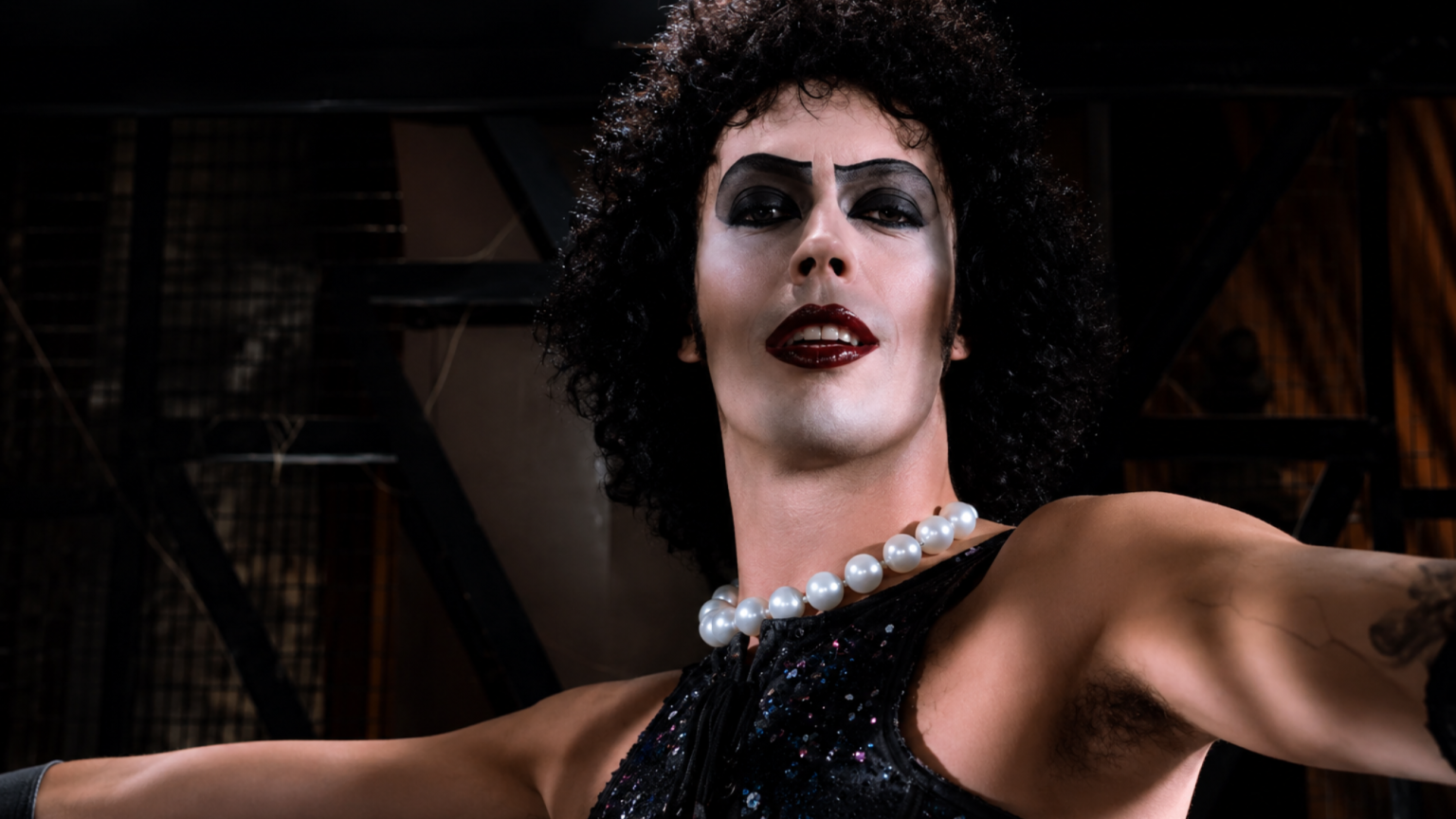
Tim Curry was a shapeshifter. Notoriously media shy, he let his fans delight in his wild array of acting roles without really ever knowing him at all. When his more persistent admirers formed an emotional bond with the Tim Curry of their imaginations, he would sometimes be forced to set them straight. ‘I’m just a person’, he would say, ‘and I’m not your person’.
One of the joys of watching Curry on screen was that he was often unrecognisable from one role to the next. I have a childhood memory of the moment I learned that the demon in Legend (1985), the villain in Annie (1982), the butler in Clue (1985) and the cross-dressing alien scientist in The Rocky Horror Picture Show (1975) were all played by the same man. It was quite the revelation.
Curry died this week aged 80. The publication last year of his memoir, Vagabond, gave fans a tantalising glimpse of the real man, but even there he was determined to retain an air of mystery. Those who were hoping for salacious anecdotes about his love life were disappointed, because, as he rightly pointed out, ‘specifics about my affairs of the heart or the bedroom are – respectfully – none of your fucking business’.
His vagabond status was well earned. As the child of a military father, he was forever on the move, and it is easy to see how these early experiences shaped his capacity to embody such a range of characters. His first accolade came early when he was awarded the prize for the ‘Most Beautiful Baby in Hong Kong’. His family relocated roughly every 18 months for the first 11 years of his life, meaning that he was continually exposed to new people and environments.
Little wonder that Curry saw mutability as the essence of his vocation. As he put it: ‘How can you trust somebody, or truly know somebody, who appears as a king one day and a jester the next? What does it mean when neither role is the true identity of the person, and when that very person might be gone the next day?’ In this, he might have been paraphrasing William Hazlitt’s essay on actors, in which he described them as ‘today kings, tomorrow beggars’ and wrote that ‘it is only when they are themselves, that they are nothing’.
Curry’s key philosophy in life struck him during a gap year of travelling across Europe and north-west Africa with his schoolfriend, Richard Cork (later the art critic for The Times). Drunk on brandy one night in Marrakesh, the two friends made a pact to thoroughly explore all their contradictions and ‘see them through to their conclusion’. It proved to be Curry’s guiding principle throughout his life and career.
As he explained in his memoir: ‘Professionally, the lure of pursuing contradictions has drawn me toward complex characters or compelled me to make them more complex and nuanced: so, for example, a scoundrel who is also charming, or somebody rather abhorrent whom I can also play out as being quite irresistible. Those are the roles that have enticed me the most.’
Few roles better embodied this combination of the abhorrent and the irresistible than Dr Frank-N-Furter in the West End musical, The Rocky Horror Show. This anarchic rock’n’roll homage to science fiction and horror B-movies enjoyed an immediate success when it opened on 19 June 1973 at the small venue upstairs at the Royal Court Theatre, on a night that was suitably stormy and lightning-streaked. When adapted into a film in 1975, Frank-N-Furter was his breakthrough role. In spite of the movie’s initial failure at the box office, its subsequent cult status has ensured his legacy.
When I interviewed the show’s creator, Richard O’Brien, in 2013, he described Curry’s portrayal of Frank-N-Furter as ‘definitive’. Indeed, it is difficult to imagine how his performance in the movie version, with its delirious energy and lip-smacking abandon, could possibly be bettered. As O’Brien told me: ‘We had one actor 20 or 30 years ago who said to me: “I hope you know, Richard, I’m stealing everything off Tim Curry.” And I thought that was an honest way to approach it.’
Curry later gave the very best advice on how to approach the role. ‘None of the characters in the show are in drag’, he said. ‘We’re all wearing what people normally wear in Transylvania.’ Most importantly, Frank doesn’t ‘camp around’ or pretend to be a woman. ‘He is a very strong, aggressive man… In other words, if you’re going to attempt to truly enter the character, wear your high heels like a man.’
To make his feature-film debut in such an extreme part carried risks of future typecasting, yet the astonishing variety of roles that followed proves that he successfully manoeuvred his way through that minefield. He played Mozart in the Broadway production of Peter Shaffer’s Amadeus (1980-1981) and was nominated for a Tony Award. Other Tony nominations were to follow for his performances as Bill Snibson in Me and My Girl (1987-1988) and as King Arthur in Spamalot (2004-2007). It was quite the leap from such theatrical turns to his famous on-screen villains – Pennywise the Clown in the miniseries It (1990) and Cardinal Richelieu in The Three Musketeers (1993) – but he made it seem effortless.
Even in these most diabolical of guises, Curry insisted that he was able to draw on his own life experience. Of Pennywise and Richelieu, he acknowledged that his ‘terrifying childhood memories’ of his mother – who possibly suffered from an undiagnosed form of bipolar disorder – informed his approach. And might it even be the case that he was thinking of his mother during his brutal axe murder of Meat Loaf’s Eddie in The Rocky Horror Picture Show? ‘Well, between us, yes’, he confessed in his memoir. ‘Yes, perhaps I was.’
Those who tried to pigeonhole Curry were attempting the impossible; shapeshifters are not so easily categorised. It seems appropriate that one so protean and elusive was, at an early screening of The Rocky Horror Picture Show, mistaken for an imposter. A cinema manager tried to have him ejected for impersonating Tim Curry.
In his essay on actors, Hazlitt quotes Shakespeare’s All’s Well That Ends Well: ‘The web of our life is of a mingled yarn, good and ill together.’ This could serve as a fitting maxim for any actor, for whom even the most traumatic experiences can provide material for the craft. The body of work Curry leaves behind is testament to how successfully he wove his many disguises from the mingled yarn of his own extraordinary life.
#Tim #Curry #immortal #shapeshifter