wellnessfitpro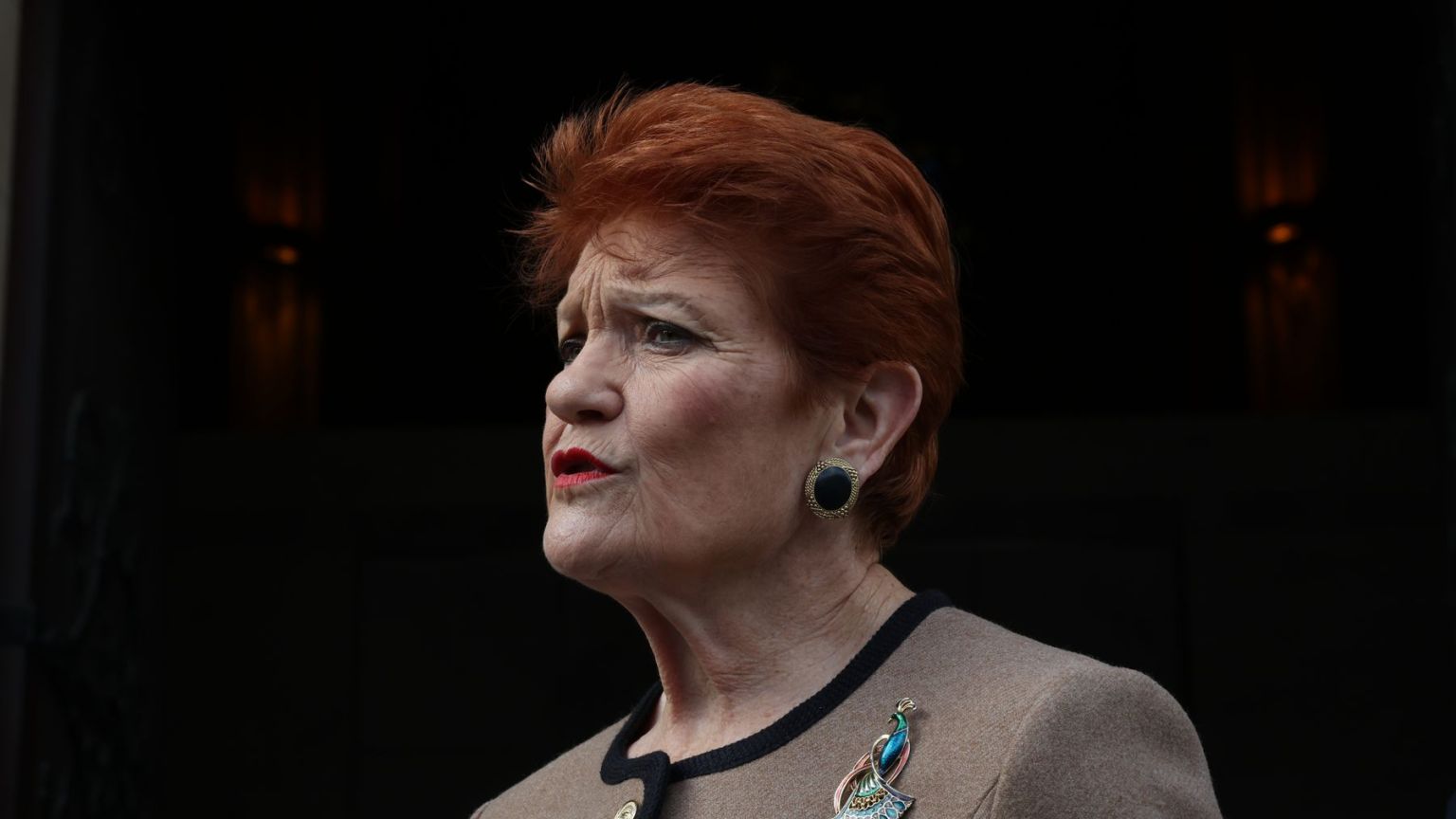
The right-populist One Nation party has been threatening to breach the defences of Australia’s impregnable two-party system for some time. That moment arrived last Saturday, when Pauline Hanson’s ‘orange tsunami’ blew Labor out of the water in one of its safest seats. We can safely say that Australia’s populist moment has arrived.
The epicentre of this political earthquake was Secret Harbour, a small electorate on the southern outskirts of Perth. It’s a constituency that you could generally bet your house on Labor winning. But not anymore: One Nation won 16,000 votes to Labor’s 12,000, a swing of nearly 20 per cent. The result represents a significant turning point in Australian politics.
Of particular interest is the fact that Secret Harbour isn’t fertile soil for a populist revolt. It is a middle class, generally affluent coastal town. Its people are young families and first home owners, many of whom work FIFO (fly-in, fly-out) in Western Australia’s lucrative mining sector. It isn’t deindustrialised, left behind or experiencing anything like the immigration seen in other parts of the country. It represents the median of Australian politics – not the ‘extreme’ or ‘fringe’ element that One Nation supposedly appeals to.
Saturday’s result came after months of steadily building momentum. In January, in the wake of the Bondi massacre, One Nation surpassed the centre-right Coalition in the polls. In July, it pulled even with the governing Labor Party at 30 per cent. Clearly, Hanson was striking a chord with Australians. It was just a matter of when she was going to land her first significant blow.
Hanson is what commentators love to call ‘divisive’. By this, they mean that she says things that ‘educated’ people despised, but that many Australians find quietly appealing, especially on immigration. Yet, outside of her native Queensland, her support never amounted to much. In hindsight, this isn’t surprising: for most of Hanson’s time in public life, there hasn’t been a need for her – immigration has been stable and living standards have been high.
Now, Hanson is being rewarded for her consistency – a virtue the established parties long abandoned any claim to. For years, she has said that immigration needed to be reduced, that Net Zero had throttled the Australian economy, and that Australia could be multiracial, but not multicultural. Suddenly, now everyone seems to agree with her.
Admittedly, prime minister Anthony Albanese has helped clear One Nation’s path. In 2024, net immigration to Australia reached 430,000 – an extraordinary figure for a country of less than 30million people. Along with the rest of his party, Albanese has prioritised Net Zero at the expense of the mining industry – the foundation of Australia’s prosperity. His calamitous 2024 referendum for an indigenous ‘Voice’ to parliament and his cynical betrayal of Australian Jews has fractured Australia on racial and religious lines like never before.
Under the new leadership of Angus Taylor, the Coalition has regained some of its fighting spirit. But, like Tory leader Kemi Badenoch in the UK, he is at the beginning of a long road to recovery. Australia’s last Coalition government chewed through three prime ministers, enthusiastically supported the Covid lockdowns (among the most draconian in the Western world) and pledged Australia to Net Zero by 2050. In light of this dismal record, Taylor has a significant mountain to climb.
Hanson and One Nation have benefited from the incompetence of the major parties. But to attribute her recent success solely to this would be to take something away from her strange appeal. Australians will look past a politician’s flaws if they can detect something authentic. And there is much in Hanson – a twice-divorced former fish-and-chip shop owner who sounds like a character from Kath and Kim – that marks her out as a distinct character. Canberra, like Westminster, is now dominated by lawyers, bureaucrats and career politicians. As a result, parliament has become a sterile and bland place. Hanson isn’t perfect – but she at least comes across as human, with a roughness to her that Australians like.
One Nation has bigger tests to come. But if it does as well as it is predicted to do in Victoria’s upcoming state election – traditionally, its weakest state – the political map of Australia will not so much have been redrawn as torched. To which Pauline Hanson’s response would no doubt be: get over it.
#Pauline #Hanson #gunning #Aussie #establishment