wellnessfitpro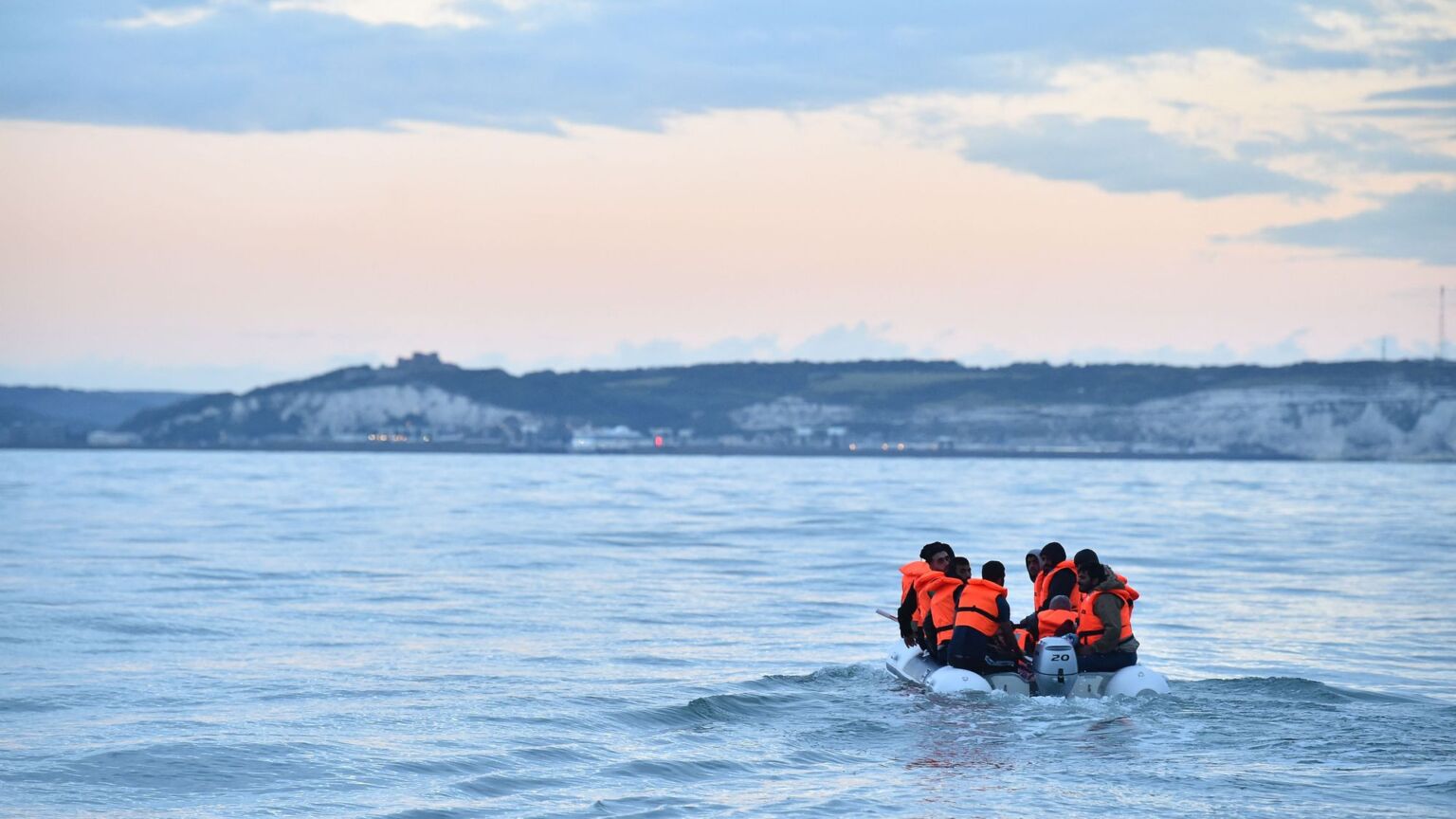
For at least the past 20 years, Britain’s political and cultural elites have claimed that immigration has been nothing but a blessing for the nation. They claim it grows the economy. That it makes Britain as a society less insular and more diverse. That it has moral as well as economic benefits.
Among vast swathes of the British public, however, a very different view has taken hold. They have experienced the reality of our increasingly porous borders. They have seen how the importation of cheap labour, far from growing the economy in real (per capita) terms, has merely suppressed wages. They have seen how immigration-fuelled population growth has put even more pressure on struggling public services. And they have witnessed what ‘diversity’ means in practice – the creation of religious and ethnic enclaves, riven with anti-Semitism and intolerance.
There is another reason for people’s concerns and anger over our immigration and asylum system, and it’s one that has come to the fore over the past two or three years. Many increasingly feel that some of those illegally entering Britain, mainly from the Middle East and Africa, pose a distinct threat to the safety of British citizens. It is a view that gains substance with every news report detailing a horrific violent incident or sex attack carried out by someone who shouldn’t have been here in the first place.
The grim cases themselves certainly seem to be mounting up. In May 2025, two Afghan 17-year-olds, Jan Jahanzeb and Israr Niazal, raped a 15-year-old girl in Leamington Spa, Warwickshire. The following month, in the nearby town of Nuneaton, another Afghan, 23-year-old Ahmad Mulakhil, raped a 12-year-old girl. He was living in a taxpayer-funded house in multiple occupation (HMO). Also last year, Khan Agah and Noorullah Ahmhdzai, both from Afghanistan, raped a woman at knifepoint in east London. All of these men had entered Britain illegally and had claimed asylum.
There have been many more reports of brutal attacks carried out by illegal immigrants over the past year or so, which are only now emerging as court trials conclude. One of the most high-profile cases involved three illegal immigrants living in a hotel repurposed for asylum seekers on the south coast. In October last year, Abdulla Ahmadi, Ibrahim Alshafe and Karin Al-Danasurt gang-raped a woman on Brighton beach as she was walking home from a nightclub. In November, three Afghan asylum seekers, Mehrab Safi, Awal Ahmadzai and Salman Habibkheli, groomed and raped a 17-year-old girl in Bristol after plying her with alcohol. Recently, the public learnt that a 33-year-old Eritrean asylum seeker, Bruke Desalagne, had been found guilty of raping an elderly man behind a church in Harrow, north London, in July 2025.
There are lots of other cases like this. And we are only able to read about them because reporting restrictions were lifted. There are likely similar cases progressing through the courts of which we are currently ignorant.
The bleak stories have kept coming. In May, seven Afghan asylum seekers were charged over effectively establishing a grooming gang in Norwich, the alleged victims of which were in their early-to-mid teens. Just last week, a 24-year-old Afghan asylum seeker was charged with raping a 17-year-old girl in Manchester’s Picadilly Gardens.
A seeming relationship between illegal immigration and sex offences is not in any way unique to Britain. Other European countries that have absorbed large numbers of illegal migrants and asylum seekers have endured similar waves of sex crimes. It happened in the German city of Cologne in 2016, when nearly 500 women were assaulted over a single night by roughly 1,000 men from Africa and the Middle East – men who had been granted asylum by Angela Merkel’s infamous ‘wir schaffen das’ invitation of 2015.
Right now, something similar is happening in the Spanish enclave of Ceuta in north Africa. In July, staggering footage of more than 70,000 immigrants flooding across the border from Morocco. Since then, most have either returned or travelled to mainland Spain. But at least 5,000 remain in Ceuta. Now, according to the BBC, prosecutors in Ceuta have recorded 23 sexual assaults since its border was breached – a rate of about one a day. Nine of the sexual assaults have occurred against children. One journalist recently described it as ‘the migrant crisis of 2015 on steroids’.
Britain’s ‘progressive’ elites continue to look the other way of course. They still morally decry the very idea of borders and insist on the right of illegal immigrants to live here. They also claim that any attempt to link the rise in asylum seekers to a seeming rise in sexual crimes is racist. This attitude was on full display last summer during the spate of protests outside ‘migrant hotels’ – hotels that have been given over to hosting asylum seekers. These protests reached their height in Epping, where in July a 14-year-old girl was sexually assaulted by Hadush Kebatu – a small-boat migrant from Ethiopia who had been in Britain for less than a week before carrying out his attack.
Right-thinking politicians attacked the protesters. They dismissed their concerns about the misogynistic cultures prevalent in the countries from which many of the illegal immigrants had come. ‘Which culture doesn’t have patriarchy and misogyny in it?’, asked then Labour frontbencher Jess Phillips at the height of the protests. ‘I’ll tell you the group of people that is most likely to abuse – that is men’, she said.
In September 2025, an open letter was signed by a group of prominent left-wing women, including singer Paloma Faith, and left-wing politicians Diane Abbott and Zarah Sultana. ‘There is no evidence that people seeking refuge are more likely to commit acts of sexual violence’, the letter stated. It said the protests were an attack on ‘refugees, Muslims and migrants’. The following month Green Party leader Zack Polanski claimed that ‘there is absolutely no evidence that the people who are sexually assaulting people are the people claiming asylum’.
The UK government, too, has seemed particularly keen to bury any connection between illegal immigration and crime, especially sex crime. In July, we learnt that the Ministry of Justice was taking legal action to prevent the release of data that might have shown such a link. The right-wing think tank, the Centre for Migration Control, had requested a breakdown on foreign offending in England and Wales from 2018 to 2024 – a request that was even approved by the Information Commissioner. But, citing the cost and the supposed risk of leaking suppressed identities, the state refused to release it. The families of victims of crimes carried out by illegal immigrants – including the relatives of Rhiannon Whyte and Wayne Broadhurst, both of whom were murdered by asylum seekers – have demanded the government publish what it knows.
There are other good reasons to suspect that the government is trying to conceal the truth. When reports first emerged that a young girl had been raped in Nuneaton, police secretly briefed councillors, instructing them not to reveal the suspect’s immigration status. Police media releases also try to regularly exclude the immigration status of perpetrators – as in the case of asylum seeker Sheraz Malik, who raped an 18-year-old in Nottinghamshire in June last year. When the immigration status of an offender happens to slip through the hands of the authorities, there is even evidence that they influence the statements of family members to paint migrants in a particularly positive light. In June, when Stephen Ogilvie was brutally stabbed in Belfast by Hadi Alodid, a 30-year-old asylum seeker from Sudan, the victim’s family praised immigrants for their ‘contribution’ to the UK’s healthcare and hospitality sectors. Looking at all of this together, we are right to suspect that the government is hiding something that it doesn’t want to admit, or to be known, about the cost of immigration and illegal immigration in particular.
Nevertheless, through freedom-of-information requests, some kind of picture is beginning to emerge of the true nature of the problem. The Centre for Migration Control was successful in getting data from police forces and the Home Office covering the first 10 months of 2024. These data, combined with information from the Office of National Statistics, show that foreign nationals were three times more likely to be arrested for sex offences than British citizens. Another freedom-of-information request from the Centre for Migration Control, this time using data from the Ministry of Justice between 2021 and 2023, found that foreigners were convicted of 23 per cent of sex crimes in England and Wales. Based on convictions for 10,000 of the population, Afghans and Eritreans were 20 times – or 2,000 per cent – more likely to be convicted of sexual offences than British citizens.
But getting an accurate picture of the relationship between illegal immigration and sex offences remains difficult, for the simple reason that immigration status is not generally recorded in convictions. As Madeleine Sumption, the director of Oxford University’s Migration Observatory, told the BBC last year: whether or not immigrants (and particularly asylum seekers) are more likely to commit sexual offences can only be inferred by the nationality of the offender. Nonetheless, Sumption said, there were ‘big variations’ in what nationalities were convicted of sexual crimes. ‘It is true that some of those nationalities where most people tend to come through the asylum system’ – she mentioned Afghans, Syrians and Iranians – ‘have the highest rates of convictions overall, and also for sexual offences specifically’.
Ironically, the clearest sign yet that the public is at a disproportionate risk from asylum seekers and illegal immigrants came from the Home Office itself – the very department that continues to fight, tooth and nail to prevent us from knowing the truth. In August, it emerged that the Home Office was handing out information guides to newly arrived asylum seekers. This ‘promotional material’ informed newcomers that ‘both people must say “yes” to sex’, adding that they must not have ‘sex or sexual contact with a child under 16’.
It was a humiliating admission from the government. But it is an admission that, had we connected the dots, or looked a bit closer at what was happening, should never have been necessary. For nearly a decade, the British state has been embarking on a strange and terrifying experiment – absorbing tens of thousands of overwhelmingly young men about whom it knows nothing, through our asylum system, from countries steeped in violence and often misogyny.
Here is what we do know. Since 2018, approximately 200,000 people have entered Britain via small boats. The vast majority – at least 75 per cent – are men over the age of 18. And we know that the vast majority of arrivals come from a small number of countries – in particular, Iran, Afghanistan and Eritrea.
These are countries where you do not want to be a woman. In Eritrea, there is a 90 per cent chance that you will be subjected to some form of female genital mutilation as a girl. In Iran, as we have witnessed in recent years, women’s ‘modesty’ is viciously ‘protected’ by the state – even by murder if necessary. And in Afghanistan, girls are routinely sold by their fathers, domestic violence is legal so long as it breaks no bones nor leaves any ‘visible’ injuries, and women are effectively confined to their homes. Obviously, all of these practices would be against the law in the UK. In a more general sense, we can also say that the culture that has informed such practices is sharply opposed to the equality and sexual freedom that women enjoy in Britain.
That young men from these backgrounds and with these experiences are disproportionately likely to commit sexual crimes is hardly a surprise. But there is another factor that amplifies the risk. Namely, the type of young man to whom a dangerous journey is likely to appeal, and what they might experience as they cross from Asia, through various European countries, before eventually arriving in Britain. On this point, recent evidence from the Leeds Crown Court is instructive.
In August, Ibrahim Albashir was convicted of the attempted murder of a 32-year-old woman at a bus stop in Leeds. The court heard that, in August 2024, Albashir had waited until the woman – who was going home after dinner with friends – was by herself, before attacking her repeatedly with a glass bottle. He was sentenced to 25 years in prison and an indefinite hospital order.
Albashir is a 34-year-old asylum seeker from Sudan. He left his home country when he was 25, first breaking into Libya and then heading to Italy. From Italy, he travelled to France. Then he started drinking alcohol and smoking cannabis. He began to experience bouts of madness and was institutionalised for six months. During his internment, Albashir was diagnosed with paranoid schizophrenia.
At some point, Albashir’s asylum claim was denied by France. But that didn’t matter to him – he proceeded to travel to Calais, and then to Britain. It isn’t clear what, if any, background checks were conducted on Albashir by the authorities when he arrived. We only know that he was sent to a migrant hostel in Birmingham with no supervision. At the hostel, he assaulted a female member of staff before heading to Leeds, where he committed the attempted murder.
This takes us close to an important point. Breaking into a country illegally after a long, dangerous journey through Europe demands a certain type of person. Those embracing this opportunity will be interacting with people smugglers and regularly breaking the law. And when many people like this – overwhelmingly young and male – find themselves living side by side, it is likely to reinforce their worst personality traits.
It isn’t ‘racist’ to state the facts clearly. It doesn’t put you in a league with the ‘far right’ to point out that illegal immigration clearly poses a threat to the public. It isn’t racist to point out that receiving tens of thousands of men, from societies whose values are alien to our own, is likely to cause severe social challenges and worse. Yet too few among our governing class are willing to acknowledge the reality staring so many in the face. Our immigration and especially our asylum system are not fit for purpose. Too many people are illegally entering and remaining in Britain who pose a clear and present danger, especially to women and girls. This can’t go on.
#migrant #crime #wave #shames #British #state