wellnessfitpro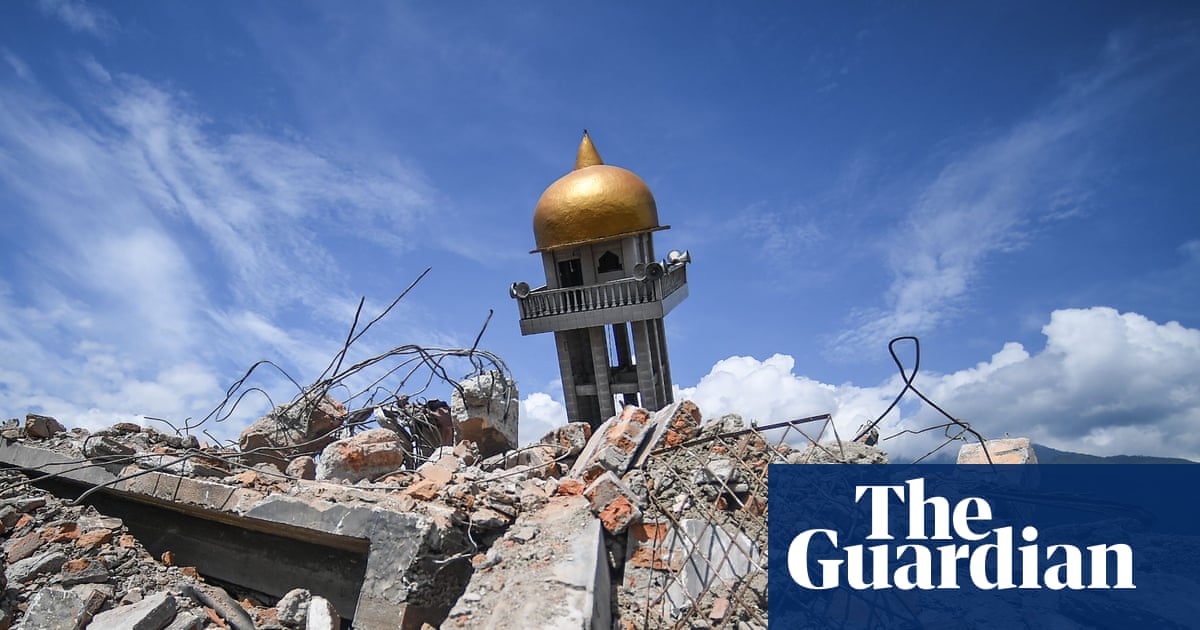
Scientists working on an early warning system in earthquake-prone Indonesia have taken the spiritual path to designing a network of alarms that will reach even the remotest communities: they hope to use mosques to save lives.
A five-year trial is assessing whether the ubiquitous loudspeakers used to broadcast the call to prayer can double up as warning klaxons for earthquakes.
“Every community has a mosque,” says project lead Dr Inoue Hiroshi, speaking to the Guardian from Indonesia. The pilot scheme was the brainchild of the Japanese disaster scientist, who says he came up with the idea nearly two decades ago while researching deadly quakes in Sumatra, Indonesia.
Inoue, of the Disaster Prevention Research Institute at Kyoto University in Japan, is working with the Indonesian government to assess whether the country could implement an early warning system similar to Japan’s.
“I thought if Indonesia had the same service and people received the warning before the shaking came, then many people among those few hundred wouldn’t have died,” he says of a devastating 2009 quake in western Sumatra which killed at least 1,000 people.
Indonesia’s disaster agency has to grapple with huge distances and hard-to-reach territories, but it has the benefit of an already established network of regularly serviced loudspeakers, something many other countries do not.
With the largest population of Muslims worldwide, Indonesia has hundreds of thousands of mosques, which broadcast the call to pray five times a day. The pilot scheme has already hooked up several mosques to its seismic sensor network.
For an earthquake early warning system to save lives, there are two critical factors – it needs a network of alarms, and they need to work. “The advantage of a mosque speaker is that they’re existing and well maintained,” says Inoue. “For any disaster infrastructure, maintenance is the big challenge … but the mosque speaker is maintained by the people”.
Many modern disaster preparedness strategies work using mobile phones, although those are vulnerable because earthquakes can disrupt communication infrastructure.
The country has a tsunami early warning system dating back to 2008, but the earthquake initiative could be a “breakthrough”, says Andi Eka Sakya, senior researcher at the Indonesian government-affiliated National Research and Innovation Agency and the Indonesian head of the joint research team.
While tsunamis affect coastal areas and can be predicted in minutes or even hours, earthquake waves move through the ground at incredible speeds, and Sakya says a village 50km from the epicentre could have only five to 10 seconds to respond.
“It’s still a prototype, and they don’t issue warnings to the public yet,” he says. “The ultimate goal is actually to alert the people so that they can respond as early as possible.”
The project, which runs until 2030, is also looking at installing alarm systems in school loudspeakers and using radio and television transmissions.
Indonesia and Japan both lie on the Pacific Ring of Fire and are frequently affected by earthquakes. Researchers are looking at how behaviours and survival strategies differ between Japan and Indonesia.
In Japan, official disaster guidelines focus on the widely used “drop and cover” strategy – taking immediate shelter, for example, under a table and staying indoors.
In contrast, low-rise homes in some developing countries like Indonesia are frequently built from unreinforced masonry that is highly vulnerable to collapsing, and so people have survived by escaping outside. In some cases, two-storey buildings in Indonesia have seen the first floor crushed and the second floor remain relatively intact.
“The way people react is they quickly escape out of the room,” says Inoue. “They know how to survive.”
Because standard international advice does not always suit fragile buildings, project researchers are conducting simulations and human experiments to establish guidelines grounded in science. “This is actually one of the main research topics,” says Inoue.
Other countries in the Muslim world have looked at similar systems. When the United Arab Emirates government planned to start its Barakah nuclear power plant, an official on the project said mosque loudspeakers would be part of a broader network of alarms in the event of a radiation leak.
A far more extensive mosque loudspeaker project is going on in Uzbekistan, where the Ministry of Emergency Situations announced a pilot project this year for devices to be installed in 272 mosques. The alarms would alert people to floods, mudflows, landslides and avalanches.
“The selection of mosques is not incidental,” the United Nations Development Programme (UNDP), which partnered in the initiative, said in a statement. “They are traditionally perceived as authoritative social institutions with significant influence on local communities.”
#Indonesia #mosque #loudspeakers #double #earthquake #warning #systems #Indonesia