wellnessfitpro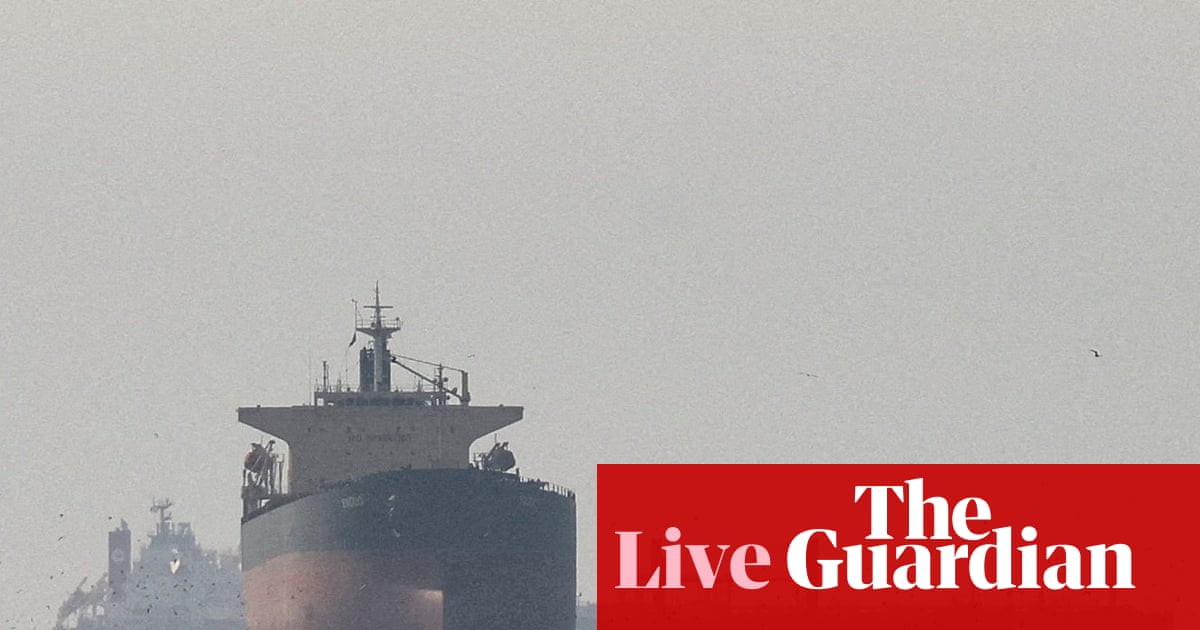
Key events
Delta Air Lines pulls growth plans after near-doubling of jet fuel prices
Delta Air Lines has cut its profit outlook for the second quarter and pulled its growth plans.
The US carrier said it was too early to update its full-year outlook, citing uncertainty caused by the surge in jet fuel prices since the start of the Iran war in late February. Jet fuel prices have nearly doubled, inflating airlines’ costs and prompting them to trim schedules.
The Atlanta-based airline forecast lower-than-expected profit for the April to June quarter, and said it was removing all planned capacity growth from that quarter, which will cut capacity by 3.5 percentage points.
Delta added its capacity growth plans now have a “downward bias until the fuel environment improves”.
Fuel accounts for about a quarter of airline operating costs. The surge could lead to an industry shakeout, with weaker airlines more likely to cut capacity, take on debt or absorb deeper losses.
Delta chief executive Ed Bastian said:
It’s going to separate the winners and force the weaker players to take some pretty significant steps to either get better or something else will happen.
Delta now expects adjusted earnings of $1.00 to $1.50 per share in the June quarter. It expects to pay $4.30 a gallon for jet fuel in the quarter, adding more than $2bn to its fuel costs compared with a year earlier.
So far, airlines have relied on strong travel demand to recoup part of the higher fuel bill through fare increases, baggage fees and other ancillary charges. Bastian said Delta aims to recover about 40% to 50% of higher fuel costs in the second quarter by lifting fares. It also plans to raise fees to check in bags, following in the footsteps of rivals United Airlines and JetBlue Airways.
Bastian indicated that the higher fees could be permanent.
At this level of fuel, it’s hard to call anything temporary.
He played down concerns that higher fares and fees could weigh on demand, saying ticket sales have risen in double digits year on year over the past month.
RAC: Despite oil price drop, outlook for UK drivers ‘highly uncertain’
The RAC motoring group has warned that despite the sharp drop in crude oil prices today, the outlook for drivers in the UK remains “highly uncertain”.
The average price of a litre of unleaded is now 157.71p, up 25p or 19% since the war began. Diesel has exceeded the 190p mark, costing an average 190.62p a litre and is up 48p, or 34% since the Iran war started on 28 February. Both fuels are at their most expensive since late 2022.
RAC head of policy Simon Williams said:
The conditional ceasefire announcement may have taken some heat out of global oil prices, but the outlook for drivers in the UK remains highly uncertain. The best hope in the short term is that pump prices stop rising at the rate they have been and hopefully top out in the coming days.
Much will depend on the stability of the ceasefire, whether oil shipments can move freely through the strait of Hormuz, and the longer‑term impact on oil production across the Gulf. As it is a sustained lower oil price – over several weeks, not just a few days – that is required to bring wholesale fuel costs down meaningfully.
Drivers should not expect significantly cheaper fuel in the short term, although some smaller independent forecourts buying on a ‘spot’ basis may be quicker to pass on any reductions.
Williams recommended that drivers shop around for fuel.
Shell oil trading profits soar amid Iran war but Qatar strikes hit gas output
Shell is expected to report “significantly higher” profits from its commodity trading desks in the first quarter of this year after weeks of market volatility triggered by the Iran crisis.
The surge in energy commodity markets over recent weeks is expected to drive up trading results at Shell’s chemicals and products unit, which includes its main oil trading desk.
Shell’s trading windfall is expected to be particularly high in its renewable energy division. Earnings are expected to soar to between $200m (£149m) and $700m in the first quarter, from about $100m in the final quarter of last year, it predicted in a trading update on Wednesday.
Europe’s biggest oil and gas producer also expects lower gas production for the first quarter, compared with the final quarter last year, because of the impact of the Middle East conflict on its assets in Qatar.
Lloyd’s welcomes ceasefire but says region ‘remains at heightened risk’
The Lloyd’s market, which is at the heart of global shipping insurance, has cautiously welcomed the ceasefire.
Neil Roberts, head of marine and aviation at the Lloyd’s Market Association, which represents managing agents in the world’s oldest insurance market, said:
From an insurance point of view, the ceasefire is of course welcome. Time will tell whether it is a pause or a peace but, in the meantime, it is highly unlikely that trade into the Gulf will simply resume. The region remains at heightened risk with none of the underlying tensions resolved.
The losses already advised will be dealt with as normal and it can be expected that the ships previously unable to leave will now try to do so as soon as the owners and master deem it is safe to do so.
Like everyone else, we can only await developments. Whatever happens, the London insurance market will continue to support its clients.
Economist: Transit fees would mean ‘de facto nationalisation’ of strait
Neil Shearing, chief economist at Capital Economics, said Iran’s plan to charge transit fees for ships to pass through the strait of Hormuz would only have a modest impact on global energy priced but would amount to a “de facto nationalisation of the shipping route”.
There are significant hurdles to overcome before the ceasefire agreement between the US, Israel and Iran can translate into a lasting end to the war. But if it were to hold, it would move outcomes closer to those envisaged in our “baseline” forecast. In that scenario, oil prices decline but still end the year at $80 a barrel, headline inflation rises to around 3-4% year-on-year in the US and Europe and, while GDP growth slows in most major economies, the overall economic damage outside of the region remains limited.
Talks between the US and Iran, on the basis of Tehran’s 10-point framework, which Washington has apparently accepted as a starting point, are expected to begin in Islamabad on Friday. The plan contains several provisions that are likely to prove difficult for both sides.
These include acceptance of Iran’s continued uranium enrichment, a demand that US/western sanctions on the country be lifted, and the withdrawal of US forces from all bases in the region. Shearing said:
It is difficult to see these points being agreed to in full. Some compromise will be required and, without it, there’s a good chance the agreement will fall apart and the conflict resumes.
Turning to markets, Shearing said:
For markets, the most critical issue remains the status of the strait of Hormuz. The framework appears to allow the full passage of oil tankers through the strait, but the terms under which this would occur remain unclear. Some reports suggest the introduction of transit fees of around $1m–2m per tanker.
Given that tankers typically carry 1m–2m barrels of crude, such fees would add roughly $1 per barrel to the cost of oil transported through the Strait. This would therefore have only a modest impact on global energy prices though, in practice, it could amount to a de facto partial nationalisation of the shipping route.
If these issues can be resolved and a deal is reached, we would get closer to Jefferies’ baseline scenario, which assumes the conflict de-escalates by the end of this month and energy flows through the strait resume along the same timeframe.
Even in that scenario, however, there would still be some economic damage. The impact would be most severe in the region itself, where we estimate that GDP could contract by around 10% in the countries most directly affected. The long-lasting damage to LNG facilities in Qatar means it could be disproportionately affected.
Meanwhile, although oil and natural gas prices have fallen sharply today, they are likely to remain elevated relative to earlier in the year. In our baseline forecast, Brent crude averages around $95 per barrel in the second quarter before easing towards $80 by the fourth quarter.
Inflation in the major advanced economies also has further to rise. We expect it to peak at around 4.5% in the UK and between 3.5% and 4% in the US and the euro-zone. US inflation data due later this week will provide an early indication of how quickly those pressures are building.
Finally, the rate hikes currently priced into markets may prove excessive. If energy prices stabilise and growth holds up better than feared, central banks are unlikely to deliver the tightening now priced into markets, which in turn would flatten the front end of yield curves. Equity markets are likely to ebb and flow according to developments in the talks over the next couple of weeks but in our baseline scenario a recovery in risk appetite pushes the S&P 500 above 7,000 by the middle of the year.
Despite the sharp drop in crude oil prices today, Mohit Kumar, chief European economist at Jefferies, does not expect oil prices to go back to pre-war levels anytime soon, and warned it could take months for energy supply to return to normal levels.
Here are his thoughts.
We would view the Iran 10 point proposal positively and do think that it could become the basis for further negotiations. The important background is that Trump really wants a deal and wants to get out of the war and hence would be open for negotiations.
The two contentious elements from the Iran proposal are 1) no mention of nuclear deal 2) the proposal to charge a fee which would be unacceptable to the US or its allies.
The first part doesn’t worry us. Before the war started, reports suggested that Iran was open to a nuclear deal in exchange of sanctions waiver. We believe that an agreement will be reached on nuclear, at least in principle.
Charging of a fee for safe transit through the strait would be unacceptable to the US or its allies. However, a possible compromise could be achieved by having a fee structure for a limited time which will eventually lead to a free safe passage through the strait of Hormuz.
While we are optimistic that we could be heading towards some form of agreement, we fear that this arrangement would be an unstable equilibrium. An emboldened Iran with greater control over the strait of Hormuz would be unacceptable for US allies in the region. A ceasefire would be fragile as any attack (even small) from Iran proxies can be considered a violation of the ceasefire terms and lead to escalation.
Assuming the ceasefire goes ahead, he expects increased spending from US allies on drone interceptors “as this was the Achilles heel for the US and allies during this war”.
Potential alternative routes for the strait of Hormuz would be in focus. For Iran, sadly we fear that apart from reconstruction, it would continue its efforts to acquire a nuclear weapon as a credible deterrent.
Hence we do not see oil going back to pre-war levels anytime soon. We would also need to price a geopolitical risk premium across asset classes which would produce winners and losers.
From a macro impact, even if the strait is opened, it could take months for energy supply to revert to normal levels. The US is likely to be the least impacted from the energy supply disruption, while energy importing countries in Asia would be the most impacted. Europe would fare worse than the US from a macro perspective.
The International Maritime Organization, a UN agency, has welcomed the temporary ceasefire and reopening of the strait of Hormuz.
IMO secretary-general Arsenio Dominguez said:
For the health and wellbeing of seafarers and the global shipping industry, I welcome the ceasefire announced in the Middle East. I am already working with the relevant parties to implement an appropriate mechanism to ensure the safe transit of ships through the strait of Hormuz. The priority now is to ensure an evacuation that guarantees the safety of navigation.
About 1,000 ships are still stuck in the region, according to the boss of the German shipping company Hapag-Lloyd.
Rolf Habben Jansen said in a call with customers that this includes six ships from his company with a combined capacity of 25,000 standard containers.
He said the situation remains “fluid”, and that it would take six to eight weeks for normal traffic to resume.
Even if a ceasefire has now been agreed overnight, I would say that it’s fair to say that the conflict in the Middle East is still severely disrupting shipping, but also supply chains.
He estimated that the Middle East crisis is costing Hapag-Lloyd between $50m and $60m a week, and warned that the shipping company will have to pass some of that cost on to customers.
European gas prices slide 20%
European gas prices have fallen 20% since the ceasefire was announced, after nearly six weeks of war.
The European bellwether front-month gas contract on the Dutch TTF hub initially dropped to €42.50 per megawatt hour this morning, its lowest since 2 March, before rising slightly to €43.46 per megawatt hour.
The UK natural gas contract for May fell by nearly 18% to 111.04p per therm.
Iran has agreed to reopen the strait of Hormuz, through which around a fifth of the world’s gas and oil passed prior to the war, assuming there are no more strikes from the US and Israel.
Henning Gloystein, managing director of energy and resources at the political risk consultancy Eurasia Group, said:
The first thing to see is whether ships can safely pass through the strait of Hormuz.
If they pass freely, it’s possible that Qatar starts repairs to its Ras Laffan facilities, but I don’t think they can ramp up production within the two-week ceasefire window.
The waterway has remained effectively closed since the US and Israel launched strikes on Tehran on 28 February. A retaliatory Iranian strike on Qatar’s Ras Laffan LNG (liquefied natural gas) hub on 18 March knocked out an estimated 17% of export capacity.
Yahdian Falah, senior portfolio manager at trading firm Trianel told the European energy market newswire Montel News:
This is a strong relief and could be the turning point for the global gas market to rebalance.
The ceasefire removes risk of further damage to infrastructure, while reopening the Strait of Hormuz will bring volumes back into the market.
However, “further elimination of risk premium” would be subject to evidence of increased traffic through the strait, he added.
ANZ bank analysts said in a note:
Even if shipping routes reopen, missing Qatari output cannot be replaced quickly, leaving the market to clear through higher prices, inventory drawdowns and demand rationing.
European stock markets jump, FTSE highest since 3 March
The FTSE 100 index has risen to the highest level since the Tuesday after the US and Israel started attacking Iran in late February.
The UK’s benchmark index rose as high as 10,655.92 this morning, and is now trading 2.4% higher at 10,603, up 253 points. This is the highest since 3 March, the fourth day of the war.
Stock markets in the rest of Europe have jumped even more. Germany’s Dax soared 5.2% to 24,118, up 1,194 points. France’s CAC jumped 4.45% to 8,260, up 352 points. Italy’s FTSE MiB has gained 3.5% to 47,016, up 1,601 points. Spain’s Ibex climbed 3.5%, or 608 points to 18,053.
Matt Britzman, senior equity analyst at Hargreaves Lansdown said the ceasefire gives Donald Trump “a clear offramp and lowers the immediate risk of further escalation”.
The FTSE 100 has opened 2% higher, while US futures are pointing to an even larger jump when markets open later this afternoon. The S&P 500 notched its fifth consecutive positive session last night, with the index now on track to record a six-day winning streak if it can hold on to pre-market gains, something not seen since October 2025.
Oil prices have moved sharply lower as the ceasefire agreement marks the first meaningful step toward a potential resolution. News that all parties are now working toward reopening the Strait of Hormuz is another clear positive for market sentiment, even if energy markets remain cautious. There is still work to be done, though, and oil prices will likely remain elevated and choppy until there is a more permanent resolution. The return of free-flowing traffic through the Strait of Hormuz, without any Iranian tolls or controls, feels essential if oil prices are going to start trending back toward levels we saw before the conflict began.
Interest rate expectations have shifted slightly following the ceasefire, bringing markets back toward the view that further US tightening is off the table. Investors are now becoming more comfortable, tentatively pricing in the potential for rate cuts to resume toward the end of this year or into early 2027.
In the UK, markets are still attaching some probability to another hike, although conviction has faded meaningfully in recent sessions. We still see rate hikes as unlikely, given lingering growth concerns, with a holding pattern more probable for now. Further moves in this direction, and perhaps an eventual return to expectations of rate cuts, would be supportive of both stock markets and gold.
Maersk: ‘we take a cautious approach’ on strait of Hormuz
The Danish shipping giant Maersk has issued a cautious statement, saying the two-week ceasefire between the US and Iran including the temporary reopening of the strait of Hormuz does not yet provide full maritime certainty.
The war that began with US-Israeli strikes on Iran on 28 February, followed by Iranian attacks across the region and Tehran’s effective closure of the strait, has brought shipping in the Gulf to a near standstill, disrupting oil, gas and fertiliser shipments and rippling across global supply chains.
Maersk said in a statement to Reuters:
Any decision to transit the strait of Hormuz will be based on continuous risk assessments, close monitoring of the security situation, and available guidance from relevant authorities and partners.
At this point, we take a cautious approach, and we are not making any changes to specific services.
FTSE 100 index jumps while energy companies slide
And we’re off. The FTSE 100 index has jumped 273 points, or 2.6%, to 10624 in early trading.
There are only three fallers: oil companies BP and Shell, down by 8.3% and 7.3% respectively, and British Gas owner Centrica, down 3.5%.
Traders cut chances of interest rate hikes, government bond yields plummet
Interest rate expectations have shifted dramatically, and government bond yields have fallen sharply.
Markets are now pricing in one interest rate hike from the Bank of England this year, probably by September.
Last week, investors were expecting two to three rate increases to rein in rising inflation. It’s still very different from before the war, when the Bank was expected to cut interest rates.
UK government bond yields plummeted on news of the ceasefire as rate hike expectations receded, with the yield, or interest rate on the 10-year gilt down 18 basis points. The five-year yield dropped by 20 basis points.
Sterling has also risen sharply, by 0.9% against the dollar, to $1.3416.
Eurozone government bond yields also plunged as traders scaled back bets on future rate rises from the European Central Bank. Markets are now pricing in a 20% chance of a rate hike in April, compared with 60% on Tuesday, before the dramatic announcement of a US-Iran ceasefire overnight.
The yield, or interest rate, on Germany’s 10-year government bond fell 18 basis points to 2.91%.
Jim Reid, markets analyst at Deutsche Bank, said
Investors will be breathing a big sigh of relief that an offramp out of the war is being taken even as there’ll be various elements to watch to see whether this leads to sustained de-escalation.
Will the ceasefire hold? We saw some strikes by Israel and Iran overnight though these may have been in the works before the conditional ceasefire. We’ve also seen conflicting commentary on whether the ceasefire will extend to Israel’s action in Lebanon. Can talks lead to a permanent cessation of hostilities?
Trump’s comment last night that “Almost all of the various points of past contention have been agreed to” suggests a lower bar for agreement, but Iran’s reported 10-point plan includes elements such as the lifting of all sanctions and Iran controlling the Strait of Hormuz that have previously been unacceptable to the US and allies.
Those points also do not restrict Iran’s enriched uranium, which Trump suggested would be “perfectly taken care of” as he claimed a “total and complete victory” in an interview to AFP late last night. And in his latest post overnight, Trump appeared keen to lean into the prospects for full resolution, claiming “a big day for World Peace” and that the US “will be helping with the traffic buildup in the Strait of Hormuz”.
Introduction: Oil prices plunge below $100, stocks surge and dollar slumps after US-Iran ceasefire
Good morning, and welcome to our rolling coverage of business, the financial markets and the world economy.
Oil prices plunged more than 15% below $100 a barrel, Asian stocks surged and the dollar slumped after the US and Iran agreed a two-week conditional ceasefire on Tuesday evening, including a temporary reopening of the strait of Hormuz.
Investors breathed a sigh of relief, and Brent crude, the global oil benchmark, fell by more than $15 to $93.82 a barrel in early London trading. It reached a low of $91.7 a barrel in Asian trading – but remains much higher than before the US and Israel launched attacks on Tehran on 28 February, when it traded around $72 a barrel.
Japan’s benchmark Nikkei 225 jumped 5.45%, the Australian market climbed 2.55% and South Korea’s Kospi soared 7.7%. Elsewhere, Hong Kong’s Hang Seng surged 3%, while the Shenzhen Composite in China rose just over 4%.
European stock futures are pointing to a strong rally when markets open soon, with Germany’s Dax seen rising more than 5% and the UK’s FTSE 100 up nearly 3%.
The dollar fell more than 1% against a basket of major currencies. Spot gold rose 2.6% to $4,825 an ounce.
After a last-minute diplomatic intervention led by Pakistan, Donald Trump held off on his threat to bomb Iran “back to the stone ages” and wipe out “a whole civilization”.
With less than two hours to go until his ultimatum of 8pm Eastern time, the US president said a ceasefire agreement had been mediated through Pakistan, whose prime minister, Shehbaz Sharif, had requested the two-week peace in order to “allow diplomacy to run its course”.
Trump wrote in a post that “subject to the Islamic Republic of Iran agreeing to the COMPLETE, IMMEDIATE, and SAFE OPENING of the Strait of Hormuz, I agree to suspend the bombing and attack of Iran for a period of two weeks”.
Soon after, Iran’s national security council confirmed it had accepted a two-week ceasefire under the management of its military if attacks against Iran were halted. Tehran said peace negotiations with the US would begin in Islamabad on Friday.
However, there is still much uncertainty about the outcome of the talks, how the strait of Hormuz will be managed and what will happen to shipping after the two-week period ends.
Charu Chanana, chief investment strategist at Saxo Bank in Singapore, said:
Markets were positioned for a much worse outcome, so the relief rally in equities, FX, and oil makes sense. This is the market unwinding some of its disaster hedges.
The ceasefire does not resolve all the underlying risks. Investors still need clarity on whether hostilities truly stop, whether Hormuz remains reliably open, how quickly disrupted energy supply can recover, and whether the 10 April talks in Islamabad produce real progress.
For macro and rates, the worst immediate inflation shock has eased, so markets can start to put some rate cuts back on the table. But I would not assume they simply return to the exact same pricing as before the war, because shipping, insurance, and supply-chain disruptions may take longer to normalize.
Tactically, the Iran playbook may now be flipping. Relief-sensitive areas such as airlines, consumer discretionary, selected cyclicals, and broader risk assets could benefit if de-escalation holds. Structurally though, I still think investors should balance growth and AI exposure with energy, supply-chain resilience, hard assets, and national-security themes.
The Agenda
-
8.30am BST: Eurozone construction PMI for March
-
9.30am BST: UK construction PMI for March
-
Noon BST: US mortgage applications
#Oil #prices #plunge #stocks #surge #dollar #slumps #Trump #announces #USIran #ceasefire #business #live #Business