wellnessfitpro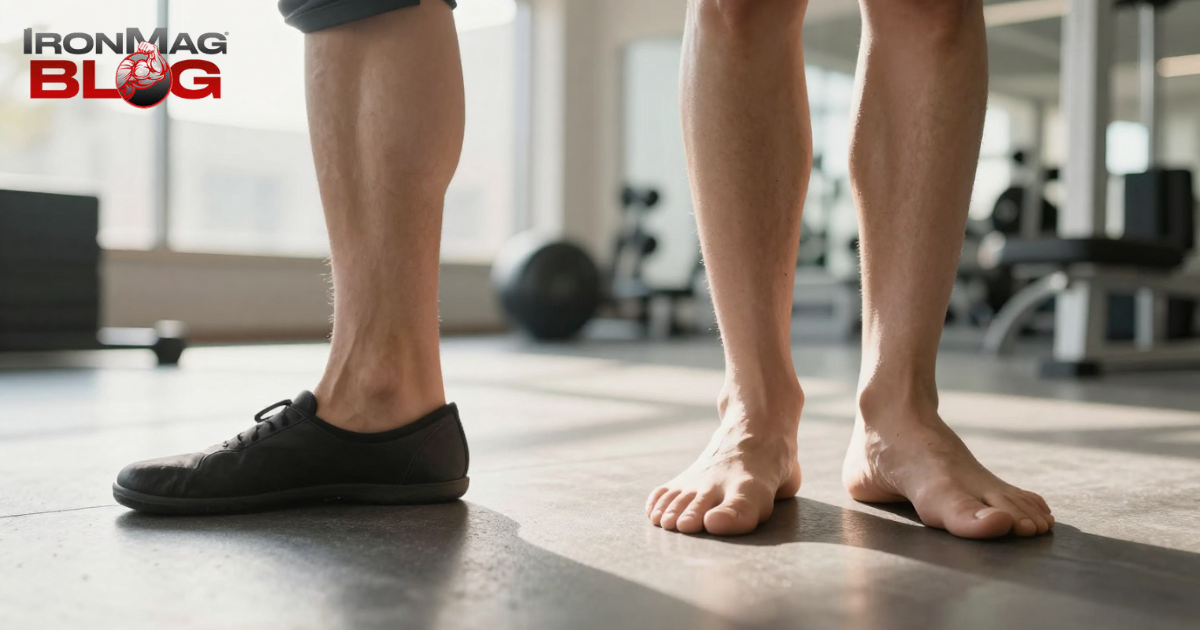
If you’ve spent any amount of time in a gym, you’ve probably noticed this: One person lifts in structured shoes with a raised heel, while someone else trains in socks or completely barefoot, pulling weight like it’s second nature.
Both methods are defended as if they’re the only right way.
So, what actually makes sense?
Is one better than the other? Are both complete nonsense? Or is there a clear winner when comparing the two?
After all, you don’t want to look goofy or like a noob in the gym, right?
The truth is, the answer isn’t one-size-fits-all (of course, right?). It depends on the lift, your training style, and how your body handles balance, stability, and force.
With the number of clients I’ve worked with over the years, I’ve actually seen people perform better both ways, which is why it’s worth understanding the difference instead of blindly picking a side.
In this article, I want to dive deeper into rocking flat shoes and going barefoot in the gym to understand the pros of both. That said, before you let your dogs loose, make sure your gym even allows you to go barefoot.
Disclaimer: This article is for informational purposes only and should not be used to treat or diagnose any condition. It is recommended that you speak with your doctor before starting any exercise program, making changes to your nutrition plan, or adding any new dietary supplements into your current regimen.
What Do Your Feet Do When You Lift?
Your feet play a key role in how safely and effectively you train.
Think about your everyday movement. When you walk or run, they act like springs and help push you forward with each step. They also support your body weight and help you stay balanced.
When you lift weights, especially during compound movements like squats, your feet work constantly to keep you stable, even if you don’t notice it.
According to studies, a stable foot allows you to push more effectively into the ground, which can help you lift more weight with better control.
What you choose to wear on your feet can directly influence all of this.
Barefoot Lifting
Training barefoot isn’t a new idea. In fact, before specialized gym shoes became a thing, people lifted in whatever gave them the most stability, often just their own feet.
Recently, barefoot lifting has made a comeback, especially with the rise of functional training and minimalist gym culture. A lot of people simply want to feel more connected to the ground, as thick, cushioned soles can take that away.
But this isn’t just about preference. There’s a functional side to it.
Every lift starts from the ground up. Your feet act as the base for everything you do.
When you train barefoot:
- Your feet and ankles engage more stabilizer muscles
- Your balance improves
- You become more aware of your body position
Think about a heavy squat. In soft running shoes, the sole compresses under weight, which can make you feel unstable. Without that cushion, you get direct contact with the floor, so the force you generate transfers more efficiently into the lift.
Pros of barefoot training
- Better stability and balance
- Less energy is lost through soft or cushioned soles
- Stronger foot muscles and ankle control
- Improved feedback, which helps correct technique
Cons of barefoot training
- Less cushioning during jumps or high-impact movements
- May not suit everyone, especially those with flat feet or mobility issues
- Not allowed in some gyms due to hygiene rules
Lifting Shoes
Now, let’s look at lifting shoes and how they compare to going barefoot.
Unlike regular sneakers, weightlifting shoes are designed with a raised, solid heel, usually around 0.5 to 1 inch. That small change makes a big difference in how you move under the bar.
The raised heel helps in two ways:
- It improves ankle mobility, allowing you to squat deeper
- It keeps your torso more upright, which can reduce strain on the lower back
This is why Olympic lifters and serious strength athletes rely on them. When you’re performing lifts like cleans, jerks, or snatches, you need a stable and controlled base. Lifting shoes help provide exactly that.
Benefits of lifting shoes
- Helps achieve better squat depth
- Supports a more consistent bar path
- That said, they’re not meant for every exercise
- Reduces the chances of the knees collapsing inward
- Improves stability when lifting heavy weights
But it is important to note that they are not suitable for all exercises.
So, What Should You Wear?
It really comes down to your goals and how you train.
If you focus on squats, weightlifting shoes can give you an edge by helping you get into a better position.
On the other hand, if you mostly do deadlifts, flat shoes, or even going barefoot can work better since they keep you closer to the ground and may help you lift more weight.
If you train for Olympic lifts and need to consistently hit deep squat positions, lifting shoes are usually the better choice.
For most people, though, it doesn’t have to be that complicated. What you wear on your feet won’t make or break your progress. Comfort, control, and consistency matter more. So, pick what feels right and keep training hard.
Author Bio:
Matt Weik, BS, CSCS, CPT, CSN, is a globally recognized health, fitness, and supplement industry expert with over 25 years of hands-on experience. He is the founder of Weik Fitness and one of the most prolific writers in the space, known for translating complex science into clear, actionable content. Matt holds a Bachelor of Science in Kinesiology from Penn State University and multiple industry certifications, giving his work both academic credibility and real-world authority. His writing has been featured on thousands of websites and in 100+ magazines worldwide, including FLEX, Muscular Development, Iron Man, and Muscle & Fitness UK, and he has authored 30+ published books. Trusted by leading supplement brands and media outlets alike, Matt is widely regarded as one of the most knowledgeable and reliable voices in health, fitness, and sports nutrition.
#Wear #Lift #Weights #IronMag #Bodybuilding #Fitness #Blog