wellnessfitpro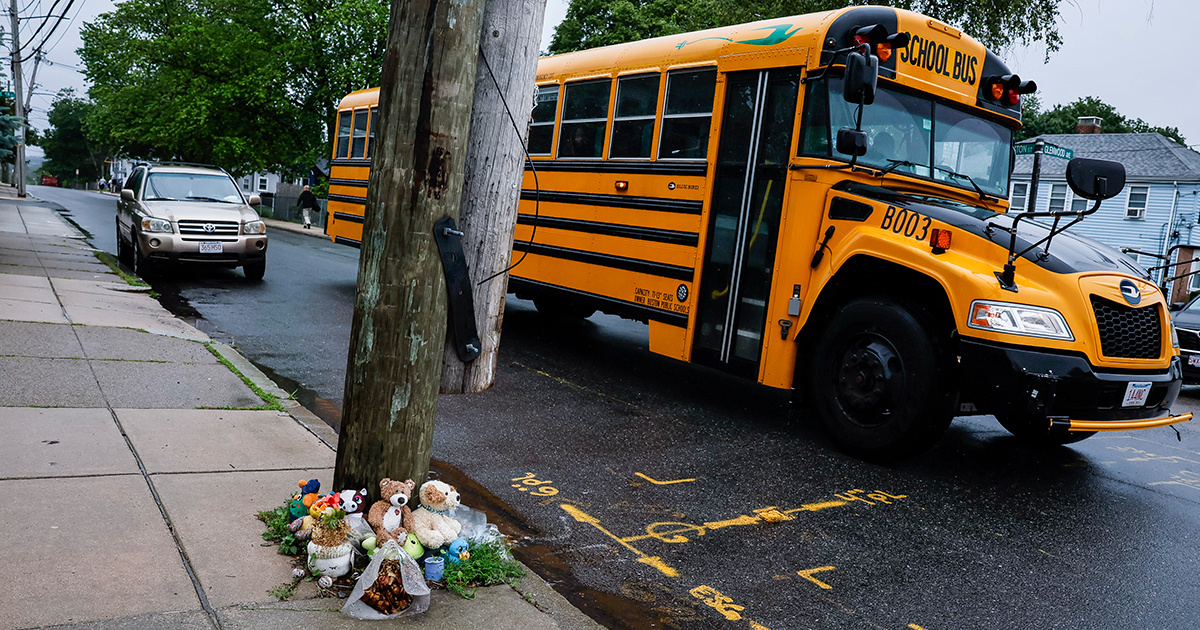
Reporting Highlights
- Missing Crashes: The federal system for tracking serious bus crashes fails to identify most of a major company’s fatal collisions.
- Fatalities Across the Nation: The buses run by one major transportation company were involved in at least 60 fatal crashes over 10 years; the database notes only 18.
- A Schoolboy Killed: The death of a Boston 5-year-old last year was one of the accidents not counted under the name of the bus operator, Transdev, a major transportation company.
These highlights were written by the reporters and editors who worked on this story.
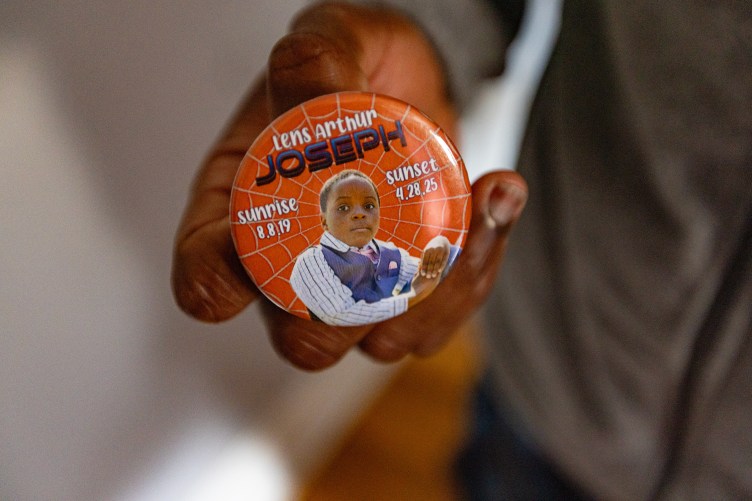
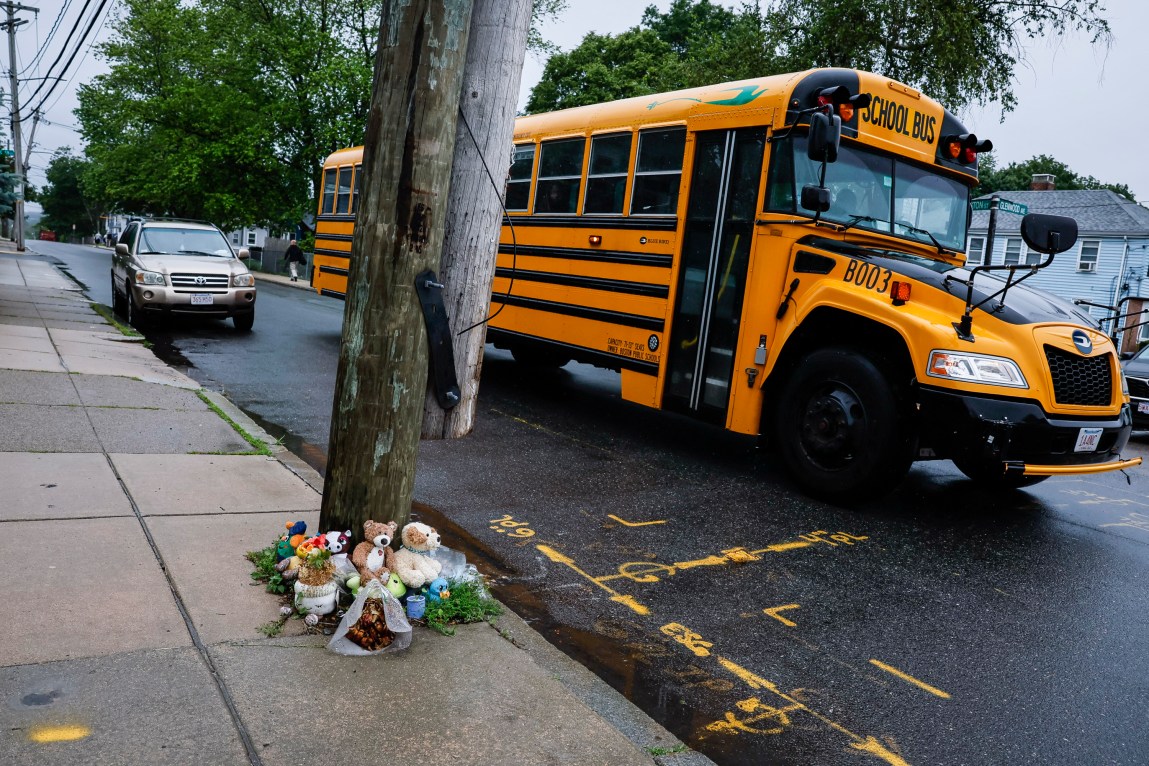
On the day 5-year-old Lens Joseph was killed by a Boston Public Schools bus last year, the driver had already struck a postal truck, ignored a stop sign and missed several stops, prosecutors said. When he got to Lens’ house, he dropped him off on the wrong side of the street and then ran over the kindergartner as he crossed in front of the bus.
Transdev, a multinational company that has been the city’s sole bus contractor since 2013, hired and trained the driver of the bus that killed Lens. Yet a federal safety database shows no sign that the company was involved in the April 2025 crash. WBUR and ProPublica found at least 60 fatal Transdev crashes in the last decade, but the federal database shows only 18 under the company’s name. That means 42 fatal crashes are not identified as Transdev’s.
This missing information is important because the Federal Motor Carrier Safety Administration, which oversees commercial motor vehicles, relies on it to pinpoint unsafe companies.
But the process the agency uses to collect information is faulty: It identifies only a fraction of a company’s fatal crashes.
As a result, the full safety record of Transdev, one of the largest private operators of public transit in the U.S., remains a secret to regulators, the public and the local government agencies that might award it a contract.
“That is a serious, serious gap in safety,” said Peter Kurdock, general counsel with Advocates for Highway and Auto Safety, a nonprofit that promotes transportation safety and has pushed for improvements in crash data for years. “And it’s a serious, serious shortcoming when it comes to the regulation of these carriers by FMCSA.”
Help Further Our Reporting on Bus Crashes
If you are a current or former FMCSA employee, or someone in the industry with information about the agency or the safety of school buses, transit buses or motor coaches, our team wants to hear from you. Willoughby Mariano can be reached by phone at 617-358-0802, Signal at willoughbymariano.55 and email at [email protected].
The deadly crashes associated with Transdev span at least 16 states and involve pedestrians, at least two bicyclists and other vehicles. Lens’ death and at least two others have resulted in criminal charges against the bus drivers. Transdev did not provide comment on any specific crash.
The crash data feeds into FMCSA’s online Safety Measurement System, which makes safety records public for bus companies nationwide. Instead of listing Transdev, that data often lists collisions under the government agency that hired Transdev or the name of a company it acquired. Also, when crashes are listed under other names, companies that oversee the buses involved are not required to claim the collisions. The agency’s instructions for how to determine the motor carrier involved in a crash are interpreted differently by police who respond to the scene, the news organizations found.
Based in France, Transdev has vast U.S. operations. It says it holds contracts in busing, light rail and other forms of public transit in 46 states, plus Washington, D.C., and Puerto Rico. The multibillion-dollar company employs more than 30,000 people nationally. Transdev’s only school bus contract is with Boston Public Schools.
Transdev U.S. CEO Laura Hendricks declined an interview. In a written statement, Transdev said it complies with “federally mandated reporting standards.”
“Transparency and continuous improvement are central to our safety approach, and we work closely with oversight agencies and our clients to ensure our practices meet or exceed expectations,” the statement said.
The statement did not respond to questions about why Transdev did not ensure crashes the company was involved in were logged as part of its safety record. It did stress that reporting crashes is the responsibility of law enforcement.
At the publications’ request, Transdev reviewed lists of the crashes that reporters tied to the company. Transdev confirmed that most of them matched with collisions in their records but did not have records for all of them.
The FMCSA did not respond to requests to interview Derek Barrs, the head of the agency, or emails with a list of questions.
Other than the federal database, there are few ways to connect crashes to particular bus companies. A different database, run by the Federal Transit Administration, records transit crashes but doesn’t connect them to contractors. Separately, FMCSA requires all bus companies to keep an internal register of how many serious crashes take place during their operations. However, those records are not open to the public, and companies are not obligated to submit the information to regulators unless they ask for it. Transdev declined the publications’ request for its register.
So while Transdev may know about its own collisions, federal agencies and the public often don’t.
Darin Jones, a former FMCSA Midwest field administrator, spent more than 35 years in federal transportation safety and often oversaw investigations. He said investigators are supposed to consider a company’s serious crashes as part of their assessment. If many are logged inconsistently, they cannot determine whether Transdev or any other company is operating safely.
“ The knowledge of this motor carrier’s operation, any motor carrier’s operation, is critical,” said Jones. “If you don’t have the full picture of an operation, how do you truly know what’s going on?”
At least in Boston, Transdev appears to have had no serious school bus crashes over 10 years. But that’s not true. WBUR and ProPublica uncovered at least 71 serious crashes involving the company that weren’t under its name.
Kurdock says the FMCSA needs to fix its safety data, especially in Boston.
“The agency needs to be much more proactive in ensuring that the data they do have is accurate, even more so when you’re talking about a carrier that is operating a transportation service for schoolchildren,” Kurdock said. “If there is one bipartisan issue left here in Washington, D.C., it’s that schoolchildren should have a safe ride.”
Transdev Crashes Across the Country Were Recorded Under Different Names
Since 2016, about two-thirds of Transdev’s 60 fatal crashes have appeared in federal safety data under the names of a company it acquired or agencies that contracted with them. Click a state to see more details about the Transdev crashes we found there and how they were recorded in the federal database.
Nurse, Cyclist Among Those Killed
When a crash happens, local law enforcement fill out accident reports that document the location, identities of the drivers and companies involved. This information becomes part of the federal safety database and helps regulators connect a crash to a particular company.
But the news organizations found multiple examples where that system masked the company running the bus lines. For most of these crashes, the database is also unclear on whether the drivers violated traffic laws.
In Lens’ case, the motor carrier is listed as “CITY OF BOSTON MVMB,” an abbreviation for the city’s Motor Vehicle Management Bureau, which acquires and manages municipal vehicles. There is no mention of the school district or Transdev being involved.
Another crash killed registered nurse Renée Shea in southern Massachusetts in 2017. It appears under the name of the Greater Attleboro Taunton Regional Transit Authority, not Transdev, the agency’s contractor at the time. A bus made a left-hand turn into the path of the Jeep SUV she was driving, according to a police report. The bus company’s driver, Margaret Correia, may have been distracted because she began to take off her jacket before she made her turn, the report found. She could not be reached for comment.
Correia pleaded guilty to misdemeanor negligent operation of a motor vehicle, court records show. A GATRA spokeswoman said Shea’s family received $1 million from the area transit agency’s insurer.
Charlie Shea said his ex-wife was a generous mother who had taken custody of her granddaughter.
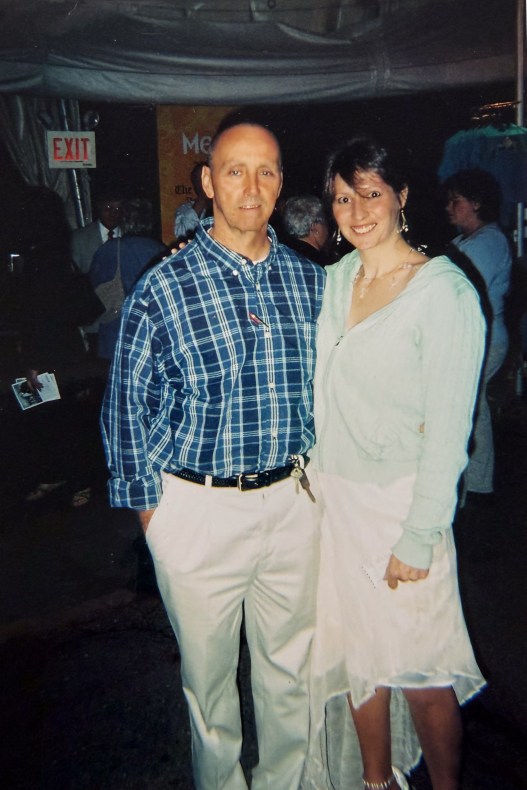
As a former MBTA bus driver, Charlie Shea said he continues to be shocked by the bus driver’s actions.
Driving and taking your jacket off “ain’t a bright idea for anybody,” he said.
He said his ex-wife’s death, like all crashes, needs to be part of Transdev’s safety record.
“It’d make them more accountable,” Shea said. “They would have to use their safety records to get contracts from the state or the counties or from schools.”
Outside Massachusetts, there are dozens of other fatal Transdev crashes in the database with no mention of the company.
In a November 2023 Las Vegas crash, federal records list the Regional Transportation Commission of Southern Nevada as the motor carrier of a transit bus that killed bicyclist David Ortiz in a crosswalk. Court records state driver Johnelle Johnson, a Transdev employee, pleaded guilty to a misdemeanor vehicular manslaughter charge. A lawsuit by Ortiz’s family against Transdev and the driver was settled for an undisclosed sum.
Transdev has operated the Las Vegas-area bus system since 2023, when it acquired First Transit, which originally held the contract, the commission’s records show.
Although First Transit is now part of Transdev, at least five fatal crashes across the United States are still recorded under First Transit’s name after the acquisition.
Beyond the fatal crashes, WBUR and ProPublica also took a close look at all of Transdev’s serious, but nonfatal, crashes with Boston Public Schools. Those include crashes where any person was transported to a hospital or a vehicle was towed.
In a December 2024 crash, a bus lurched onto a sidewalk outside Curley K-8 School in the Jamaica Plain neighborhood. The bus struck an 8-year-old boy with autism and his school aide before smashing into two fences, a police report states. The crash sent both victims to the hospital with long-term injuries, their civil lawsuits against Transdev allege.
A bus camera showed that Transdev driver Vitony Laguerre’s eyes were closed and his head was back before he pressed the accelerator, police stated. He pleaded not guilty to a misdemeanor charge of negligent operation of a motor vehicle.
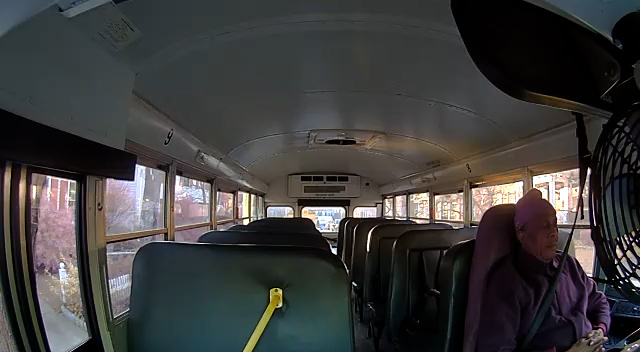
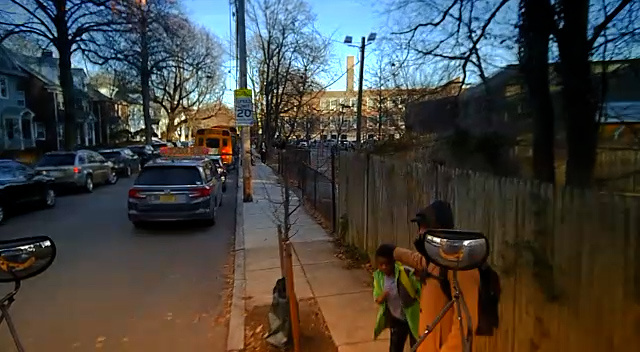
The federal record lists the city of Boston, not Transdev, as the carrier.
Attorneys for Laguerre and both crash victims did not comment for this story. Laguerre and Transdev denied they were negligent in the crash, according to records in an ongoing civil case.
Boston Public Schools Superintendent Mary Skipper declined an interview request. A spokesperson did not answer a list of questions, but in a written statement said that the district follows established safety protocols and has worked with Transdev over several years to improve accountability and performance.
“We will continue to work with our transportation partner to monitor performance, address issues as they arise, and ensure every student gets to and from school safely,” the statement said.
Local Law Enforcement Takes Over
The current system of collecting and publishing bus crash data began as part of a federal push for safer roads. In the early days of this work, in the 1970s and 1980s, rules put the burden on bus and truck companies to self-report serious crashes to the U.S. Department of Transportation. Each operator had to report its fatal bus crashes in person or by telephone “as soon as possible”; crashes that resulted in injuries or serious vehicle damage had to be reported in writing, and in triplicate.
But both companies and federal safety investigators complained the process was burdensome and inadequate. For one thing, investigators could not tell whether companies failed to report their accidents, said Jones, the former FMCSA regional administrator.
Regulators and traffic safety researchers thought they could do better. At the time, many states were already collecting crash information electronically from local police departments.
“Why burden the industry with reporting?” Jones said. “We had a more accurate record from the states.”
So in 1993, the federal Department of Transportation decided to end self-reporting by carriers. Today, local law enforcement agencies send their bus and truck crash information to state agencies, which submit it to FMCSA.
After investigating, a local officer must fill out a form that asks for the name of the bus company, or “carrier,” that is involved in the crash and the company’s U.S. Department of Transportation identifier. FMCSA training material recommends the officer determine which company should be included in the form by figuring out which entity “controls” or “directs” the bus.
For transit and school buses, this decision can be surprisingly complicated. Transdev employees may be behind the wheel, and the company may manage the daily operations of the buses, but the transit agencies or a school district may choose the routes. So who is in charge? In these cases, Transdev’s role often disappears in the data.
Transportation experts and former FMCSA officials said bus companies can voluntarily inform the agency that crashes under other names belong to them.
But Alex Scott, a University of Tennessee, Knoxville transportation expert, said companies rarely update the federal record, according to research he published in 2021. “There’s not really an incentive for them to account for all of their crashes,” Scott said. “If a company could just magically make them go away, of course they would.”
Boston City Councilor Erin Murphy, a former teacher for the district where Lens attended school, has become a vocal critic of how Transdev operates its buses. She was shocked when she learned from a reporter that the company is not required to take steps to ensure all its crashes are part of its federal safety record.
“Horrifying,” she said. “Why would they be able to not report accidents — one that was a fatal accident? There’s nothing worse than a fatal accident.”
“There’s not really an incentive for them to account for all of their crashes. … If a company could just magically make them go away, of course they would.”
Alex Scott, a transportation expert at University of Tennessee, Knoxville
After several passenger bus crashes with multiple fatalities, Congress passed legislation in 2012 that gave FMCSA powers to conduct more comprehensive inspections into the safety operations of bus companies.
When Transdev underwent one of these reviews in 2016, investigators uncovered what they described as “numerous crashes” that were not listed as part of the contractor’s safety record, according to the inspection report. There were enough crashes that the FMCSA planned to give Transdev a “conditional” safety rating, which would mean the company had insufficient safety procedures.
Because local police departments may not “be aware or equipped” to report crashes to the FMCSA, the carrier should report them, the report stated.
“This self reporting is required for accurate evaluation by FMCSA and the accurate safety record of the carrier,” it added.
The company successfully appealed the decision to lower its safety rating by arguing its drivers could not have prevented many of the crashes investigators uncovered.
FMCSA investigators urged Transdev to report to the agency when its role in a crash is not reflected in safety data, yet the company’s name continues to be absent from many of them. Transdev did not comment on this recommendation.
A Father Seeks “Justice”
Lens’ death last year became a local flashpoint, shedding new light on Transdev’s safety procedures and raising questions about its ability to keep the city’s children safe.
The driver of the school bus that killed Lens should not have been behind the wheel that day, and the bus never should have been on the road, according to information from city officials and prosecutors.
Driver Jean Charles became ineligible to operate a school bus in December 2024 after a required driving credential expired, according to a statement from Boston Mayor Michelle Wu’s office last year. But the company did not take him off the road then. In the weeks before Lens died, Charles had two minor collisions and underwent remedial training, it said, and soon returned to work.
On the day of Lens’ death, Charles began his shift without conducting a required pretrip inspection, prosecutors alleged. One of the bus’s four rear tires was flat, and a safety crossing bar was broken. Transdev is also in charge of maintenance, but it’s unclear how long the bus had these problems.
Had Charles followed procedures, the bus would have been sent for repairs, prosecutors said. And yet Charles set off on his route to UP Academy Dorchester, where Lens climbed aboard.
At 2:42 p.m., Charles dropped off Lens and his 11-year-old-cousin on the wrong side of their street. To get home, they would have to cross in front of the bus.
Neighbor Carolyn Tomlinson was inside her home cleaning windows when the cries of a child brought her outside. She followed the sound to the corner of Glenwood Avenue and Washington Street, where she saw the cousin screaming. Lens was on the ground.
“I’m looking at Lens, just lying there,” Tomlinson said. “And as a mom it broke my heart.”
Tomlinson said she dialed 911 and held the cousin in her arms to comfort her.
“I was praying with her, saying, ‘It’s going to be OK. God’s got us,’” Tomlinson said.
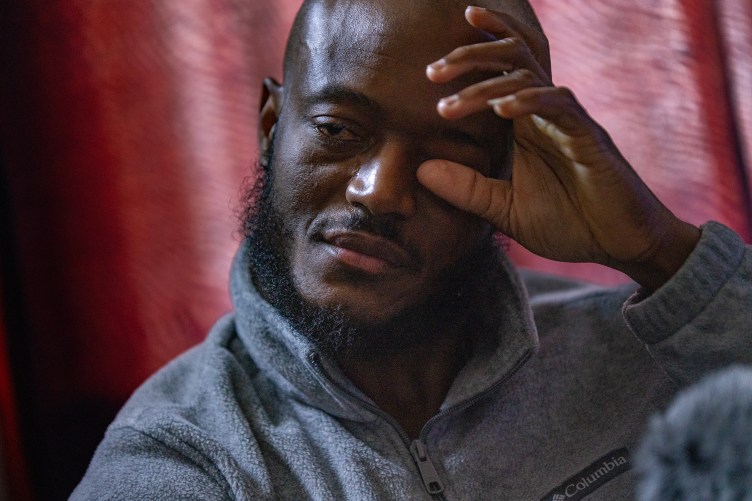
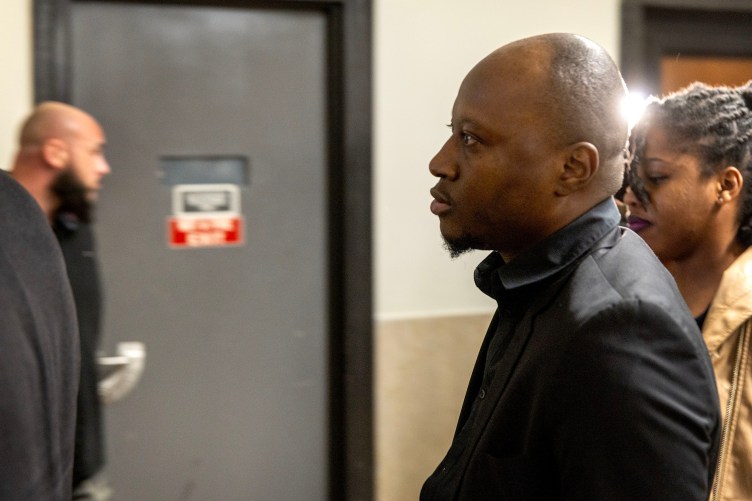
Lens’ father, Esaie Joseph, had parked his truck in North Carolina after a day on the road as a long-haul trucker when his brother told him about the crash in a phone call. Hours later, he got word that his boy was dead.
Lens was Joseph’s only son, and he was self-assured beyond his years, his father said in an interview with WBUR. His nickname was “smart guy.”
Every time Lens asked Joseph for a new toy, he’d begin with, “Dad, you know I’m a smart guy?” the father recalled.
Joseph has kept his son’s soccer ball and toy cars, and he smiled as he sorted through them on a recent evening: a police car, because Lens wanted to be an officer. A Spider-Man-themed car because he loved the superhero.
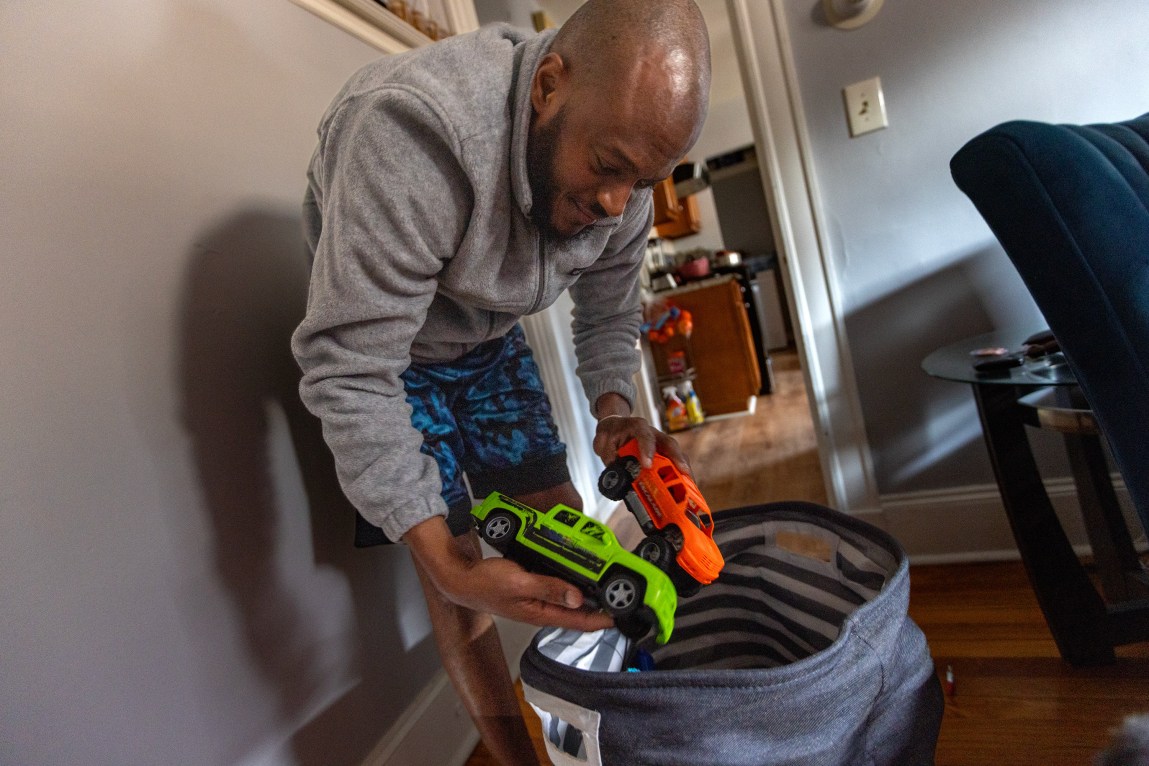
After he lost Lens, Joseph stopped driving trucks and moved with his relatives to a new neighborhood, away from the scene of the crash. He now is a driver for a city of Boston van service for seniors.
He and his family are suing Transdev and Charles, who resigned from Transdev soon after the crash. Joseph said he wants some good to come from Lens’ death, and for Transdev to operate safely.
“The first thing I hope is justice for him,” he said. “They have to care for safety so something like this will not happen again.”
Charles pleaded not guilty to felony involuntary manslaughter and other charges in March. His attorney did not respond to requests for comment.
Transdev did not comment about the crash and said the company had discussed its safety measures publicly during a Boston City Council meeting last August. The company and Charles denied in civil court filings that they were negligent or reckless.
Transdev is in the third year of its five-year, $651 million contract with Boston Public Schools and transports about 19,000 of the district’s students every school day. It is currently looking to expand in Boston, where it is one of three finalists for a multibillion-dollar commuter rail contract.
To this day, the federal record does not show that Transdev was the operator of the bus that killed Lens. Neighbor Tomlinson wants it to be part of Transdev’s safety record so regulators can hold them accountable, and agencies and school systems can understand the companies they are hiring.
“It should be visible to the ones that need it, so we can see it and keep our babies safe,” Tomlinson said.
#Dozens #Boston #Bus #Crashes #Missing #Contractor #Transdevs #Federal #Record #ProPublica