wellnessfitpro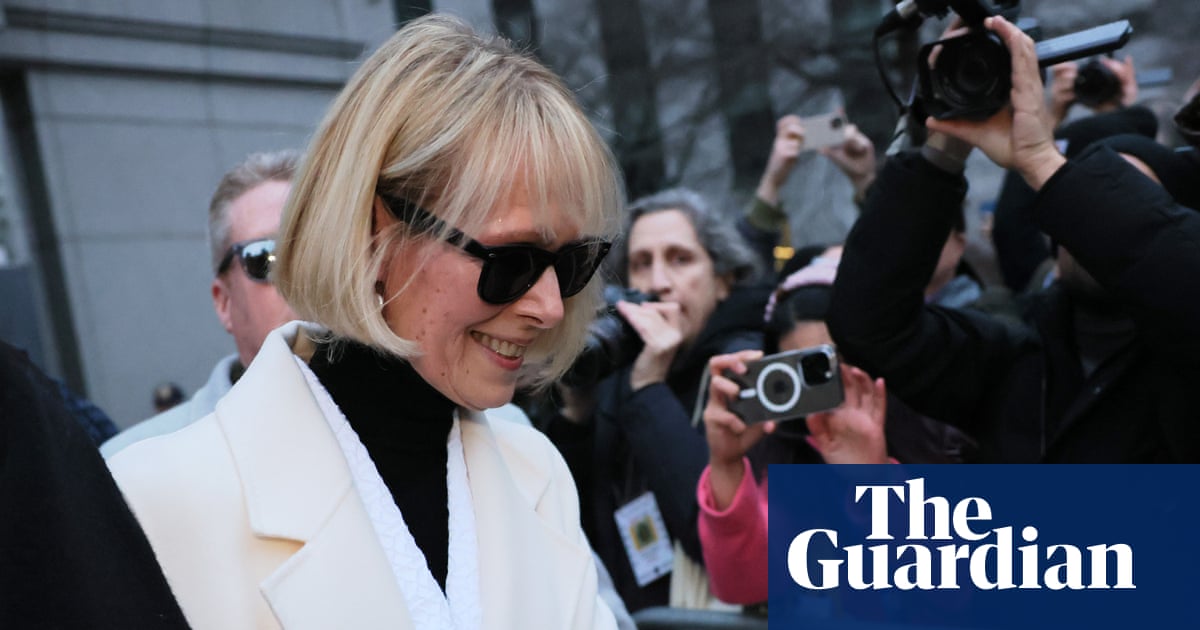
A Manhattan federal court judge has ordered the release of the more than $5m Donald Trump owes E Jean Carroll following her successful 2023 sexual abuse and defamation trial against him. Less than an hour after the judge issued his order, Trump filed paperwork indicating he was appealing the decision.
Trump had deposited this $5m jury award, as well as 11% interest, into a court-held account some six weeks after Carroll’s courtroom victory. Judge Lewis Kaplan’s order directs the disbursement of these court controlled funds, which now total some $5.8m due to interest accrual.
Kaplan’s decision comes more than three years after Carroll bested Trump in her bombshell civil case; jurors determined that he sexually abused the former Elle writer and unlawfully impugned her reputation with false, vitriolic denials. Trump denied all wrongdoing.
The order followed the US supreme court’s 29 June decision not to review Trump’s appeal. Trump wanted the supreme court to weigh his appeal after lower courts repeatedly snubbed his fight against this verdict.
After Trump first appealed the verdict, he received an automatic 30-day stay barring collection. Carroll and Trump’s teams agreed in June 2023 that he could put the money into the court’s registry investment system (Cris) while his appeals played out.
The Cris system effectively serves as an escrow agent for money awarded during litigation; funds are secured while whatever post-judgment processes unfold. If someone loses their appeals, the money is available for collection – since they do not have it in their possession, it cannot be hidden or shielded with legal maneuvering.
When Trump and Carroll’s teams agreed on the deposit, part of the deal was that Carroll could collect the Cris held money if certain appeals-related developments took place – including a supreme court refusal to hear his case, as happened several weeks ago. Losers of court cases can also secure bonds for judgments instead of making a Cris deposit.
During a separate trial in 2024, a different Manhattan federal court jury awarded Carroll $83.3m for defamatory statements Trump made about her as president. Trump secured a bond rather than putting money in Cris for Carroll’s second judgment against him.
Both sums involve a 2019 New York magazine cover story excerpting Carroll’s book, What Do We Need Men For? A Modest Proposal. Carroll alleged in the book that Trump sexually assaulted her three decades prior in the dressing room of a New York department store.
Trump responded with several statements denying Carroll’s claim, insisting that he did not know who she was, and stating he had never met her. Carroll sued Trump in November 2019 over these statements, saying they damaged her reputation.
“Trump’s false and insulting statements about Carroll were defamation per se,” the suit said. “They tended to (and did) damage Carroll in her trade, occupation, and/or business, and they were defamatory on their face without reference to any extrinsic information.”
At the time Carroll filed this suit in 2019, the statute of limitations barred her from suing for alleged sexual assault, so this litigation only involved defamation. But New York state greenlit the Adult Survivors Act when, which created a brief one-year window for adult victims of sexual violence to sue for abuses that had expired under the statute of limitation, allowing Carroll to sue over Trump’s alleged attack.
Carroll in 2022 did file suit against Trump for the alleged attack and additional defamation after he had left office. The first trial involved Carroll’s second lawsuit because the initial litigation was mired in appeals, with Trump trying to argue he couldn’t be sued for statements made during his presidency.
‘Time for this case to end’
Carroll’s legal team, helmed by high-profile attorney Roberta Kaplan, pushed for the swift release of these funds after last month’s supreme court decision. Roberta Kaplan argued in a 30 June court filing that enough was enough.
“This time around, he remarkably seeks to further delay Carroll’s collection of the judgment awarded to her in 2023 by stating that he is considering whether to move for reconsideration of the supreme court’s denial of his petition,” Kaplan said. “But this is the end of the line.”
“After four years of litigation across every level of the federal court system, it is time for this case to end,” she also said. “And under the court’s stipulation and order, Carroll is now entitled to obtain payment of the money due under the judgment.”
In a 1 July letter, Roberta Kaplan also asked the judge to expedite the schedule for legal filings around the disbursement of money. Judge Kaplan agreed and later refused Trump’s request, which had claimed his new lawyer needed more time “to become completely familiar with the facts and procedural circumstances of this case”.
Trump’s team on 7 July made a detailed argument against releasing the funds. They said Trump has asked the supreme court to rehear his request for review of the case.
after newsletter promotion
Trump’s lawyers argue that Carroll’s team misinterpreted their agreement about releasing Cris-held funds. “Plaintiff’s position contradicts the plain text and purpose of a security arrangement designed to preserve the status quo during appellate review,” they said.
If Carroll received the money, and the supreme court wound up taking on the case and ruling in his favor after disbursement, Trump would suffer an “unrecoverable loss”, he alleges.
Carroll “has repeatedly stated that she intends to give away all funds that she collects from him, and once those funds are distributed to third parties, they likely cannot be recovered”.
Legal experts told the Guardian that Kaplan’s order all but guarantees that Carroll will soon receive the money.
And they said it was unlikely the second circuit court of appeals would rule in Trump’s favor.
“I think that would be a really tough argument,” Bryan Sullivan, a partner with Early Sullivan Wright Gizer & McRae, said earlier this week of efforts to secure a second circuit stay, for example. “I think Roberta Kaplan said it best: he’s at the end of the line here.”
Trump could request a stay from the US supreme court, but legal veterans told the Guardian that would be unlikely to succeed. They also said the supreme court almost never green-lights petitions for rehearing, making this last-ditch effort all the more ephemeral.
“That’s really the only mechanism that’s left,” said Neama Rahmani, founder of West Coast Trial Lawyers and a former federal prosecutor, before the decision came down. Rahmani said reconsideration was all but nil, and that he “can’t even recall an instance where that relief has been granted”.
Sullivan said he did not think the supreme court would reconsider its denial, given its exceedingly high bar for considering cases to begin with, calling the success of initial requests “slim to none, on average”. Other than the fact that Trump is a defendant, the case does not have dramatic implications for US law the way civil rights cases might.
“It doesn’t really call in a lot of constitutional law [questions] or splits between the circuits or something [that] the supreme court looks for in granting cert,” he said prior to Kaplan’s decision and Trump’s filing. “This is just a guy who lost, [and] he was annoyed and upset that he lost. That’s really kind of what it feels like.”
Alphonse Provinziano, the managing partner of Provinziano & Associates law firm in Beverly Hills, concluded “it seems like she [Carroll] will get the money eventually”.
“Think of the money as sitting in a lockbox at the courthouse. Trump put roughly $5.5m into a court-controlled account back in 2023 so he could appeal without paying Carroll first. That is standard practice under federal rules,” he said in a statement prior to Kaplan’s decision. “The deal was simple: if he wins on appeal, he gets it back. If he loses, she gets paid.”
“He lost, and now she gets it with interest,” Provinziano said. “While there may be stalls, this is purely procedural.”
#judge #orders #release #5.8m #Trump #owes #Jean #Carroll #court #loss #Donald #Trump